
Idea 1
Rewriting the Soundtrack of Your Life
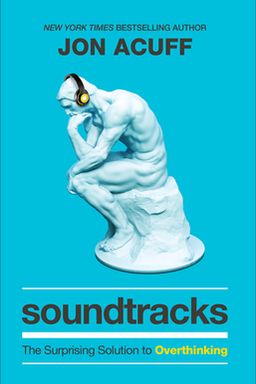
Have you ever noticed that the loudest obstacle in your life isn’t someone else—it’s your own mind? In Soundtracks: The Surprising Solution to Overthinking, Jon Acuff argues that the stories we tell ourselves are like repetitive “soundtracks” that shape our reality. These internal loops can either propel us forward or hold us back. Acuff’s core claim is disarmingly simple yet profound: you can change your life by changing the thoughts you listen to.
Acuff contends that overthinking—where what you think gets in the way of what you want—isn’t a fixed trait or brain flaw. Instead, it’s a form of mental energy we can redirect. In this book, he shows you how to transform overthinking from a super problem into a superpower. By turning down old, destructive soundtracks and replacing them with new, life-affirming ones, you reclaim control over your mind and your results.
Why Our Thoughts Behave Like Music
Much like songs that trigger memories and emotions, our internal soundtracks play quietly underneath everything we do. When we listen to negative ones long enough, they start to shape our identity and our actions. Acuff draws on neuroscience, psychology, and humor to show that our brains are malleable: thanks to neuroplasticity, we can literally rewire how we think. This notion echoes Carol Dweck’s growth mindset and Dr. Caroline Leaf’s work on thought transformation—yet Acuff translates those ideas into an approachable, funny, story-driven guide.
The Retire–Replace–Repeat Framework
The entire book revolves around three steps: Retire the old soundtracks holding you back, Replace them with new ones that serve your goals, and Repeat these until they become automatic. You don’t eliminate overthinking; you redirect it. This approach is both practical and empowering because it transforms thinking from an uncontrollable stream into a skill you can manage with intention.
Stories That Stick
From Acuff’s hilarious story of agreeing to his first-ever public speaking gig with only one thought—“I think I can do this”—to the tale of Colleen Barry, who went from receptionist to CEO by rethinking her narrative, the book brims with real-life examples. Each story reinforces a central message: the gap between where you are and where you want to be is often bridged by a new thought, not just a new plan. (This echoes ideas from James Clear’s Atomic Habits and Carol Dweck’s Mindset—change begins invisibly, in the mind.)
The Science of Turning Thoughts Into Results
Drawing from cognitive psychology, Acuff explains how our brains tend to distort memories and overvalue negative experiences—a phenomenon known as the negativity bias. He cites research on how social rejection triggers real pain responses in the brain, and how constant mental rehearsal cements negative loops. But that same repetition can be harnessed for good. Through deliberate thought practice—like repeating affirmations or visualizing positive outcomes—you can strengthen productive neural pathways and weaken the destructive ones.
Why This Matters Now
In a noisy, fast-paced digital world, overthinking feels inevitable. Yet Acuff invites you to challenge that assumption. He promises—and delivers—a blueprint to quiet the chaos not by silencing thought but by curating it. Instead of fighting your mind, you learn to DJ your own mental playlist. “If you can worry, you can wonder. If you can spin, you can soar.” That single line captures the book’s spirit—playful, practical, and astonishingly hopeful.
By the end of this summary, you’ll see how to retire broken soundtracks, replace them with empowering mantras, and repeat them with practical actions that stick. You’ll learn why thinking kind thoughts matters as much as true ones, how to borrow mental music from mentors, how to “turn down the dial” when your mind gets loud, and how symbols—from coins to sneakers—anchor mindset shifts in daily life. “Soundtracks” isn’t just about overthinking less; it’s about thinking better and finally letting your thoughts become your allies instead of your enemies.