
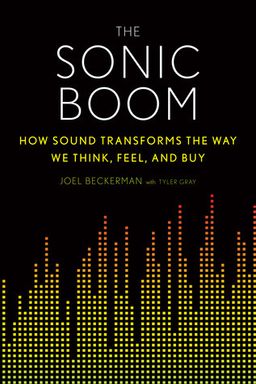
Sonic Boom cover

Sonic Boom

by Joel Beckerman with Tyler Gray

Sonic Boom explores the profound impact of sound on our thoughts, emotions, and decisions. Learn to harness this invisible force to enhance your brand, inspire communities, and transform personal experiences, making sound a powerful tool in business and life.

The Hidden Power of Sound in Everyday Life

When was the last time a sound changed your mood, drew your attention, or shaped your decisions without you even realizing it? From the hiss of a coffee machine to the chime of a phone, sound constantly influences how you feel and act. In The Sonic Boom, Joel Beckerman—composer and founder of Man Made Music—reveals how sound profoundly shapes perception, behavior, and emotion. He argues that by understanding and harnessing sound intentionally, you can transform experiences, connect more deeply with others, and even tell better stories in your business and personal life.

Beckerman’s central premise is powerful yet simple: sound is never neutral. Every sound you hear tells a story, evokes an emotion, and drives an invisible narrative in your brain. But because sound operates below conscious awareness, most people and even most brands overlook its potential. Beckerman’s work—ranging from designing the AT&T sonic logo to scoring NBC’s Super Bowl broadcast—proves that sound can become a force for clarity, memory, and connection when used strategically.

Sound as a Human Experience

To show the depth of this unconscious influence, Beckerman opens with a story as moving as it is illuminating: Sarah Churman, a woman who began hearing for the first time at 29 after receiving an ear implant. For Sarah, the slam of a car door sounded like an explosion, and her own laughter startled her. In her journey from soundless isolation to sonic fullness, Beckerman finds a human metaphor for what we all take for granted—how sound connects us to who we are, where we are, and how we feel. Sarah’s overwhelming first days of hearing remind us that every tap, chime, and rustle forms a texture we live inside of, even when we don’t consciously notice it.

From Awareness to Soundscaping

The first big shift Beckerman proposes is learning to hear consciously—a practice he calls “soundscaping.” Just as you might curate your home decor or lighting, you can curate your sound environment. Start by closing your eyes for two minutes and identifying the foreground (the loudest sounds), the midground (ambient daily noises), and the background (distant hums or environmental tones). This exercise turns subconscious noise into conscious design. Once you notice these layers, you start to ask: Which sounds comfort or irritate you? Which inspire action or focus? Beckerman insists that shaping those answers can dramatically improve your days.

The Science Behind the Sonic Effect

Sound works fast because your brain’s auditory pathways connect directly to systems governing emotion, memory, and instinct. Neuroscientists like Petr Janata and Seth Horowitz have shown that sound can trigger multiple brain regions within milliseconds—far faster than vision. Beckerman translates this science into something practical: sounds shortcut meaning. The creak of shoes on a hallway, the ping of an incoming text, or the ring of an ice cream truck all bypass rational analysis and go straight to feeling. As Beckerman says, “If a picture is worth a thousand words, the right sound at the right moment is worth a thousand pictures.”

Sound’s Emotional Efficiency

When deployed thoughtfully, sound can shape entire experiences. A car startup chime, the clink of a wine glass, even the silence between musical notes—all communicate rich meaning. Beckerman uses examples ranging from Disney theme parks, where every footstep and echo helps sustain the magic, to Apple’s iconic start-up tone, which redefined serenity in technology. Each example underscores that people remember not what they hear, but how the sound made them feel. This feeling-first principle drives everything from cinematic scores to customer experience design.

Why This Matters

The book arrives at a cultural moment shaped by sensory overload—constant pings, ads, and devices vying for our attention. Beckerman’s call isn’t simply to use more sound, but to use it better. He champions what he calls sonic humanism: the belief that sound should help people feel more, not less, connected. For anyone—marketer, teacher, parent, or simply a listener—the payoff of mindful sound design is focus, calm, and empathy. By noticing the sonic world, you learn to use it to improve how you live, work, and relate.

Throughout this summary, we’ll explore how Beckerman’s ideas unfold. You’ll discover how sizzling fajitas at Chili’s revolutionized restaurant marketing, how sound guides soldiers and shoppers alike, and how companies like AT&T and Univision use music to tell emotional truths. You’ll also see how harnessing sound in your everyday environment—from your home and commute to your voice and playlist—can create what Beckerman calls boom moments: those fleeting bursts when sound transforms ordinary life into something unforgettable.

In short, The Sonic Boom invites you to stop hearing sound as background noise and start recognizing it as the invisible architecture of experience. Once you tune in, your world—and your story—will never sound the same.


The Science of the Boom Moment

Beckerman introduces the idea of a “boom moment”—a sudden, emotionally charged instant when sound triggers a chain reaction across your senses. Think about the sizzle of a fajita at Chili’s: it’s loud, surprising, and irresistible. You hear it before you see or smell the dish, but instantly your brain lights up with expectation and desire. That’s no accident, he says—it’s wiring. Our auditory reflexes evolved to detect and react before sight could process danger or opportunity. By tapping into this ancient mechanism, businesses and artists can catalyze powerful feelings in mere seconds.

From Startle to Story

Neuroscience backs up this phenomenon. A sudden sound activates your orienting response: within ten milliseconds—faster than a blink—your body tenses, your head turns, and your heart rate spikes. That same reflex that once alerted humans to predators now alerts you to the fajita. In that moment, your hippocampus and amygdala (centers of memory and emotion) join in, turning simple sound into anticipation. Beckerman shows how this reaction builds story: you imagine a hot skillet, smell the onions, and suddenly crave something you didn’t even notice on the menu. The sound creates meaning before words can.

Icons of the Everyday

Boom moments aren’t limited to food. The ice cream truck jingle transforms a simple purchase into childhood nostalgia. Designed by Les Waas in 1958 for Mister Softee, its tinkly melody is unmistakable—a symbol of summer, community, and delight. Even decades later, adults hearing it feel a trace of that joy—and maybe guilt for racing after “candy from a stranger.” The tune’s genius lies in its consistency and emotional truth: it sounds playful and safe, literally granting permission to indulge. That’s the magic of a sonic brand done right—it fuses memory, feeling, and action.

Sound and Memory

Beckerman explains why these sonic triggers endure. Music imprints on the brain’s emotional centers, binding sound to story. That’s why a two-note “Jaws” motif can induce dread faster than any image of a shark. He refers to research by neuroscientist Petr Janata, who found that familiar tunes activate both motor and memory regions, priming the body to respond even before thought. Once a sound is linked to a strong feeling, it acts like an emotional shortcut. That’s why devices booting up or cars revving can evoke entire brands instantly (as with Apple’s chime or a Harley’s rumble).

Boom Moments in Motion

Automakers understand this well. Ford’s recreation of the 1968 Mustang Bullitt’s growl shows how sound can resurrect nostalgia. Engineers couldn’t mimic the movie’s impossibly loud Hollywood car directly—so they designed exhaust tones that made drivers feel like Steve McQueen racing through San Francisco. The result: emotional authenticity through engineered imperfection. It wasn’t the loudest or most accurate sound that mattered—it was the one that meant something. In similar fashion, a phone’s notification tone only works if it signals importance rather than irritation.

For Beckerman, boom moments are the emotional accelerators of life and commerce. They’re why some sounds stop you in your tracks while others fade into noise. Whether you’re serving fajitas or designing software, the real question is: what story should your sound tell? If you can answer that, you’re ready to create your own boom.


Sonic Landscapes and the Stories Around Us

If a boom moment is the spark, a sonic landscape is the setting—a soundtrack that defines the mood and behavior of space. Beckerman invites you to think of every environment as a composition. From the creak of shoes on a wooden floor to the hum of appliances at home, sound constantly informs your sense of place and safety. Directors, brands, and even cities can “score” these environments to create meaning just as composers score films.

When Space Speaks

Movie director Frank Darabont’s story about The Green Mile illustrates this concept perfectly. A squeaky boot on death row turned out to be too “real”—until added back deliberately. That small sound gave every footstep emotional weight. In the same way, everything from the buzz of a smartphone to the hiss of a restaurant kitchen defines how you experience space. Chefs like Jesse Schenker blast heavy metal while cooking to fuel intensity; high-end restaurants like Chipotle’s redesign their wall acoustics to dampen harsh echoes and invite guests to linger. Sound literally flavors experience—as studies by Unilever and Oxford psychologist Charles Spence show, background noise can change how food tastes.

The Retail Symphony

Retailers are learning that sound equals sales. Slow-tempo music makes diners stay longer (and spend more), while fast beats hurry them along. Beckerman notes supermarkets where even the thunder before a produce mister cues freshness. In stores like AT&T’s flagship in Chicago, he and his team installed overlapping soundtracks—one ambient layer representing possibility, another punctuated by joyful sonic “spikes” like fireworks and pops—to create constant micro-moments of surprise. The result wasn’t just atmosphere but emotional connection. Customers felt they were entering a story rather than a shop.

The Sound of Home

At home, your hearing shapes belonging. The hum of a fridge or the chirp of morning birds subtly tells your brain: all is well. Beckerman urges people to rethink design not just visually but sonically—soundproofing, choosing materials, or adding water sounds can transform stress into calm. This is “personal architecture”—crafting your environment as carefully as any playlist. Once you start tuning in, silence itself becomes part of the composition, framing meaning like white space in a painting.

To Beckerman, every space has a story waiting to be told through sound. Designers and individuals alike can choose whether that story hums with harmony—or vibrates with noise.


The Principles of Sonic Branding

Just as logos and colors define how brands look, sonic branding defines how they feel and sound. Beckerman’s craft at Man Made Music centers on turning invisible feelings into audible symbols. He argues that successful sonic design must be strategic, emotional, and human—not just cool background music. His framework rests on several pillars: creating experiences, making sound matter, curating the soundtrack, working it hard, respecting silence, and dumping sonic trash.

From Jingle to Anthem

Unlike fleeting jingles, an anthem carries a story. It’s the sonic DNA from which shorter brand snippets, or sonic logos, are born. Disney’s “When You Wish Upon a Star” or McDonald’s four-note tag work because longer anthems root them in emotion. Lacking that, most jingles vanish. Beckerman emphasizes that all sound choices—from a store playlist to a smartphone tone—should reinforce one emotional truth about the brand.

Make It Mean Something

True sonic branding demands authenticity. Using a pop hit just because it’s trendy often backfires, as seen when Royal Caribbean used Iggy Pop’s “Lust for Life” (a song about addiction) in a cruise ad. The public sensed the lie. By contrast, when sound fits a brand’s purpose, it becomes timeless. Apple’s chime suggests clarity and renewal; Nike’s rhythms convey action and confidence. A good sonic brand doesn’t manipulate—it tells emotional truth.

Silence as Style

Surprisingly, silence is one of Beckerman’s favorite tools. Quieter moments frame emotion. He points to Disney Imagineering, where designers use “perceived quiet” between park zones to cleanse guests’ sonic palate. In Tokyo’s Tower of Terror, removing sound before a drop doubled the fear because silence built anticipation. As composer Hans Zimmer puts it: “Get rid of the shitty sound. Life’s too short.” Strategic absence of sound can be as powerful as music itself.

Dump the Sonic Trash

“Sonic trash,” Beckerman warns, includes any sound that doesn’t serve a story—like the infamous crunchy SunChips bag that drove customers mad or annoying tech beeps that replace meaningful feedback. Thoughtful sound design filters out clutter so what remains resonates. The goal is sonic integrity: every tone should serve the narrative, not distract from it.

Sonic branding, when done right, is emotional shorthand. It’s what makes you smile when you hear NBC’s chimes, shiver at a film cue, or feel grounded when your device powers on. And when done wrong? It’s just noise.


The AT&T Anthem and the Sound of Humanity

Perhaps Beckerman’s most detailed case study is the reinvention of AT&T’s sonic identity. The company, once synonymous with dropped calls, needed to remind employees and customers that their technology connected people to each other, not just to machines. Working with marketing leader Esther Lee, Beckerman’s team developed an anthem grounded in what he called “the sound of humanity.”

Finding Authentic Emotion

The early versions failed because they were too cheerful—what Beckerman calls “smiles and rainbows.” The music had to convey AT&T’s relentless innovation and purpose, not pap optimism. So the team rebuilt from scratch using imperfect, organic instruments: a beat-up glockenspiel, an upright piano, Stevie Wonder’s old clavinet, and even bagpipes. The result sounded human, inventive, and open—exactly the traits the brand wanted to convey.

Four Notes, Endless Contexts

From that anthem emerged the now-famous four-note sonic logo—a simple sequence that ended every ad with a snap. Executives were stunned to find that within a year, audiences recognized the tones almost as readily as the globe logo that had existed since 1983. After fourteen months, recall of the sound approached that of NBC’s chimes, one of the most iconic logos in history. The reason: the sounds were used consistently and truthfully wherever AT&T’s story lived.

Small Business Lessons

Beckerman argues that these same principles scale down. A coffee shop or flower store can design its own sonic identity simply by curating meaningful sounds—welcoming door chimes, playlists that match their values, even the material of their floors. Sound is high-impact and low-cost compared to visual redesigns. As AT&T proved, the right four seconds of audio can accomplish what millions in ad spend cannot: emotional credibility.

Every brand, big or small, has a voice; Beckerman’s work shows how to make sure it’s saying something worth hearing.


Music as Movement: Univision and Cultural Sound

Sound doesn’t just sell products—it unites people. Beckerman illustrates this through his collaboration with Univision, the largest Spanish-language media network in the United States. In the early 2010s, Univision was undergoing a transformation, appealing to a younger, bilingual, bicultural generation. Executive Ruth Gaviria realized the company needed an anthem to reflect Latino pride, cultural unity, and a new American identity. Music, she believed, could lead this movement.

An Anthem for a Nation Without Borders

Beckerman’s team studied how national anthems and freedom songs—from “The Star-Spangled Banner” to “We Shall Overcome”—had galvanized communities. They concluded that Univision needed not a corporate jingle but a musical flag. Working with Jose Luis Revelo, they fused Mexican and Caribbean rhythms, clave beats, and even accordion to capture Latin diversity without favoring one culture. The result was celebratory and emotional—a soundtrack for an emerging Latino middle class reshaping America.

Sound as Social Glue

The anthem worked. When it debuted in 2013, Univision soon led prime-time ratings among adults under 50, even beating English-language networks. Viewers felt seen and connected. As Ruth put it, “With just three notes, you can signal you’re part of something bigger.” The anthem became the heartbeat of a cultural movement rather than just a marketing tool.

Through Univision’s story, Beckerman extends sonic branding beyond brands—it becomes a way to amplify identity and solidarity. When sound tells a community’s truth, it can turn entertainment into empowerment.


Scoring the Experience: Lessons from NBC and Disney

In one of the book’s most fascinating chapters, Beckerman opens the curtain on his collaboration with John Williams and NBC to score the Super Bowl XLVI broadcast. The challenge: make sports feel like cinema. When NBC producer Fred Gaudelli said the Super Bowl must appeal to those who didn’t even care about football, Beckerman realized sound would have to turn a game into an emotional journey.

Turning Music into Emotion

Using Williams’s classic “Wide Receiver” theme as a foundation, Beckerman extended and modernized it with rock, electro, and orchestral layers. Each piece corresponded to emotional beats—tension, triumph, reflection. During the broadcast, producers triggered these cues live, manipulating audience emotion subconsciously in real time. Viewers didn’t just watch a game; they felt a story unfold. Ratings broke records.

What Disney Knew All Along

To explain why this works, Beckerman compares NBC’s musical strategy to Disney’s theme parks. At Disney, sound never stops guiding emotion. Tram operators are trained to speak with warmth; ambient music in transition zones (“decompression areas”) eases guests between rides. Even bathrooms are scored. When done right, he says, it feels seamless—you don’t notice sound, only magic. Great sonic design, whether on TV or in a park, shapes how you move, think, and feel moment by moment.

Beckerman’s takeaway: half of storytelling is sound. Whether you’re delivering a presentation or sharing a brand’s story, music sets expectation before words begin. As Hans Zimmer told him, “Music is fifty percent of the movie.” The same holds true for life.


Creating Boom Moments Every Day

The book closes with a manifesto: you don’t need to be a composer to use sound intentionally. Every day offers chances to design boom moments—small sonic interventions that change how you and others feel. From your morning alarm to your voice in conversation, sound shapes your confidence, relationships, and well-being.

Curate Your Personal Soundscape

Choose gentle waking tones instead of jarring buzzers; add running water or white noise to mask urban chaos. Even clothing sounds matter—crisp shoes project authority, while rustling fabrics or clinking jewelry tell stories about character. Your phone, too, can become an emotional tool when you assign meaningful tones to loved ones instead of generic ringtones. Each sound can convey reassurance, urgency, or joy without a single word.

Voice, Persuasion, and Presence

Beckerman emphasizes that how you sound often outweighs what you say. Research by Albert Mehrabian and studies by Quantified Impressions show that vocal tone influences perception more than content. For example, Sarah Garrigan, an MBA graduate struggling with job interviews, discovered her high pitch and up-talking made her sound insecure. After voice coaching lowered her register and controlled pacing, she landed her dream job. Sales expert Gary Coleshill likewise tailors tone to context—slower for empathy, faster for excitement, deeper for authority. The lesson: your voice is your most powerful instrument.

Sound for Health and Focus

Sound can heal, too. Studies show that calm music or birdsong slows heart rate, while therapies like melodic intonation help stroke survivors regain speech (as seen in Gabrielle Giffords’s recovery). Even exercise performance improves when music sets the tempo—Costas Karageorghis calls it a “legal performance-enhancing drug.” Beckerman’s advice: use sound intentionally throughout your day—to focus, relax, and recharge. Let music be your mood architect.

Your sonic story is already playing. The challenge—and opportunity—is to compose it consciously.

Dig Deeper

Get personalized prompts to apply these lessons to your life and deepen your understanding.

Go Deeper

Get the Full Experience

Download Insight Books for AI-powered reflections, quizzes, and more.