
Idea 1
The Politics of Fear: Duterte’s Deadly Promise
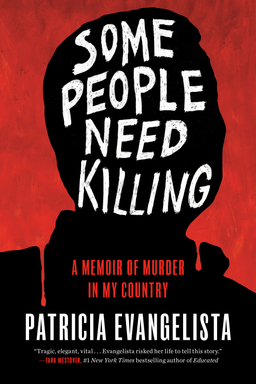
What happens when a nation’s deepest insecurities—about safety, poverty, and belonging—are distilled into a single, brutal promise? In Duterte’s Promise and the Rise of a Violent Regime, the author explores how Rodrigo Duterte transformed fear into political power, turning rage into policy, and vengeance into governance. His rise wasn’t an accident—it was the product of decades of inequality, disillusionment, and an appetite for strongman certainty in the face of chaos.
The book argues that Duterte’s narrative—“Drugs are the root of all evil”—offered a simple answer to complex questions. For many poor Filipinos, it was an answer that finally seemed to make sense. This clarity, even wrapped in violence, was more comforting than the abstract promises of liberal reformers. But by labeling millions as enemies of the state, Duterte built his power on dehumanization. Ordinary citizens were recast as ‘durugistas’: addicts, pushers, parasites who could—and should—be killed.
From Populism to Blood Politics
After decades of elite-led democracy that failed to bridge the gap between rich and poor, Duterte emerged as the rage-filled alternative. He positioned himself as a man of the people who spoke the language of the street rather than the boardroom. Human rights, to him, were the vocabulary of the privileged—useful for those who already lived behind walls, not for the millions trapped in crime-ridden slums. This resentment became the foundation of his political persona.
What’s striking is not just the rhetoric, but the reaction it inspired: chants for blood, vows of loyalty, and a sense of moral renewal through violence. (In a similar pattern, as seen in books about populism by Jan-Werner Müller and Pankaj Mishra, populist leaders often redefine morality through force rather than ethics.) Duterte’s speeches, filled with shocking declarations like “Kill them all,” resonated because they simplified the complex web of poverty, crime, and state neglect into a moral war between the pure and the corrupt.
A Manufactured Enemy
To sustain this political mythology, Duterte needed an enemy big enough to justify unending warfare. The durugistas fit that role perfectly. His inflated numbers—claiming 4.5 million addicts and tens of thousands of murders attributed to them—were factually wrong but emotionally powerful. The reality, as UN figures showed, was far less grim: drug use rates were below the world average, and crime rates didn’t match his apocalyptic descriptions.
Yet, accuracy didn’t matter. Perception did. By convincing Filipinos that addicts were baby-killers, rapists, and demons, Duterte created space for moral indifference. In this new moral order, killing wasn’t a crime—it was salvation. The narrative was intoxicating: be afraid, but trust the man with the gun.
Why It Mattered—and Still Does
What the book shows so vividly is how violence becomes a form of governance when legitimacy falters. When you can’t deliver jobs or justice, you deliver vengeance. This is why Duterte’s story matters far beyond the Philippines. It’s a cautionary tale about how democracy can erode not through coups, but through applause. Every time citizens cheer for easy answers and strong hands, they trade liberty for the illusion of safety.
Ultimately, the author contends that Duterte’s promise—to cleanse the nation through death—was never just about drugs. It was about power built on fear, obedience enforced through violence, and a society convinced that some lives aren’t worth saving. Understanding this dynamic isn’t just about grasping one regime’s brutality. It’s about recognizing how despair, when left unchecked, can transform into something far deadlier than corruption or crime: collective complicity.