
Idea 1
From Social Death to Defiant Humanity
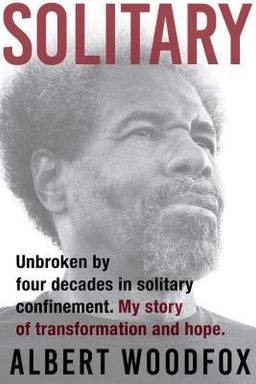
How does a person transform from being declared socially dead to becoming a symbol of moral resistance? In Solitary, Albert Woodfox recounts his journey from a poverty-stricken childhood in Jim Crow New Orleans to spending more than four decades in solitary confinement for a crime he insists he did not commit. His story is not just about a wrongful conviction; it is an anatomy of systemic racism, carceral brutality, and the resilience of the human spirit.
You see the arc immediately: a boy shaped by segregation grows into a man radicalized by injustice, then survives extreme isolation through friendship, learning, and disciplined defiance. The narrative moves through layered transformations—personal, political, and institutional. Each stage reveals how structures of oppression reproduce themselves through prison management, and how individuals reclaim identity within those systems.
The roots of injustice
Woodfox begins with the Jim Crow South, showing you what social death means in everyday acts: segregated schools, recycled textbooks that erase Black history, and humiliations so routine that dignity feels illicit. Poverty and racial hierarchy define possibility—his mother scrubs floors and hustles bar tips while Woodfox learns that survival means improvisation. You understand that environment does not simply limit choices; it scripts them. When Woodfox falls into petty crime, he is tracing the narrow corridors prepared for him by exclusion.
Radicalization through experience
Imprisonment at Angola exposes the plantation logic underlying modern incarceration. Angola’s landscape and labor map directly onto slavery’s memory—the same land, now managed by state employees instead of overseers. Sexual violence and punishment serve as mechanisms of control. In the Tombs in New York, Woodfox meets members of the Black Panther Party who give him the vocabulary to decode this reality: oppression is structural, not personal. Through their study sessions and the 10-Point Program, he learns that community protection and political consciousness are the antidotes to institutional dehumanization.
Resistance inside walls
Woodfox’s transformation takes shape through practice. At Angola, he and Herman organize antirape squads to defend vulnerable inmates—political action masquerading as practical protection. Education replaces raw survival; books become revolutionary instruments. He studies George Jackson, Malcolm X, and Frantz Fanon, turning self-education into a collective strategy. He teaches others to read, studies law, and files lawsuits. Each action subverts the prison’s purpose: instead of breaking men, it becomes a site of rebuilding.
Solitary confinement as crucible
When he enters Closed Cell Restricted housing, the story evolves from activism to endurance. He describes physical claustrophobia, psychological dissolution, and moral testing—how routine searches and strip rituals attempt to erase personhood. Yet solitary becomes his workshop. Discipline, study, and camaraderie turn the cell into a moral classroom. His friendships with Herman Wallace and Robert King become networks of loyalty that pierce administrative separation—“Separated but never apart.” Defiance itself becomes survival practice.
Law, exposure, and liberation
Later chapters trace legal manipulation and grassroots activism: fabricated witness statements, withheld evidence, and politically motivated prosecutions. Support groups—Malik Rahim’s coalition, Anita Roddick’s sponsorship, and Amnesty International’s campaigns—transform local struggles into global crusades. Civil suits expose solitary as constitutional violation, with Judge Dalby declaring decades of isolation “beyond the pale.” Reinvestigation uncovers Brady violations, and finally, in 2016, Woodfox accepts a nolo contendere plea to walk free after forty-four years.
Freedom, ambiguity, and moral victory
His release is ambivalent. Justice remains incomplete, but freedom itself becomes moral testimony. You realize that Solitary is not just personal memoir—it’s an indictment of state cruelty and a meditation on dignity. Woodfox’s refusal to surrender meaning inside a cell designed for erasure exemplifies the human capacity for reconstruction under pressure. By the end, you understand that his life argues for this truth: even in a space built for death, disciplined solidarity and learning can resurrect a person—and a movement.