
Idea 1
Socialism and the Ongoing Struggle for Equality
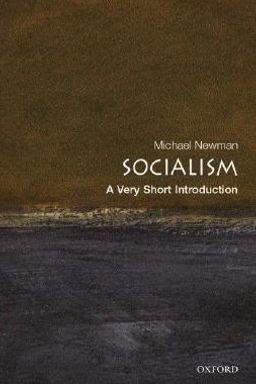
Why does the idea of an egalitarian society—where everyone has the same chance to live well—continue to resonate across centuries? In Socialism: A Very Short Introduction, political theorist Michael Newman argues that socialism endures because the problems it seeks to address—inequality, exploitation, and alienation—have not disappeared. Indeed, they have evolved and multiplied. For Newman, socialism is not a relic of 19th- or 20th‑century politics but a living tradition of thought and action concerned with how human beings might live in solidarity and equality rather than competition and hierarchy.
Newman opens with a striking contrast: when Karl Marx predicted capitalism’s demise in 1867, many believed socialism’s triumph was inevitable. A century later, the situation appeared reversed—capitalism was ascendant, and socialism was pronounced dead. Yet Newman insists that such obituaries are premature. Throughout its two‑hundred‑year history, socialism has continually transformed, adapting to new crises and social realities—from industrial exploitation to digital inequality, from class struggle to environmental collapse. In this comprehensive but concise work, he maps these transformations through key moments, thinkers, and movements.
What Socialism Really Means
Instead of locking socialism into one narrow definition, Newman proposes three foundational commitments that unite its diverse traditions. First, socialists seek to build an egalitarian society—a world free from arbitrary privileges of birth, wealth, or gender. Second, they emphasize solidarity and cooperation over the individualism celebrated by liberal capitalism. Third, they believe strongly in human agency—in people’s ability to transform society through conscious action rather than accept fate or tradition. These principles allow socialism to stretch across a vast spectrum—from the radical utopian communes of Robert Owen to the coordinated welfare systems of Swedish social democracy.
Importantly, Newman avoids the trap of equating socialism with any single regime. He reminds readers that socialism has been both revolutionary and reformist, centralized and localist, statist and anti‑state. What connects all these forms is the moral conviction that inequality is unjust and preventable. As he writes, no socialist would defend the current inequalities of wealth and power.
A Global and Historical Story
Newman traces socialism’s development from the early 19th‑century European revolutions into a truly global project. The Industrial Revolution’s upheavals—urbanization, factory labor, and mass poverty—made socialism a response to both economic exploitation and moral dislocation. From there, its diversity exploded: Marx and Engels advanced a scientific, class‑based socialism; anarchists such as Bakunin and Proudhon attacked power itself; and utopian thinkers like Saint‑Simon and Fourier envisioned harmonious, communal futures. Later chapters show how socialism evolved through major experiments and experiences: the Soviet Union’s rise and collapse, Cuba’s revolutionary resilience, Sweden’s egalitarian democracy, the New Left of the 1960s, feminism and environmentalism, and the post‑Cold War search for a new politics.
By studying these examples, Newman demonstrates that socialism is not a blueprint but a set of evolving practices shaped by context. Cuban communism and Swedish social democracy, though worlds apart, both pursued the socialist triad of equality, cooperation, and solidarity—one through revolution, the other through reform. Similarly, feminist and green movements expanded socialism’s meaning beyond class, into gender justice and ecological survival.
Why It Still Matters
Newman argues that socialism’s relevance today lies in its moral and practical challenge to the inequalities of global capitalism. In our own time—marked by staggering wealth gaps, erosion of social welfare, and climate catastrophe—the socialist vision offers an alternative logic of human flourishing. Where neoliberalism preaches competition and privatization, socialism urges cooperation and responsibility. Where market individualism measures success in profit and status, socialism asks what kind of life is possible for all. Newman’s discussion of globalization, feminism, and environmental crisis shows how socialism keeps reinventing itself to tackle new power structures—from international finance to gender hierarchies to ecological destruction.
A Map of the Book
Across five major chapters, Newman traces the evolution, variations, and future prospects of socialism:
- Chapter 1 delves into major socialist traditions—utopian, anarchist, and Marxist—showing their interplay and enduring contributions.
- Chapter 2 contrasts Cuban communism and Swedish social democracy as case studies of socialist practice in drastically different conditions.
- Chapter 3 explores how feminism, environmentalism, and the New Left fragmented and refreshed socialist thought.
- Chapter 4 examines socialism after the fall of the Soviet Union, from European social democracy to Latin America’s “Pink Tide.”
- Chapter 5 looks ahead, asking what socialism can offer in the 21st century—its moral vision, lessons, and democratic renewal.
By the end, Newman invites you not to mourn socialism’s past but to reimagine its future. Socialism, he suggests, remains humanity’s most enduring attempt to align freedom with equality, progress with justice, and faith in human cooperation with the hard realities of power. It is, in his words, as relevant as ever—because the world still needs it.