
Idea 1
The Social Brain and the Power of Connection
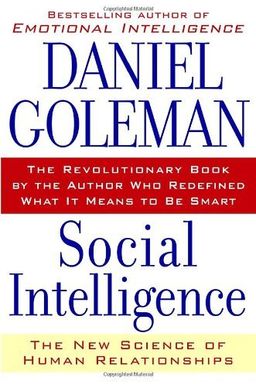
Your brain is wired to connect. In Social Intelligence, Daniel Goleman expands on his earlier work on emotional intelligence to reveal that relationships are not just psychological or cultural—they are biological. Every encounter you have with another person shapes your neural pathways, hormone levels, and even gene expression. The book’s central claim is bold: your well-being, learning, leadership, and morality all depend on how well your brain connects with others.
Drawing from the emerging science of social neuroscience, Goleman explains that when you engage with someone—through a smile, tone, or touch—your brain and theirs synchronize. This sync creates what he calls an interpersonal bridge: one person’s nervous system becomes input for the other’s. Whether that bridge heals or harms depends on your attunement, empathy, and care.
The Social Network Within Your Brain
Neuroscientists like John Cacioppo and Richard Davidson showed that specific brain circuits evolved for connection. The amygdala detects others’ emotions within milliseconds; the orbitofrontal cortex integrates these feelings into decisions; and mirror neurons allow you to feel what another feels. Together, they form the social brain. Goleman distinguishes two routes of processing: the low road (fast, automatic, emotional) and the high road (slow, reflective, controlled). Healthy relationships depend on harmony between both—your instinctive empathy balanced by conscious regulation.
When these systems misfire—through neglect, trauma, or manipulation—the brain can turn defensive, filtering human signals as threats. Conversely, when nurtured through caring touch and secure attachment, these networks strengthen, fostering trust and resilience. Relationships sculpt the very architecture of the brain.
From Emotional Contagion to Compassion
Every interaction is an emotional exchange. Goleman’s idea of an emotional economy reframes daily life as a flow of emotional credit and debt. Mirror neurons and facial mimicry make emotions contagious. A smile raises others’ oxytocin; contempt breeds cortisol. Rapport, he explains, depends on three ingredients: mutual attention, shared positive feeling, and synchrony. These are measurable—skin conductance and heart-rate studies confirm that two attuned people literally sync physiologically.
This rapid contagion shows why leaders, teachers, and parents set emotional climates. As with the “cinema effect,” whole audiences’ brains can synchronize to story rhythms. In teams, that synchronization can generate collective intelligence—or, if poisoned, collective stress.
Attachment, Love, and Biology
The roots of empathy and security start in early attachment. John Bowlby and Mary Ainsworth demonstrated that responsive caregiving gives infants a secure base—a foundation for exploration and stress regulation. When bonds are broken or inconsistent, the brain wires for anxiety or avoidance. Oxytocin, the “bonding hormone,” anchors this circuitry: it soothes stress, builds trust, and fosters caregiving. In both animals and humans, touch and closeness trigger oxytocin release, turning affection into biology.
Over time, these early patterns become adult attachment styles—secure, anxious, or avoidant. Researchers like Mario Mikulincer found that secure individuals can act compassionately under stress, while anxious individuals become overwhelmed and avoidant ones disengage. The good news: security can be primed—even a brief reminder of someone caring can boost empathy and pro-social behavior.
The Social Cost of Disconnection
Goleman warns that modern life fosters what Martin Buber called “I–It” relationships—treating people as objects rather than partners. From iPods to urban anonymity, technology and haste can dull empathy. Worse, the “Dark Triad” personalities—narcissists, Machiavellians, and psychopaths—embody disconnection: they grasp social cognition but lack emotional resonance. Empathy, Goleman reminds us, is the prime inhibitor of cruelty. Turning off that capacity makes harm possible.
Stress, Health, and Healing Through Connection
Relationships shape not only the mind but also the body. Chronic social stress floods you with cortisol, damaging memory and immunity. Epidemiologist Sheldon Cohen’s “cold studies” proved that isolation and conflict predict illness better than smoking. Janice Kiecolt-Glaser’s caregiver research showed weakened immunity and accelerated cellular aging from prolonged social strain. Yet compassionate relationships reverse these effects. Richard Davidson’s fMRI research revealed that holding a loved one’s hand calms the brain’s threat centers more effectively than drugs or logic.
In hospitals, Kenneth Schwartz’s advocacy for compassionate presence demonstrated that small acts—listening, touch, warmth—lower stress hormones and elevate patient outcomes. Kindness, it turns out, is medical.
From Individual Change to Social Repair
The book extends from personal connection to collective transformation. Youth justice programs in Missouri and Kalamazoo show that restorative, relationship-based approaches rehabilitate far better than punishment. Likewise, prejudice-fighting interventions by Thomas Pettigrew and others reveal that sustained friendships across divides—not lectures—reduce bias and even alter implicit brain responses.
Core message
Connection is not a luxury—it is the defining trait of humanity and the key to our collective survival. Every time you attend, listen, or care, you reshape brains—your own and others’—for empathy, health, and hope.
In short, Social Intelligence weaves science and story to prove that human connection is a biological imperative and a moral practice. From neuron to neighborhood, our fates are interwoven.