
Idea 1
The Economics and Human Science of Soccer
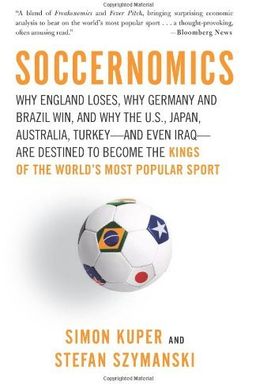
You probably think of soccer as pure emotion: rivalries, talent, and drama on the field. Yet, beneath the roars and rituals lies a set of measurable patterns that reveal how the game truly works. In this book, the authors—drawing on the combined insights of economist Stefan Szymanski and journalist Simon Kuper—show you that soccer is not immune to the laws of economics, psychology, and data science. Through decades of research, they expose how money, management, geography, and social forces shape who wins, who loses, and why the sport matters far beyond the pitch.
The authors insist you stop treating soccer as a mystery guided by instinct and luck. Instead, consider it a test case for human systems—where decisions, incentives, and errors play out under the world’s brightest lights. Once you decode the evidence, you see that what looks irrational (a wild transfer spree, a dynasty’s grip, or a fan’s devotion) often follows predictable, even comforting, patterns.
Money Rules the League
The biggest revelation is economic: wages, not transfer fees, explain success. Using four decades of English league data, Szymanski demonstrates that about 90% of long-term league performance correlates with salary spending. Wages sustain access to better talent and stability, while impulsive transfers often waste resources. Clubs led by statisticians, such as Lyon under Jean-Michel Aulas, used disciplined wage and recruitment structures to dominate domestically. In contrast, those chasing flashy signings—Liverpool under Houllier or Benitez, or QPR under Tony Fernandes—proved the cost of ignoring data.
This reframes competition: if your club wants trophies, it must spend steadily on human capital, not on one-time splurges. (Note: This echoes Billy Beane’s Moneyball logic, adapted for soccer’s fluid complexity.)
The Rise of the Geeks and Data-Driven Soccer
Once the sport’s only meaningful statistics were goals and points. Now, data scientists measure passes, sprints, recovery rates, and positional heat maps. Clubs such as AC Milan’s Milan Lab pioneered physiological analysis to predict injuries—helping players like Paolo Maldini extend their careers. Manchester City reviewed corner-kick data to correct biased intuition (switching from outswingers to inswingers). These examples show how analytics can reveal micro-edges that intuition misses.
But the authors also warn: metrics can mislead if context is ignored. Early analytics evangelists misread raw tackle counts or pass completion stats. The smarter approach combines human judgment and quantitative tools—what the authors call the “dashboard method”: numbers guide intuition, not replace it.
Power, Inequality, and the Business of Clubs
Despite the billions surrounding soccer, few clubs are genuinely profitable businesses. Even global giants like Real Madrid or Manchester United operate on fragile margins. Why do they survive? Because of what economists call the soft budget constraint: communities, creditors, and politicians refuse to let them die. Bankruptcy becomes symbolic theater—new legal shells (“phoenix” clubs) emerge while fans and cities sustain the brand. That resilience creates moral hazard but also social cohesion: clubs survive because they matter beyond profit.
Regulations like UEFA’s Financial Fair Play attempt to impose discipline but spark new inequalities. By banning rich owners’ injections from breakeven calculations, FFP entrenches elite clubs that already have high revenues while curbing the upstarts. The paradox: sugar daddies may distort fairness, but their spending spreads money down the pyramid, benefiting smaller clubs via transfer markets.
People behind the Patterns
The book demystifies the cult of the manager and the myths of fandom. Data across 699 managers show that only about 10% deliver measurable overperformance—names like Ferguson, Wenger, and Paisley stand out. Most results follow wage budgets, not managerial charisma. Similarly, fans are less steadfast than pop culture suggests. Studies show 50% of attendees at a given English fixture are new compared to the previous year—a rotating crowd of loyal cores, casuals, and “serial supporters.” Marketers must attract newcomers constantly, while the mythic Hornby-style devotee represents only a minority.
Other human patterns—racial bias, economic irrationality, and media exaggeration—also bend to data’s scrutiny. Economists proved that discriminatory clubs paid a “racism tax”: teams using fewer black players underperformed relative to their wage bills, showing that prejudice carries quantifiable costs. Markets, once informed, corrected the imbalance by rewarding performance.
Beyond the Pitch: Nations, Fans, and Meaning
National success follows logic too. Population, income, and match experience predict international results more reliably than myths about mentality. England, routinely mocked as a chronic underachiever, actually overperforms these models, lagging only because of fatigue, social recruitment biases, and tactical insularity—failures of network learning more than talent. By contrast, “Tom Thumb” nations such as Croatia or the Czech Republic excel through openness and coaching exchanges. Success now depends not just on wealth but on participation in global knowledge networks.
At a higher scale, soccer unites societies in measurable ways: TV people-meter data show which nations truly love the game, while studies of suicides around World Cups reveal that collective watching—not winning—literally saves lives by fostering social cohesion. Hosting tournaments seldom makes countries richer, but it reliably boosts happiness. As economist Georgios Kavetsos found, citizens report lasting surges in well-being after hosting—an “emotional dividend” far exceeding any GDP gain.
Why It All Matters
The lessons link together: numbers illuminate emotion, and emotion gives meaning to data. Soccer, by mirroring human economies and social structures, becomes a laboratory for understanding markets, culture, and identity. The book ends where it began—with a paradox: soccer’s irrationality is what makes it rational to study. By measuring performance, wages, fandom, and feeling, you see how precision and passion coexist, and why the world’s most irrational game still obeys understandable laws.