
Idea 1
The New Culture of Public Shaming
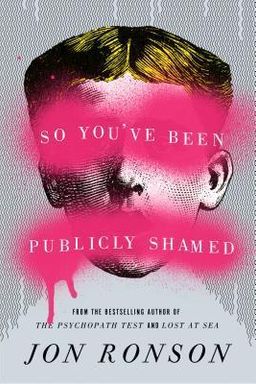
When was the last time you watched a person’s life crumble online—and felt a rush of righteousness? In So You’ve Been Publicly Shamed, journalist Jon Ronson asks a question that has quietly haunted our social-media age: why do ordinary people now act as judge, jury, and executioner from behind their screens? He argues that the digital world has revived the ancient punishment of public humiliation—once carried out at the stocks or the pillory but now performed through tweets, posts, and hashtags. Shaming, he contends, has become a new form of mass entertainment dressed up as moral activism.
Ronson’s investigation unfolds through vivid stories of people publicly destroyed by online mobs—writers, professionals, and unknowns alike—while he questions how and why we’ve built an economy of outrage. He draws parallels between modern shaming and historical punishments, showing how technology supercharges age-old instincts toward conformity and retribution. The heart of the book reveals that behind our collective moral fervor is a disturbing truth: public shaming doesn’t create justice or empathy; it creates fear and uniformity. Everyone becomes terrified of misspeaking, misstepping, or being misunderstood.
The Birth of Modern Shame
The story starts with a curious incident: a fake “Jon Ronson” Twitter spambot posting absurd things in Ronson’s name. When he exposes and confronts its creators—three academics who refuse to take responsibility—Ronson uploads their debate to YouTube. What follows is an avalanche of online anger against the professors, who quickly remove the bot. For Ronson, this is a moment of revelation: shame works as the Internet’s “factory reset” button. Communities unite in fury, and balance seems, at first, restored. But his victory leaves him uneasy. That instability—of enjoying someone else’s humiliation—becomes the axis of the book’s inquiry.
The Democratization of Justice—and Its Dangers
Ronson describes the early years of social media as a digital utopia: ordinary citizens discovered their voices against the powerful. Campaigns shaming tabloids for homophobic columns or fitness companies for unethical actions felt like “a renaissance of justice.” Yet soon, the same weapon of shame began turning inward—toward average people who made poorly worded jokes or mistakes online. The joyous clamor for righteousness became a merciless mob, erasing the line between legitimate accountability and mob persecution. As Ronson puts it, “We were creating a new global justice system—without any statutes of limitation.”
A Society Obsessed with Purity
The book dissects how social media distills moral life into binary reactions of “good” and “evil.” In this environment, each person’s online identity is a fragile construct, constantly vulnerable to collective judgment. Ronson interviews victims like journalist Jonah Lehrer, whose plagiarism scandal turned into a worldwide shaming spectacle, and PR executive Justine Sacco, whose career vanished over a single misinterpreted tweet. Their stories reveal how the Internet’s thirst for moral reckoning often leaves no space for apology, complexity, or forgiveness. Once accused, you’re permanently branded.
Why It Matters
Ronson’s core argument is that the rebirth of public shaming threatens empathy, courage, and freedom of expression. In a culture where everyone is under scrutiny, creativity and dissent shrink. We imagine we’re fighting injustice, but often we’re feeding an algorithm that rewards outrage with clicks. Ronson combines psychology, sociology, and storytelling to uncover the paradox at the center of our age: shame feels like social control disguised as moral progress. Understanding this dynamic, he insists, is essential if we want to reclaim our humanity in a world where one viral moment can end a life. Ultimately, So You’ve Been Publicly Shamed is an urgent reflection on power, empathy, and the digital mob’s new hunger for purity.