
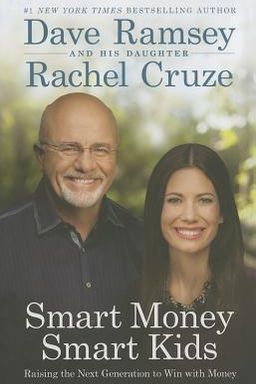
Smart Money Smart Kids cover

Smart Money Smart Kids

by Dave Ramsey & Rachel Cruze

Smart Money Smart Kids offers parents actionable strategies to teach their children financial literacy. Authors Dave Ramsey and Rachel Cruze guide readers through lessons on work, spending, and saving, ensuring kids grow up with the skills needed for financial independence.

Raising the Next Generation to Win with Money

What does it take to raise children who are not ruled by debt, greed, or entitlement but instead grow up confident, generous, and financially free? In Smart Money Smart Kids, financial expert Dave Ramsey and his daughter Rachel Cruze share a step-by-step blueprint for parents who want to give their children not just financial stability but the mindset and behavior to sustain it for life. Drawing on their own family story—from bankruptcy and fear to financial peace and abundance—they argue that smart money habits are built not through complex financial systems, but through daily life lessons taught intentionally at home.

The central claim of the book is simple but profound: personal finance is only 20% head knowledge and 80% behavior. This means you don’t need to be a financial genius to raise money-wise kids. What children need is consistent modeling of discipline, boundaries, generosity, and responsibility. Ramsey and Cruze contend that if you can teach your children to work, spend, save, give, and avoid debt, you can transform not only their lives but your entire family legacy.

Breaking the Cycle of Financial Ignorance

Most parents don’t teach money principles because they were never taught them themselves. As Dave describes, after going bankrupt in his twenties, he and his wife Sharon decided to “change their family tree.” They made a covenant: not only would they never go broke again, but they would raise their children to understand how money works. Rachel, as their daughter, literally grew up as the first “test case” for what became the Ramsey method. This generational turn—from financial chaos to financial peace—is the heart of the book’s message. It’s about legacy, not luxury.

From Theory to Practice: Family as the Classroom

Rather than leaving financial literacy to schools, Ramsey insists that the home is the ultimate classroom for money. Kids learn what they see. If they witness their parents using credit cards, living beyond their means, or stressing about bills, those patterns embed deeply. Conversely, if they see work, saving, giving, and budgeting modeled consistently, those habits become second nature. As with any family tradition—like repairing cars, cooking, or discussing politics—money management is a cultural inheritance.

The book offers stories about families who fought their way out of debt, shouted “We’re debt free!” on Dave’s radio show, and showed up at his office with kids in tow. Those moments, Ramsey explains, don’t just free parents—they change everything for the kids who watch them.

Character Before Cash

A key theme running through each chapter is that money is a mirror of character. Being “money-smart” isn’t ultimately about wealth accumulation—it’s about building discipline, integrity, and stewardship. The Ramseys weave biblical wisdom throughout, highlighting verses such as Proverbs 22:6 (“Train up a child in the way he should go”) and 2 Thessalonians 3:10 (“If anyone will not work, neither shall he eat”). The message: work precedes reward, gratitude grounds generosity, and responsibility builds dignity.

Because money amplifies a person’s existing character, the goal is not to make children rich, but to make them wise. As Rachel puts it, “Money doesn’t change who you are—it makes you more of who you are.”

What You’ll Learn

Throughout the book, Ramsey and Cruze lead readers through a developmental approach to money training, moving from toddlers to young adults. Key stages include teaching work ethic (“work, don’t wish”), introducing commission instead of allowance, explaining the envelope system for spending and saving, and equipping teenagers to pay cash for their first car and go to college debt-free. Later chapters explore how to cultivate contentment in a materialistic world, manage family conflict around money, and guide the eventual handoff of generational wealth responsibly.

Each stage connects practical tools with moral values: budgeting teaches planning; saving teaches patience; giving teaches humility and gratitude. The emphasis is always on experiential learning—children discovering consequences and rewards early while parents provide guidance and grace.

Why It Matters

The importance of this process extends beyond individual households. In an age of student debt, instant gratification, and “buy now, pay later” culture, Ramsey argues that equipping children with financial literacy is a revolutionary act of parenting. He compares it to spiritual discipleship—ongoing, repetitive, and deeply formative. Kids raised this way not only avoid debt; they approach life with confidence, generosity, and resilience.

The essence of the book: Teach your kids to work hard, spend wisely, save patiently, give generously, and live contentedly—because that will change their financial future and, just maybe, the world they inherit.

By the end of Smart Money Smart Kids, you realize the true victory isn’t just about money. It’s about character, stewardship, and freedom. You can’t control the economy, but you can control the kind of adults your children become. And that, Ramsey and Cruze insist, is the smartest investment of all.


Teach the Value of Work

The first foundation of raising a money-smart child is teaching them to work. Ramsey and Cruze argue that work is not punishment—it’s the source of dignity, freedom, and confidence. They draw from their own lives, remembering how Sharon Ramsey’s coupon cutting and chore lists made frugality normal, not shameful. Rachel recalls learning early that money came from effort: “Work, get paid. Don’t work, don’t get paid.”

Replacing Allowances with Commissions

The Ramseys famously despise the word allowance. An allowance, they argue, is “welfare for kids,” implying entitlement rather than effort. Instead, parents should set up a commission system—children earn money by completing jobs appropriate for their age. For example, preschoolers can pick up toys or help set the table, while school-age kids can feed pets or take out trash. Teenagers progress to babysitting, mowing lawns, or even starting microbusinesses like Rachel’s teenage snack shop, “Your Integrity Snacks.”

To connect work with reward, pay should follow quickly after the job is done—especially for younger kids who need immediate feedback. Visual reinforcement, such as a clear jar for dollar bills, lets them see how work builds wealth. Over time, the habit becomes internalized: effort equals income.

Age-Appropriate Training

  • Ages 3–5: Introduce simple household chores and reward with small earnings. Keep it fun and immediate.
  • Ages 6–13: Add responsibility. Use chore charts and pay weekly. Introduce non-paid “family contribution” chores to teach service without reward.
  • Ages 14–college: Transition from commissions to real-world jobs, part-time work, or small businesses. Introduce checking accounts and financial independence.

By gradually expanding a child’s responsibility, parents teach self-sufficiency and grit. These skills extend beyond money—they shape how kids approach education, relationships, and calling.

Work and Self-Worth

Ramsey connects work to dignity: “Teaching a child to work is not child abuse—it’s love.” Work creates a sense of contribution rather than consumption, fighting entitlement and laziness. He notes that children who learn to work respect others who do and seek similar partners later in life—a subtle generational benefit.

The “no work, no pay” rule mirrors real life. But equally important is grace—parents aren’t grading perfection but building principles. Missing a payday occasionally (after forgetful chores) provides teachable consequences, not punishment.

The Ramseys’ core message: Don’t raise consumers—raise contributors. When kids understand that money flows from effort, they value both the reward and the work that made it possible.


Spending with Intention

How do you teach children to spend wisely? Ramsey and Cruze emphasize that real learning happens through failure. Rachel tells of blowing all her hard-earned Opryland theme park money on games within five minutes—and getting no bailout from her parents. Dave’s only words: “When the money’s gone, it’s gone.” That childhood heartbreak taught her one of life’s most powerful financial truths: money has limits.

Let Them Fail Early

The authors insist that parents must resist rescuing their kids from small financial mistakes. Letting a child go without a treat or toy teaches accountability. As Dave notes, “It takes tremendous parental strength to let the pain of stupid decisions be a teacher.” The goal is to build wisdom when stakes are low—so as adults, they won’t repeat those mistakes with cars or credit cards.

Know Your Child’s Money Personality

Ramsey identifies two primary types: spenders and savers. Spenders act on emotion and enjoy instant gratification; savers lean toward security and patience. Neither is inherently better—each has strengths and blind spots. Parents must avoid projecting their own bias (“saving is right, spending is wrong”) and instead help children balance their natural tendencies. A spender can learn delayed gratification; a saver can learn generosity and enjoyment.

(Psychologists echo this point—Daniel Kahneman’s concept of “fast” and “slow” thinkers parallels this spender-saver divide: one acts quickly, the other deliberates. Both can be trained toward balance.)

Using the Envelope System

To prevent overspending, children use three labeled envelopes: Spend, Save, and Give. Money earned through commissions gets divided weekly—for example, one dollar to giving, two to saving, two to spending. That structure mirrors adult budgeting and enforces limits: when the envelope empties, spending stops. For visual learners, this tactile system teaches discipline far better than digital tracking.

Practical Spending Lessons

  • Use opportunity cost scenarios (“If you buy this now, you can’t buy that later”).
  • Teach the “wait overnight” rule: postpone purchases for 24 hours before deciding.
  • Model wise purchasing: show negotiation and budgeting in real time (e.g., Dave bargaining for a better deal on a toy at a flea market taught Rachel that prices can be flexible).

Above all, parents must embody restraint themselves. Retail “therapy,” as Dave warns, sends the wrong message: spending to ease emotion trains kids to use money as medication rather than management.

In short, wise spending is less about math and more about maturity. You’re teaching discernment—the ability to control desires so money becomes a tool, not a master.


The Discipline of Saving

Saving money, the Ramseys write, is both a financial and character exercise. It trains patience, foresight, and maturity. Rachel’s story of saving for her dream car, a yellow Nissan Xterra, illustrates this perfectly. Told she had to pay for half of it under her dad’s so-called “401DAVE” plan, she worked, strategized, and sacrificed for two years—only to realize on the test drive that she didn’t even like the Xterra! The lesson: saving produces not only money, but clarity, humility, and gratitude.

The Psychology of Saving

Research backs up what the Ramseys intuitively teach: saving builds emotional resilience. Studies cited from CNN and Bankrate show that most Americans can’t cover a $1,000 emergency. Children who grow up saving—even small amounts—develop confidence and self-efficacy. Saving transforms “I can’t” into “I can wait.” Each deposit into a jar or account rewires their brains for delayed gratification, countering a culture of instant rewards.

Three Phases of Saving

  • Purchases: Young children save for short-term goals (toys, games). This introduces goal-setting and persistence.
  • Emergencies: Teens should build a $500 emergency fund to take responsibility for small crises—like cracked phones or car repairs.
  • Wealth Building: As older teens and young adults grasp investing, parents can explain compound interest and long-term saving through mutual funds or Roth IRAs.

Ramsey insists that behavior trumps information. Saving isn’t a concept to memorize but a habit to feel. The first time a child buys something from their savings, pride replaces impatience. The brain links effort, waiting, and reward.

Finding the Balance: Grace vs. Legalism

Parents must strike balance when enforcing savings. A story about a mother refusing to pay her son’s tax on a $300 PlayStation—sending him home empty-handed—demonstrates well-intentioned rigidity. Ramsey’s advice: celebrate effort, not perfection. Reward diligence; extend grace when goals are nearly met. The goal isn’t rule-following—it’s internal motivation.

Teach saving, but make it redemptive, not punitive. Saving should empower, not discourage. When children understand that patience equals power, they discover the real freedom that money can offer.


Creating Givers, Not Takers

For Dave and Rachel, giving is the heart of healthy financial life. It’s also the ultimate cure for selfishness and materialism. “It’s not yours anyway,” Dave reminds readers, grounding their philosophy in biblical stewardship. Money, they argue, is never truly owned—it’s managed on behalf of God. That mindset transforms giving from an obligation into a joy.

The Spirit of Stewardship

Drawing on medieval origins of the word “steward,” Ramsey shows that a steward managed the resources of a lord, enjoying their benefits but never claiming ownership. When families adopt this attitude, generosity becomes natural. A $10,000 company donation, he notes, didn’t feel burdensome because “it wasn’t ours—it was God’s.” Teaching children that money is God’s builds humility and liberates them from greed.

Modeling Giving

Rachel recalls watching her parents drop their tithe check into the red velvet offering bag each week. They didn’t lecture; they modeled. That quiet, consistent act taught her more than any speech could. To make giving visible today—especially in the age of online banking—parents should let children see generosity in action. Whether writing checks or volunteering, seeing giving happen embeds its meaning.

Teach the Give Envelope

For young children, giving begins with a dedicated Give envelope. Contributing their own money—rather than a parent’s dollar—to weekly offerings builds emotional ownership. It’s not about the amount but the habit. As Rachel quotes John D. Rockefeller: “I never would have tithed my first million if I hadn’t tithed my first salary of $1.50.”

Time, Talents, and Treasure

Giving, Ramsey teaches, extends beyond money. Families should serve through time, using talents alongside financial treasure. Rachel’s story of taking underprivileged girls shopping with her mother’s money illustrates this idea beautifully: it combined her love of fashion with generosity, producing joy on both sides. These “bubble-bursting” moments help privileged children encounter real need and gain perspective.

Dave recounts similar family projects—delivering gifts to families through Angel Tree or participating in secret “12 Days of Christmas” missions. Not every attempt goes perfectly, but as he reminds readers, “Giving isn’t about the response—it’s about the heart.”

Generosity inoculates children against entitlement. A grateful, giving heart leaves no room for greed. The more your kids learn to give, the more fulfilled—and free—they become.


Teaching Teens to Budget and Plan

Budgeting, says Rachel, is simply telling your money where to go instead of wondering where it went. For teenagers, it’s their first real-world exercise in adult responsibility. Ramsey encourages parents to start early by modeling their own family budget, then gradually letting teens take the reins.

Start at Home

Even young children learn budgeting through the envelope system, but teens need something bigger—a bank account. At age fourteen, the Ramsey kids opened checking accounts into which their parents deposited money for clothes, entertainment, and necessities. Instead of doling out cash, Dave gave them one lump sum a month and said, “Here’s what you have—manage it.” If they overspent, they faced the consequences. If they budgeted well, they gained pride and independence.

The Five Foundations

To help teens prioritize, Ramsey created “The Five Foundations,” a roadmap for young adults:

  • Save a $500 emergency fund
  • Get out of debt
  • Pay cash for a car
  • Pay cash for college
  • Build wealth and give

Each foundation lays the groundwork for the next. The goal isn’t perfection but intentionality—deciding ahead of time where every dollar will go. Rachel recommends a “zero-based budget,” where income minus expenses equals zero on paper.

Guided Independence

Parents should coach rather than control. Review budgets monthly, discuss choices, and allow failures within a “safe learning zone.” When mistakes happen—such as Rachel’s teenage bounce checks—use them as lessons, not lectures. (Her father famously made her meet with the branch manager to apologize for “lying” about having money. That mortifying experience ensured she never overdrew again.)

Ultimately, budgeting flexibility helps teens prepare for adult decisions: weddings, apartments, and charity. As Dave says, “A budget isn’t a straitjacket—it’s freedom written on paper.”

The teenage budget phase is rehearsal for adulthood. When kids master budgeting early, they don’t just manage money—they master themselves.


Escaping the Debt Trap

Debt, the Ramseys insist, is a modern form of slavery. “The borrower is slave to the lender,” Dave quotes from Proverbs 22:7. Throughout his career, he’s met thousands of families crippled by loans they believed were normal—car notes, student loans, even credit card perks. In truth, debt chains families to perpetual stress and robs children of future freedom.

Debunking Cultural Lies

The book exposes society’s most destructive myths: that you must “build credit,” that car payments are permanent, and that student loans are “good debt.” Ramsey dismantles each claim. FICO scores, he notes, measure nothing but borrowing behavior—not wealth, not stability, not generosity. A zero credit score, he proudly declares, simply means you owe no one. To truly win, you must love freedom more than convenience.

Credit Cards and Cars

Parents must make credit visible and understandable. Dave dramatizes the emotional difference by laying a debit card next to fifty $10 bills and asking his teens which “feels real.” Research shows that people spend up to 30% more when using plastic because cash feels painful—a pain families should preserve. Rachel recalls how her husband, Winston, used a credit card on their early dates; they later laughed, but she also knew she’d only marry someone willing to cut it up.

Car debt, too, is a cultural epidemic. The average $492 monthly car payment drains wealth steadily. If instead that sum were invested monthly, a person could retire with over $5 million. Teaching kids to pay cash for used cars puts them instantly ahead of peers chained to loans.

Debt-Free College

Perhaps the most urgent message targets student loans. With national debt surpassing $1 trillion, Ramsey calls it a generational crisis. His solution? Work, scholarships, community college, and realistic school choices. He reminds readers that education is a purchase—a massive one—and must be treated accordingly. The Ramsey family’s rule was simple: attend an in-state college, graduate in four years, and stay debt-free.

He tells of students who achieved this through hard work—like one young woman whose mother made her submit two scholarship applications a day until she secured over $500,000 in awards. “The money is there,” Rachel insists, “but you have to chase it harder than you chase the dream school.”

Debt isn’t a financial tool—it’s a freedom killer. Teaching your kids early what debt truly costs ensures they’ll never trade peace for payments.


Cultivating Contentment and Gratitude

In an age of hypermarketing and comparison, Ramsey warns that the greatest threat to your child’s financial health isn’t debt—it’s discontent. “You are at war for your child’s heart,” he writes, against a culture that preaches ‘more, newer, now.’ Contentment is the antidote. A grateful heart, he argues, is immune to jealousy and anxiety.

The War of Comparison

Children today face an onslaught of advertising and peer pressure. Every holiday, app, and influencer tells them they’re missing something. This marketing-driven dissatisfaction breeds entitlement. Ramsey calls it “a socially acceptable drug.” Parents must recognize these messages early and fight them with boundaries, gratitude, and perspective.

Fighting Discontentment at Its Stages

  • Stage One – Jealousy: Wanting what others have. Teach kids to celebrate others’ blessings, not envy them.
  • Stage Two – Anxiety: Constant comparison and inadequacy. Cure it by cutting off the source—limit social media or harmful friendships.
  • Stage Three – Identity in Stuff: Defining self-worth by possessions. Replace “I’ll be happy when…” with gratitude journaling and giving practices.

Rachel’s own breakthrough came during a mission trip to Peru. Watching children with nothing radiate joy changed her perspective. A little girl who gave Rachel her only toy—a worn keychain doll—taught more about wealth than any finance class could: real riches are measured in gratitude.

Daily gratitude rituals—like shared prayers, volunteering, or writing thank-you notes—anchor children emotionally. As Dave summarizes, “A grateful heart leaves no room for discontentment.”

Teach your children to be content where they are while striving for where they’re going. Gratitude transforms money from a master into a means for joy.

Dig Deeper

Get personalized prompts to apply these lessons to your life and deepen your understanding.

Go Deeper

Get the Full Experience

Download Insight Books for AI-powered reflections, quizzes, and more.