
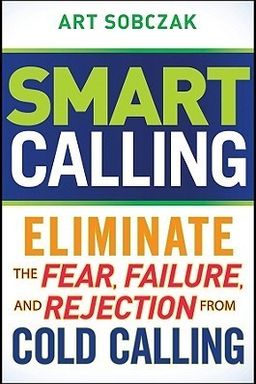
Smart Calling cover

Smart Calling

by Art Sobczak

Smart Calling revolutionizes the art of cold calling by eliminating the fear and rejection associated with it. Through strategic planning and digital tools, this book guides salespeople to engage prospects meaningfully and effectively, turning daunting calls into productive experiences.

Smart Calling: Turning Cold Calls into Confident Conversations

What if picking up the phone to call a stranger didn't feel nerve-wracking anymore? In Smart Calling, Art Sobczak flips the traditional idea of cold calling on its head. He argues that cold calling—reaching out blindly, reading canned scripts, and facing predictable rejection—is both dumb and outdated. What works instead, he says, is Smart Calling: a research-driven, empathetic, and conversational approach that removes fear and builds genuine human connections. Sobczak’s core claim is simple but profound: rejection isn’t inevitable—it’s preventable when you make the call about them, not you.

The Heart of Smart Calling

Sobczak begins by redefining prospecting itself. He insists that the phone remains one of the most powerful and direct tools for business development—but only for those who know how to use it intelligently. A “smart call,” he explains, means gathering intelligence beforehand, crafting messages tailored to a specific prospect’s situation, and speaking conversationally rather than pitching products. It’s about demonstrating relevance and value from the very first sentence so that buyers actually want to talk.

Rather than teaching you to sell harder or use psychological tricks, Sobczak emphasizes preparation, empathy, and professionalism. He argues that every call should start with a solid Possible Value Proposition (PVP)—a single, customized reason explaining why this prospect might benefit from talking to you. In other words, you don’t sell a “thing”; you sell the result they want. This shift, from pushing to discovering, turns a cold call into a warm conversation.

Replacing Fear with Confidence

Sobczak knows most salespeople dread calling strangers. The fear of rejection, he says, comes from not knowing what will happen next—or worse, knowing exactly how bad it will feel when someone hangs up. His antidote? Structure. He presents phone sales as a predictable process of research, questioning, listening, and recommending next actions. When you follow a proven pathway—instead of improvising like a desperate telemarketer—you replace anxiety with confidence.

A big part of that structure involves redefining what success looks like. Sobczak’s concept of “secondary objectives” ensures that you never actually lose; even if you don’t close the sale, you can still accomplish a win—like gaining information, building goodwill, or planting a seed for future business. This mindset (similar to concepts in Go for No by Richard Fenton and Andrea Waltz) reframes rejection not as failure but as a stepping stone toward confidence and mastery.

Information: The Fuel of Smart Calls

The book’s process starts with preparation. Sobczak introduces the art of “social engineering”—positive, ethical information gathering from people inside a company. This, combined with online research using tools like LinkedIn and Google Alerts, gives you an understanding of a prospect’s world before the first call. He draws parallels to Robert Cialdini’s Influence and Harvey Mackay’s Swim with the Sharks by advocating that persuasion begins with relevance: knowing what your prospect cares about, fears, or values most.

Armed with that intel, you craft openings that pique curiosity and reduce resistance. Sobczak dedicates substantial chapters to openings—explaining exactly what to avoid (“Can I help you?”, “Thanks for taking my call”) and how to build interest by referencing something you know about them, hinting at value, and transitioning into questions. The idea is to connect quickly and move the conversation forward without sounding like every other salesperson.

Questions and Listening: The Smart Caller’s Toolkit

Once you’ve opened the door, Sobczak teaches how to ask “Smart Questions”—those that assume value, reveal pain points, and help prospects articulate needs themselves. These aren’t interrogation-style questions but collaborative prompts such as “What happens when your delivery runs late?” or “How would smoother scheduling affect your department?” When they answer, you listen—not to respond, but to understand. His “Iceberg Theory” of questioning underscores this: the first answer you hear is just the tip; the real information lies below the surface.

The next phase focuses on recommending—not pitching. Sobczak despises “pitches” because they’re one-way monologues; instead, he models “recommendations,” grounded in information the prospect just provided. This reinforces credibility and creates what Cialdini calls “consistency”—people saying yes because it aligns with what they already told you.

From Prospect to Partner

Smart Calling culminates in the art of securing commitment. Sobczak’s strategies for closing—and more importantly, for continuing—calls turn fleeting interest into actionable next steps. He discourages manipulative closes and instead encourages authentic, collaborative ones such as “Where do we go from here?” or “What makes sense next?” He sees selling as a series of progressive commitments, not pressure tactics.

Throughout the book, Sobczak reinforces motivation. He’s realistic: not every call will go perfectly, but each provides a learning opportunity. He encourages readers to review calls, keep notes using his ACTION model (Authority, Commitment, Timing, Interest/Need, Overview, Notes), and end each day on a positive note. In his world, every call moves you forward—whether by earning a client, gaining new insight, or improving your craft.

Ultimately, Smart Calling isn’t just about sales technique; it’s about professional transformation. Sobczak wants you to stop being a “cold caller” and start being a confident consultant who uses the phone to build trust, demonstrate value, and create opportunity. As you read, you realize that prospecting isn’t a punishment—it’s a skill that, when done smartly, can change your career and your mindset for good.


The Psychology Behind Smart Calling

Art Sobczak begins with the psychology of fear and rejection in sales. Most people avoid phone prospecting not because it doesn’t work, but because it feels humiliating. Cold calling, he writes, is defined by uncertainty: you don’t know who answers, what they’ll say, or how you’ll sound. The antidote is structure, preparation, and a focus on buyers rather than yourself.

Changing the Story You Tell Yourself

Sobczak emphasizes that the stories we tell ourselves shape our sales outcomes. If your inner dialogue says, “I’m intruding,” or “They’ll reject me,” your tone reflects fear. Instead, he encourages replacing those false stories with empowering ones like, “I help professionals solve real problems.” This mindset parallels Jim Fortin’s concept of transforming your being—seeing yourself first as a successful, confident professional before acting like one.

Sobczak also dismantles myths of sales statistics and “numbers game” thinking. The point is not quantity but quality. He compares reps who speed-dial hundreds of names with those who target carefully—the latter always win. You can’t swing at every pitch; you must aim for connection and relevance.

Reframing Rejection and Failure

To him, rejection isn’t something that happens to you—it’s how you interpret what happens. Using examples of two reps responding differently to nos, he shows that attitude transforms outcomes. If you see a “no” as information (“Not right now”) rather than rejection (“They hate me”), you free yourself from fear. He even shares stories of companies enforcing upbeat endings—salespeople can’t leave for the day unless their final call ends positively, ensuring morale remains high.

Sobczak’s argument aligns with behavioral psychology and sales classics like The Greatest Salesman in the World and Go for No. The best call outcomes depend on emotional resilience. You don’t conquer fear by avoiding calls but by doing them smartly—seeing every conversation as a win, whether or not it closes a deal.


Pre-Call Planning and Intelligence Gathering

Before picking up the phone, Sobczak insists that you “get smart.” You don’t call people blindly; you build context. Researching prospects, organizations, and industries converts cold calls into informed conversations. He calls this social engineering—an ethical method of asking questions within a company to uncover useful intelligence before talking with decision makers.

Sources of Smart Information

Sobczak presents several ways to gather pre-call insights: LinkedIn profiles, company websites, press releases, trade journals, and smart Google searches. You can find trigger events—like promotions, expansions, or lawsuits—that make prospects reconsider suppliers. Tools such as Google Alerts or sales intelligence platforms (e.g., Seamless.ai) can automatically deliver updates in your inbox.

Social Engineering in Practice

He gives examples of calling assistants or department staff not to “get past” them but to establish rapport and gather insider knowledge. For instance, when speaking to a receptionist, you might ask, “I’m calling about the upcoming product launch—what’s the best way to reach your marketing head?” This builds trust and makes your eventual conversation with the prospect far smoother. Sobczak treats everyone—from gatekeepers to clerks—as valuable contributors to your intelligence.

The principle mirrors Robert Cialdini’s rule of reciprocity: when you show respect and curiosity, people naturally help you. Sobczak includes vivid stories of assistants influencing decisions because they liked the caller—a reminder that rapport and kindness can be tactical advantages.


Crafting Interest-Creating Openings

The first ten seconds of any call are make-or-break. Sobczak’s rule: eliminate resistance and earn attention quickly. His research shows most calls fail because reps sound salesy, curt, or generic. In his chapters “Opening Statements” and “Creating Interest,” he provides a blueprint for what to say—and what never to say.

Elements of a Smart Opening

A proper opening has seven parts: introduce yourself, mention your connection, state your specialty, describe a possible problem or desire, hint at your value proposition, share a result, and transition smoothly into questions. He writes dozens of examples demonstrating this pattern, proving that research and relevance matter more than charisma. For instance, “I saw your LinkedIn post about your hiring challenges—many of our clients reduce turnover by 20% using our solution. I’d like to ask a few questions to see if this might be useful for you.”

What Not to Say

Sobczak destroys cliché openings like “Can you help me?”, “Do you have a minute?”, or “I was just calling to introduce myself.” These phrases trigger defensive reflexes. Instead, he advocates “weasel words” such as might, perhaps, and depending—softeners that reduce pressure and invite curiosity. He also encourages status alignment (from Oren Klaff’s Pitch Anything): speak their language, show domain knowledge, and position yourself as an equal, not a subordinate.

Sobczak’s openings sound natural, conversational, and confident—like chatting with a peer who has done homework. This radically separates Smart Callers from robotic telemarketers and builds immediate trust.


Overcoming Resistance and Turning Nos into Dialogue

Sobczak acknowledges that even the best openings sometimes meet resistance. When a prospect says, “I’m not interested,” they’re reacting reflexively, not rationally. The author teaches pattern interrupt techniques to disarm this auto-response and get them talking.

Pattern Interrupts and Softening Statements

Instead of arguing, he suggests replying with calm curiosity: “Oh, I see. Who are you working with now?” or “Interesting, when will you review that process again?” The sudden, polite question interrupts their mental script. Adding softeners like “That’s not a problem” or “I understand” makes you sound collaborative rather than combative.

These approaches mimicking conversational human behavior are drawn from psychology and NLP (neurolinguistic programming). The goal isn’t manipulation—it’s engagement. Once prospects start talking about their situation, resistance naturally dissolves.

From Resistance to Opportunity

He also arms you with responses to common brush-offs like “We’re happy with our vendor” or “Send me some literature.” His advice: qualify the request with questions such as “So I can tailor this for your context, could I ask what’s most important to you right now?” That keeps conversation flowing and distinguishes you from the flood of transactional callers.

Over time, using these tools transforms rejection from an emotional blow into a learning signal—something to analyze and refine through your next Smart Call.


Smart Questions and Deep Listening

Smart Calling’s midsection is all about conversation mastery—learning to ask questions that reveal pain, quantify value, and help prospects articulate their own needs. Sobczak’s “Smart Questions” are designed to uncover the emotions and economics driving decisions.

The Iceberg Theory

Most salespeople stop at surface-level answers; Smart Callers go deeper. The “Iceberg Theory” shows that everything beneath the initial response contains actionable insight. You reach it by asking “one more question.” For instance, if a buyer says “Delivery times are important,” follow up with “Tell me why that’s critical for your operations.” This second question uncovers pressure points, timelines, and motivations you can solve directly.

Quantifying Value

He urges reps to attach numbers to pain—how much money, time, or productivity they lose without you. Once quantified, your recommendation appears as tangible ROI. And to make questions sound natural, Sobczak suggests replacing stiff inquiry phrases (“What challenges are you facing?”) with casual ones (“What’s getting in your way lately?”).

Extreme Listening

Listening transforms everything. Sobczak quotes Mark Twain: “No word was ever as effective as a rightly timed pause.” He introduces verbal nods (“Uh-huh,” “Tell me more”) and a “stop breathing” technique—pausing before replying to ensure you’ve heard fully. By tuning in to tone and word choice, you discover what matters most to prospects. The more they talk, the more they sell themselves.


Recommending, Not Pitching: The Art of Conversation Selling

Sobczak despises the word “pitch.” Pitching, he says, belongs on a baseball field—not in a sales call. Selling isn’t about “spraying and praying”; it’s about recommending based on mutual understanding.

The Smart Call Recommendation Process

After listening, summarize what you heard (“Let me make sure I understood correctly”), then bridge to how your solution addresses specific issues. This creates continuity and validation. Use benefits framed as results (“What that means for you is...”) rather than features. Then invite commitment with gentle questions: “Does that make sense?” or “Would that work for you?”

Using Social Proof and Consistency

Borrowing from Robert Cialdini, Sobczak demonstrates two persuasive principles: social proof (people believe others’ success stories more than promises) and consistency (people act in ways consistent with what they’ve said). For example, “Our client in your industry told us their downtime dropped by 45%. You mentioned reliability was crucial—would that help?” These subtle connections make agreement feel like a natural next step.

He also teaches preconditioning—framing statements positively (“Here’s the good news”) so prospects listen with optimism. Selling is emotional, and tone determines perception.


Securing Commitment and Following Up Effectively

Closing, to Sobczak, isn’t an end—it’s validation. You’re merely confirming what’s already been discussed. Instead of coercive closing tricks, he advocates natural commitment questions (“What makes sense next?”). This removes fear, increases honesty, and keeps calls moving forward.

Commitment Philosophy

Each call should end with a clear agreement—what they’ll do and what you’ll do next. Whether reading a proposal or scheduling a demo, small commitments build momentum. He presents dozens of examples: “Will you review those numbers before Monday?” or “Can we circle back Thursday after your meeting?” This specificity breeds accountability.

Following Up the Smart Way

Sobczak contrasts vague follow-ups (“I’ll call in two weeks”) with precise ones (“Let’s chat Friday at 11:15 your time—does that work?”). He teaches sending summary emails immediately after calls confirming mutual tasks. His ACTION model ensures organized notes—Authority, Commitment, Timing, Interest/Need, Overview, Notes.

He even proposes a “last resort question” before giving up: “Could you ever see a situation changing where this might be possible for you?” This salvages future opportunity. Every call, he reminds you, sets up the next one—success builds cumulatively.


Motivation and the Mindset of a Smart Caller

Sobczak ends the book with a motivational call to action: Smart Calling works only if you do it. Prospecting is a performance sport—progress depends on repetition and reflection. He challenges readers to take action immediately, not wait for perfect conditions.

Transforming Fear into Energy

He argues motivation must come from within. Managers or trainers can’t inject it. You drive your own belief system by committing to confident activity and rewarding incremental improvement. Sobczak references motivation experts like Dr. Alan Zimmerman and Jim Fortin to reinforce that action flows from identity—be the kind of person who calls, even when it’s hard.

Think Big and Stay Positive

Finally, Sobczak insists success starts with high expectations. Think bigger clients, higher-level contacts (VITOs—Very Important Top Officers from Anthony Parinello’s Selling to VITO), and bolder objectives. He urges you to keep notes, track wins, and never end a day on a negative call. Persistence, attitude, and process—PAP—are his final mantra.

Smart Calling transforms selling from anxiety to mastery. The phone becomes a stage, and confidence the spotlight. As Sobczak concludes, each call—done right—earns not just sales, but self-respect. That’s the mark of a true smart caller.

Dig Deeper

Get personalized prompts to apply these lessons to your life and deepen your understanding.

Go Deeper

Get the Full Experience

Download Insight Books for AI-powered reflections, quizzes, and more.