
Idea 1
The Cost of Belonging and the Price of Truth
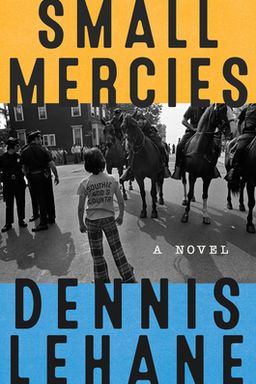
What would you do when the only world you've ever known turns out to be built on lies? In Small Mercies, Dennis Lehane explores this question through the searing story of Mary Pat Fennessy, a South Boston mother in the summer of 1974, whose teenage daughter goes missing just as Boston is being forced to desegregate its public schools. The result is both a propulsive thriller and a devastating social reckoning. Lehane argues that the tribal loyalties we cling to—our communities, our clans, our histories—can become the very cages that trap us, keeping us tangled in hate long after the reasons for that hate have vanished.
The book is set against one of Boston’s most explosive historical moments: the court-ordered integration of schools through the new busing law. For Southie, a proud, working-class Irish enclave, the policy represented not progress but invasion. Lehane uses this historical reality as a crucible to test his characters. Through Mary Pat’s desperate search for her daughter Jules, we see a neighborhood’s values collide with its fears and expose a deeper moral decay beneath its blue-collar pride.
A Mother, a Missing Daughter, and a City at War
At its core, this is a story about love—a ferocious, flawed, and ultimately transformative love. Mary Pat has already lost one child to the Vietnam war and her second to Southie’s suffocating limits. Her search for Jules becomes a brutal pilgrimage through every layer of Southie’s underbelly: the corruption of Marty Butler’s criminal empire, the misogyny and self-loathing baked into its culture, and the racism that defines its understanding of survival. By the time she discovers the truth, Mary Pat realizes that the walls that once made her feel safe were never walls of protection but of confinement.
The missing daughter story also mirrors a city’s loss of innocence. The summer of 1974 was one of unbearable heat—socially and literally. Lehane’s descriptions of “the swelter,” the sweat, and the tension make the book read like a fever dream. The desegregation crisis becomes a metaphor for the cracks appearing in America’s racial myth—where good, hardworking white people could no longer pretend their success existed separate from systematic exclusion. By setting Mary Pat’s personal crisis amid this political one, Lehane forces the reader to ask: how far would we go to hold on to our illusions of righteousness?
The Anatomy of Tribalism
Lehane’s Southie is as much a state of mind as a place. Its residents live by their own commandments: loyalty above all, never trust outsiders, and don’t talk to cops. For Mary Pat, these laws are the oxygen she’s breathed her entire life. When her daughter disappears, those same rules ensure her silence and isolation. The people who claim to protect her—men like Marty Butler, the local mob boss masquerading as a community savior—are the same forces that have exploited her poverty for decades. The novel’s central tension grows out of this paradox: what happens when belonging costs you your soul?
Lehane invites the reader to compare Southie’s tribalism to any tightly knit group that defines itself through opposition. Like the Sicilian networks in The Godfather or the intergenerational loyalties in Elena Ferrante’s Naples novels, solidarity here is both bond and bondage. What begins as protection from a hostile city becomes a weapon turned inward. You can’t leave, because to leave is betrayal. You can’t question, because to question is treason.
Violence, Gender, and Class
One of Lehane’s great talents has always been his ear for working-class speech and his compassion for its exhaustion. Mary Pat and her neighbors are not cartoon villains—they’re trapped in a world with no exits. The men drink, fight, and die early. The women endure, working double jobs and pretending that faith or family will save them. The tragedy of Small Mercies lies in its recognition that every form of oppression—from addiction to sexism to racism—feeds another. The Butler crew’s heroin trade destroys Southie from within as surely as its leaders blame every problem on “outsiders.”
Through Mary Pat, Lehane captures how women are both the backbone and the invisible casualties of such communities. Her suffering becomes an indictment—not only of a criminal syndicate but of the social blindness that made it inevitable. She begins as a woman shaped by her surroundings, but ends as their destroyer.
Why It Matters Now
In today’s polarized political climate, Lehane’s Boston feels hauntingly familiar. The echoes of Southie’s fury can be heard in modern populist rage, where fear of loss masquerades as morality and where belonging still demands an enemy. Small Mercies reminds you that racism isn’t only about color but about hierarchy—the desperate need to be above someone else when the world gives you so little. The book’s violence, its grief, and its flashes of tenderness all serve one question: can love survive when everything around you teaches hate?
Lehane’s answer isn’t optimistic, but it’s honest. Like Mystic River before it, this is a story of ordinary people caught in systems too monstrous to confront and yet, somehow, compelled to fight anyway. Small Mercies insists that truth is never free—it costs everything you believed kept you alive. But maybe, Lehane suggests, truth is the only way to start over.