
Idea 1
Growing Up Between Worlds
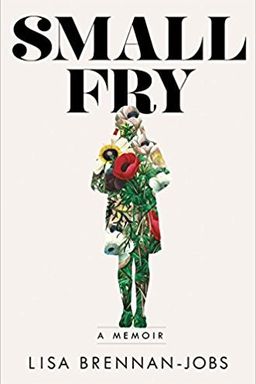
What does it mean to come of age inside fame’s bright shadow but without its warmth? In Small Fry, Lisa Brennan‑Jobs investigates that question through the lens of her own childhood with Steve Jobs and her mother, artist Chrisann Brennan. The book is less a celebrity memoir than an inquiry into belonging—what love costs when it’s intermittent, what identity forms when affection depends on performance, and how a child forges dignity in the tension between art and technology, scarcity and abundance.
Lisa’s journey unfolds as a study of two households and two emotional economies. On one side is her mother’s fragile, improvisational world—marked by instability, creativity, and survival through artistic making. On the other side stands her father’s world—polished, intellectual, and controlled by the rhythms of Silicon Valley. Between them Lisa develops a third space of her own: a hybrid identity where craft, observation, and self‑awareness become survival tools.
Dual Architectures of Childhood
Her mother’s realm is full of motion: thirteen moves before age seven, welfare checks, art projects, and breakdowns. Yet that instability births resourcefulness. Chrisann sees art as armor—turning refuse into sculpture, teaching students to paint trees by spirit rather than outline. Through her, Lisa learns that beauty can be a form of resistance.
Her father’s homes—furnished rooms in Los Altos, Woodside, and the marble apartment in the San Remo—offer glamour and ritual instead. He curates dinner tables, car rides, and hot‑tub nights like stage sets. Presence itself becomes performance: Steve demonstrates a new computer as if unveiling himself. To be near him is to experience charisma wrapped in absence.
Performance, Power, and Conditional Love
Public genius bleeds into private demand. Steve’s affection operates through tests and reversals—offering gifts or access, then withdrawing them. He teaches typography and design precision with tenderness, then mocks her mother’s singing or declares Lisa “not part of this family” when she resists a rule. Love becomes currency traded for obedience. You learn, as Lisa does, that proximity to fame rarely guarantees warmth; instead it trains you to anticipate moods and earn praise as protection.
In contrast, her mother’s volatility invites intimacy but little predictability. Fights that erupt into screaming end in late‑night comfort. You see how affection and chaos intertwine—how both parents mirror artistic creation’s extremes: genius, breakdown, improvisation, and the hunger to be seen.
Aesthetics as Survival
Art becomes Lisa’s language for holding together contradictions. Lessons about brushstroke, color, and seeing “what is really there” turn into moral lessons about perception. In this world of adults who distort truth—through denial, mythmaking, or performance—seeing clearly becomes a way to stay sane. Her mother’s Trash Buddha sculpture (a glowing figure built from garbage) embodies that ethos: transform what’s discarded into meaning.
At school she extends that discipline outward. Praise from teachers, wins in debate, and the eventual Harvard acceptance are acts of repair: performances meant to prove worth in a family that trades affection unevenly. Success emerges as survival, not vanity.
The Emotional Economy of Status
Money, gifts, and reputation shape how these relationships move. Child‑support checks open apartments; a bed from her father feels like recognition; a stolen bill from his drawer exposes both entitlement and emptiness. Lisa learns to read material tokens as emotional instruments—each gift a question: Does he see me? Does she forgive me?
When she begins living with her father full‑time, belonging requires a bargain: choose him, sever her mother for six months. The promise of stability hides another test. Inside the new household she must perform gratitude and poise. Ritual replaces intimacy—perfect table settings, aesthetic control, the illusion of harmony that photographs preserve but daily life betrays.
The Ethics of Memory and Repair
Throughout, Small Fry reminds you that memory itself is contested terrain. Photos, court documents, DNA results, and novels by her aunt Mona Simpson all contribute to rewriting the family archive. Lisa must decide how to tell a story that includes both cruelty and love, both public myth and private wound. When Steve apologizes on his deathbed—“You were not to blame”—it’s a small but seismic acknowledgment. The apology doesn’t erase what preceded it, but it allows a re‑reading of the past through compassion rather than blame.
The heart of Small Fry lies in this paradox: love withheld can shape as powerfully as love given. Lisa’s story becomes not about condemning genius but about tracing the cost of brilliance for those orbiting it.
By the end, you witness a transformation. The child who once gauged worth by attention learns to claim it through craft and clarity of vision. She accepts that reconciliation does not undo harm, yet it can humanize both sides. Small Fry ultimately teaches that identity built between worlds can hold both—the ache of incompleteness and the artistry of survival.