
Idea 1
The Making of the Long Twentieth Century
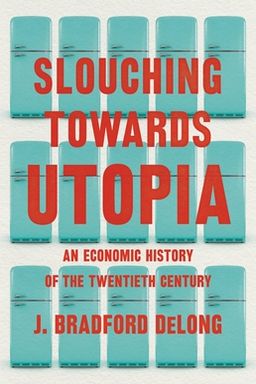
If you want to grasp why J. Bradford DeLong calls 1870–2010 the long twentieth century, you need to see it as the first era when technological and organizational progress permanently broke free from the Malthusian trap. Before 1870, population growth tended to eat any productivity gains. Afterward, mass innovation and global integration made sustained prosperity possible. This book traces how that economic acceleration reshaped politics, society, war, and ideology across the world.
The Economic Watershed
DeLong argues that three intertwined inventions—global transport networks, the industrial research laboratory, and the modern corporation—mark the watershed. Together they institutionalized technological progress, organized mass production, and enabled global markets. Between 1870 and 2010, the pace of useful knowledge deployment rose roughly fourfold, transforming the world from scarcity to abundance. Humanity became capable of multiplying productive capacity faster than population.
The era introduced what DeLong and Richard Baldwin call the first unbundling: cheap transport and communication separated production from consumption. Steamships, railways, and submarine cables made goods, capital, and people mobile on a global scale. Millions migrated; global trade doubled its share of global output. Yet industrial know‑how stayed clustered in advanced districts, producing both convergence and divergence.
Inventing How to Invent
The industrial research lab and corporate hierarchy created a social technology of innovation itself. Edison and Tesla’s rivalry or Ford’s assembly line illustrate this new model: the laboratory discovers while the corporation translates and distributes at scale. These systems drove exponential technological change while simultaneously disrupting livelihoods through creative destruction (Schumpeter’s phrase).
Empire, Inequality, and Divergence
The prosperity explosion did not spread evenly. Imperialism tethered large parts of Asia, Africa, and Latin America to extractive economies. India, Egypt, and China fell under formal or informal European control that blocked autonomous industrialization. Japan’s Meiji Restoration stands as the successful exception—showing that active state capacity and technical education could enable catch‑up. The lesson is institutional: countries that built learning communities and stable investment regimes could industrialize; those stuck with colonial extractive structures stayed poor.
Market, Society, and Political Experiment
As prosperity and inequality grew, societies wrestled with the balance between market autonomy and social protection. Hayek championed spontaneous market coordination; Polanyi warned that society always mounts a counter‑movement to protect land, labor, and money from pure commodification. Keynes offered the synthesis—markets for efficiency, macro management for stability, and social safety nets for legitimacy. Postwar social democracy embodied this triad until its neoliberal rollback decades later.
Conflict and Reinvention
The book unfolds through recurring crises—wars and depressions that tested institutional frameworks. World War I shattered Europe’s imperial order; the Great Depression exposed monetary and demand failures; totalitarian ideologies—Stalinism and Nazism—revealed what happens when planning or nationalism devour freedom. World War II proved industrial output determines victory; the Cold War rebuilt an institutional order under U.S. hegemony and containment.
Globalization, Technology, and Fragility
After 1945, Bretton Woods institutions revived trade and stability; containerization and microelectronics powered a second wave of globalization. But financial fragility and inequality resurged by the end of the century. The 2007–2009 crash, echoing the 1930s, demonstrated that financial innovation without trusted safeguards breeds systemic collapse. DeLong’s broader message: progress is real but not self‑correcting. Prosperity depends on institutions that can translate technical improvement into inclusive social advancement.
Core Insight
The long twentieth century shows that sustained growth stems from institutionalized innovation and managed globalization—but only societies that balance markets, governance, and inclusion turn that growth into genuine well‑being.