
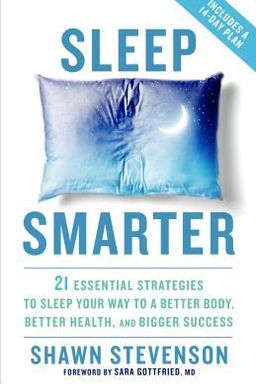
Sleep Smarter cover

Sleep Smarter

by Shawn Stevenson

Sleep Smarter is your essential guide to transforming your nights through science and practical strategies. Discover how to improve sleep quality, boost health, and increase daily productivity. Start your journey to better rest and bigger success tonight!

Sleep as the Secret Catalyst for Health and Success

How well did you sleep last night? If you’re like most people, the answer may be “not great”—and that’s exactly the problem Shawn Stevenson sets out to fix in Sleep Smarter. This isn’t just another wellness book filled with fluffy advice about getting eight hours of rest. Stevenson argues that sleep isn’t a luxury or a passive activity—it’s an active, biological process that underpins every function of your mind and body. He contends that improving the quality of your sleep is the fastest, most effective way to upgrade your health, performance, and happiness.

In Sleep Smarter, Stevenson blends cutting-edge science with lived experience. After struggling with degenerative bone disease and chronic pain as a young man, he discovered that the path to healing wasn’t found solely in exercise or nutrition—it began with better sleep. Within weeks of adjusting his sleep habits, his energy, body composition, and mobility transformed. This personal revelation became the basis for a career dedicated to teaching others how to harness the regenerative power of sleep. He insists that understanding sleep’s mechanisms—its relationship to hormones, light, temperature, diet, and even mindset—will unlock extraordinary results in every area of life.

Sleep as Biology’s Regeneration Window

Sleep, Stevenson explains, isn’t simply downtime. It’s when your body performs maintenance and construction. During deep sleep, growth hormone floods your system, rebuilding muscles and tissues, regulating metabolism, and balancing blood sugar. In REM sleep, your brain consolidates memories and clears waste through a mechanism called the glymphatic system—essentially your brain’s nightly detox. Without adequate sleep, the body’s repair systems slow, hormones misfire, and aging accelerates. Stevenson reminds us that sleep deprivation is linked to diabetes, heart disease, cancer, depression, and weight gain. “Sleep is the secret sauce,” he writes—it enhances every other health practice by amplifying their results.

The Modern Sleep Crisis

Stevenson describes modern society as being locked in a sleep crisis. Artificial light, screens, caffeine addiction, late-night work culture, and chronic stress have disrupted our circadian rhythms—the internal 24-hour clock that governs hormone release and sleep-wake cycles. Humans evolved to wake with sunlight and rest with darkness, but our routines now ignore those natural cues. We sleep in rooms flooded by blue light from smartphones, eat late into the night, and keep our bodies metabolically overstimulated. The result is millions of people operating with “biological jet lag,” their hormones confused about what time it is.

From Sleep Quantity to Sleep Quality

Stevenson’s central argument is that quality beats quantity. Eight hours of poor sleep functionally differ from seven hours of optimized sleep. He illustrates this point through studies showing how light exposure, timing, diet, and temperature impact deep sleep and REM cycles. By mastering these environmental and behavioral factors—what he calls sleeping “smarter”—you can multiply the benefits of your rest even if you sleep fewer hours. The good news: your body is programmable. With the right habits, it can relearn how to sleep efficiently and restore vitality within days.

The 21 Proven Strategies and Why They Matter

Throughout the book, Stevenson organizes his insights into 21 actionable strategies supported by science and personal case studies. These range from simple environmental changes—such as keeping your room cool and dark—to psychological techniques like calming inner chatter through meditation. He addresses nutrition (“fix your gut to fix your sleep”), exercise timing, caffeine cutoff times, and the importance of morning sunlight. He also explores unconventional yet evidence-based topics like grounding, sexual health, bodywork, and even pajama choice. Each chapter connects a lifestyle factor to its biological role in the sleep process, showing how small tweaks compound into major improvements.

A Holistic Blueprint for Human Optimization

Stevenson’s philosophy shares DNA with functional medicine (as referenced by Dr. Sara Gottfried in the foreword). He views sleep as an interconnected pillar of health alongside nutrition and movement—the “three legs of the stool.” When one leg wobbles, everything falters. Yet when you realign all three, transformation occurs: physical healing, emotional balance, mental clarity, and even peak productivity. “Sleep is the force multiplier,” he writes—it magnifies the effects of every positive action you take.

Why It Matters to You

Whether you’re chasing better fitness, sharper thinking, emotional stability, or business performance, sleep is the foundation. Stevenson dismantles the cultural myth that success requires sacrificing rest. In truth, high achievers—from LeBron James to top CEOs—often sleep more, not less, because they understand recovery equals performance. By the end of Sleep Smarter, you don’t just learn how to sleep better—you learn how to live better. You see that each night gives you a reset button. By pressing it intelligently, you wake up equipped to create the life you want, one restful night at a time.


Know the Value of Sleep

Stevenson begins by breaking one of society’s biggest misconceptions: that sleep is optional. He says we treat rest like a bank account we can borrow from endlessly—staying up late, overworking, and promising ourselves we’ll catch up on the weekend—but biology doesn’t work that way. Sleep deprivation compounds like debt, and the interest charges show up in your body as fatigue, mental fog, weight gain, and poor decision-making. Understanding the value of sleep is the first step toward changing how we live.

Sleep Deprivation Makes You Dumber

Within just 24 hours of poor sleep, Stevenson explains, your brain’s glucose metabolism drops by about 6%. That means your cognitive engine is running out of fuel. The prefrontal cortex—the part responsible for logic, discipline, and social control—loses up to 14% more glucose than the rest of the brain. This is why you crave junk food and make regrettable decisions at night. As he jokes, you become a “slightly less attractive version of yourself.” His point isn’t mockery—it’s biology. Late-night cravings or impulsive actions stem from your brain trying to survive on fumes.

Key takeaway

You cannot outwork poor sleep. Chronic sleep loss erodes your attention, impulse control, and learning capacity—it’s like trying to sprint through mud.

Sleep Improves Productivity and Creativity

When you’re rested, your brain can integrate information from multiple regions, improving creative problem-solving. Stevenson cites studies on physicians showing that sleep-deprived doctors took 14% longer to complete tasks and made 20% more errors. Similar data from college students links poor sleep quality to lower GPA—equal in effect to binge drinking. In the workplace, sleep isn’t an obstacle to hustle. It’s rocket fuel for effectiveness. (Note: Charles Duhigg’s Smarter Faster Better echoes this insight, showing that mental energy—more than hours worked—drives innovation.)

Sleep is Evolution’s Superpower

Why would humans spend one-third of life seemingly unconscious? Stevenson answers: because sleep isn’t a flaw; it’s evolution’s secret weapon. At night, your brain’s glymphatic system activates, flushing out harmful waste and toxins associated with Alzheimer’s disease. During wakefulness, these waste products accumulate, but deep sleep cleans the brain like a nightly rinse cycle. You get sharper, happier, and healthier precisely because you pause.

Shifting Mindset from Obligation to Privilege

Stevenson urges readers to reframe sleep from something they “have to” do into something they “get to” do—a luxurious human gift. He suggests making sleep a highlight, not a chore: picturing it as a spa-like indulgence that restores your body and mind. This emotional reframing helps overcome cultural guilt around resting. The successful don’t resist sleep—they schedule it deliberately, recognizing it as one of the highest-leverage habits in existence.


Get More Sunlight During the Day

One of the most surprising lessons in Stevenson’s sleep science is that great sleep starts in the morning. Natural sunlight acts as your body’s reset button, calibrating your circadian rhythm—a built-in clock that controls hormones like cortisol and melatonin. When you step into daylight, photoreceptors in your eyes and even your skin signal the hypothalamus to produce serotonin (your daytime mood and focus hormone). Come nightfall, serotonin converts into melatonin, the sleep hormone. Without sufficient daylight, this cycle breaks down, leaving you tired and wired at the wrong times.

The Hormonal Symphony

Stevenson describes a delicate dance among serotonin, melatonin, and cortisol. Morning light boosts serotonin, elevating mood and alertness. Cortisol peaks naturally in the morning, preparing you to be active, while melatonin stays suppressed so you stay awake. As daylight fades, serotonin drops and melatonin rises, helping you wind down. When artificial light dominates your day and night, this rhythm reverses—high cortisol at midnight and low melatonin when you actually need it. Exposure to natural light reprograms your internal clock to align with nature’s timetable.

Light Deprivation: The Hidden Modern Epidemic

Modern offices, Stevenson warns, are light-deprivation chambers. Indoor lighting is about 100 times dimmer than sunlight. Even on a cloudy day, outdoor light is ten times brighter than fluorescent bulbs. Workers without windows in their offices sleep roughly 46 minutes less per night and experience lower vitality and happiness. He argues that we’ve become “light deprived and suffering from the effects of light deprivation.” If we want our sleep back, we must reclaim the light our biology expects.

Practical Morning Rituals

Stevenson recommends getting 30 minutes of direct sunlight within the first two hours after waking. Ideally, this happens between 6:00 and 8:30 a.m.—prime time for setting circadian rhythm. If you work indoors, take breaks near windows or eat lunch outside. Even on cloudy days, natural light benefits your sleep-wake hormones. When outdoor exposure isn’t feasible, he suggests light therapy boxes or visors, commonly used for seasonal affective disorder, as supplemental “phototherapy.”

Sunlight and Skin Chemistry

Sunlight doesn’t just trigger hormonal cascades—it literally nourishes your body. UVB rays stimulate skin to produce vitamin D, which enhances immune health, bone strength, and sleep quality. Stevenson notes that your skin also synthesizes serotonin and converts it into melatonin, further supporting the sleep cycle. He warns against excessive protection or indoor confinement, arguing that moderate sunlight is essential medicine. The goal isn’t sunbathing for hours; it’s building consistent daylight exposure into your day.


Avoid Screens Before Bedtime

If morning light heals your sleep, nighttime light destroys it. Stevenson calls devices like smartphones and laptops “sleep-suckers” that hijack your biology with blue light—the wavelength that keeps your brain wired for daytime. This artificial light suppresses melatonin production, making your body think it’s still noon even at midnight. Research from Harvard and Brigham and Women’s Hospital shows that just two hours of screen time can delay melatonin release and shorten REM cycles. Even if you get eight hours of rest, the sleep quality collapses, leaving you groggy the next day.

Dopamine, Addiction, and the Digital Loop

Stevenson doesn’t just blame technology—he explains our biological addiction to it. Every notification or social media update triggers dopamine, the brain’s seeking chemical. It’s not the pleasure of using your phone; it’s the anticipation of the next hit. Each new like or message makes you crave more, keeping you browsing long past bedtime. This cycle mirrors drug addiction mechanisms, where stimulation activates the same neural reward pathways as cocaine or amphetamines.

How Screens Disrupt Sleep Physiology

Blue light not only pauses melatonin—it elevates cortisol, the stress hormone. Your body gets mixed signals: it’s dark outside, but your eyes tell your hypothalamus it’s daytime. This explains why night owls feel “tired and wired” instead of relaxed. Over time, these disruptions lead to chronic insomnia, weight gain, and emotional instability. Stevenson calls it “biological jet lag,” where your head thinks it’s midnight and your hormones think it’s noon.

Breaking the Blue Light Habit

The fix is practical, not punitive. Stevenson challenges you to turn off screens 90 minutes before bed. Instead, replace digital stimulation with real-world connection: reading a paper book, talking to your partner, stretching, journaling, or listening to calming music. If evening screen use is unavoidable, install blue light filters like f.lux or Night Shift or wear amber-tinted glasses that block blue wavelengths. These tools aren’t gimmicks—they allow your body’s circadian chemistry to run its natural program.

From Digital Clutter to Human Connection

Stevenson ends with a cultural critique: technology promised connectivity but delivered loneliness. People once talked to partners and family before bed; now they scroll endlessly next to them. Reclaiming your night from digital capture doesn’t just improve sleep—it restores intimacy and self-reflection. Cutting screen time is about waking up to presence, both in your relationships and in your life.


Fix Your Gut, Fix Your Sleep

Stevenson introduces a fascinating link between the gut and sleep, reminding us that the body isn’t a collection of isolated systems—it’s an integrated ecosystem. Up to 95% of your serotonin—the precursor to melatonin—is produced in your digestive tract. If your gut microbiome is unhealthy, your brain chemistry and sleep hormones falter. In other words, your belly can keep you up at night as much as caffeine can.

The Gut as the “Second Brain”

Your gut houses 100 million neurons—more than the spinal cord—and communicates with your brain through the vagus nerve. Stevenson cites research showing that 90% of signals along this pathway run from gut to brain, not the other way around. When digestive health declines, stress and insomnia rise. Beneficial bacteria also help produce serotonin; when imbalanced, the result is anxiety, depression, and poor sleep.

The Microbiome’s Circadian Clock

Even gut bacteria have sleep cycles. Studies reveal that jet lag or irregular sleep patterns can induce dysbiosis—an unhealthy shift in bacterial balance. After long flights, researchers found travelers had more bacteria linked to obesity and diabetes, which reversed only after returning to normal sleep schedules. This suggests your microbiome runs on the same internal clock as you.

Healing Through Nutrition

Stevenson advocates a simple principle: “Eat real food.” Processed products, refined sugar, antibiotics, and chemicals destroy microbial diversity, leading to inflammation and hormonal chaos. Instead, supply nutrients that restore tissue health and sleep-regulating chemistry. He recommends magnesium-rich foods (leafy greens, seeds, and nuts), selenium (Brazil nuts, seafood), vitamin C (berries and peppers), and tryptophan-rich choices like turkey and bananas. These support serotonin and melatonin synthesis while calming the nervous system.

Magnesium: The Anti-Stress Mineral

Called “nature’s tranquilizer,” magnesium supports over 300 enzymatic reactions in the body, helping muscles relax and stabilizing blood sugar. Up to 80% of Americans are deficient. Stevenson promotes transdermal magnesium—spraying or massaging it onto your skin—for superior absorption and quicker relaxation. Food and supplementation combined can transform your stress resilience and sleep consistency within days. Fix your gut, and you fix the root of sleeplessness.


Get to Bed at the Right Time

Timing is everything. Stevenson reveals that when you sleep is as important as how long you sleep. The body’s most restorative hormonal secretions—melatonin, human growth hormone (HGH), and antioxidant enzymes—peak between 10:00 p.m. and 2:00 a.m., what he calls “money time.” Sleeping during those hours supercharges recovery and longevity, whereas staying up late starves your body of those natural medicines.

The 10 p.m. Second Wind Trap

Ever felt exhausted at 8 p.m. but suddenly full of energy by 10? Stevenson explains this “second wind” as your body’s repair engine turning on. Around 10 p.m., your metabolism ramps up internally to rebuild cells and tissues. If you’re awake, you waste this energy on Netflix instead of regeneration. That second wind becomes a sleep killer—and over time leads to fatigue and hormone imbalance.

Late Nights Are Carcinogenic

Citing studies from the International Agency for Research on Cancer, Stevenson warns that chronic overnight work is a Group 2A carcinogen—on par with radiation and lead exposure. Disrupted melatonin cycles increase cancer risk, especially breast cancer, because melatonin acts as a natural antiestrogen. Working or staying awake through the night isn’t hustle—it’s hormonal vandalism.

The Sleep Cycle Hack

Every full sleep cycle lasts about 90 minutes. Waking at the end of a cycle maximizes alertness. Stevenson suggests setting alarms in multiples of 90 minutes (e.g., 6 hours, 7.5 hours, or 9 hours). If you must sleep less due to circumstances, hitting four complete cycles (6 hours total) beats an interrupted eight-hour session. It’s quality architecture, not just total time, that matters.

Align With Nature’s Clock

Stevenson encourages syncing your habits with natural light patterns—sleeping within a few hours of darkness and rising near sunrise. He argues that true health requires alignment with the diurnal rhythms that shaped human biology over millennia. Your ancestors weren’t “night owls”; they were survivalists guided by sunlight. Reclaiming that rhythm restores hormonal harmony and energy balance.


Calm Your Inner Chatter

No diet or gadget will fix poor sleep if your mind refuses to quiet down. Stevenson describes how nighttime thoughts often race—rehashing the day’s conflicts, planning tomorrow’s tasks, or spiraling into worry. This “inner chatter” is a symptom of constant sympathetic activation, your brain stuck in fight-or-flight mode. The antidote is meditation, which he reframes not as mysticism but as brain training.

Meditation as Sleep Reprogramming

By turning attention inward and focusing on breathing, you shift into alpha and theta brainwave states—the relaxation frequencies that precede sleep. Studies at Harvard and MIT show that meditation can thicken brain regions linked to attention and sensory integration while calming stress centers like the amygdala. Stevenson views it as an everyday tonic: the more consistent your practice, the faster your body learns to relax.

Breath: The Switch Between Stress and Calm

One of the simplest entry points is breathwork. Shallow breathing tells your body you’re in danger; deep rhythmic breathing activates the parasympathetic nervous system. Stevenson teaches the “baby breath”: inhaling slowly through the nose, feeling the belly rise, then exhaling to empty the lungs completely. This resets the autonomic nervous system, lowers cortisol, and slows heart rate, signaling your body that it’s safe to rest.

Mindfulness and Everyday Calm

Mindfulness meditation—simply noticing sensations and thoughts in the present moment—breaks the loop of anxiety. Stevenson suggests turning daily tasks into mindfulness opportunities: showering, walking, cooking, or talking with loved ones. By bringing awareness to these moments, you recondition your mind away from worrying about the future or past. “The present is the gift,” he reminds readers.

From Sleep Disruption to Deep Restoration

Meditation increases natural melatonin production, improves sleep onset, and enhances sleep efficiency. Unlike prescription sleep aids, its only side effect is better life quality. Stevenson concludes that calming inner chatter turns rest from a battle into a natural process—you don’t fight for sleep; you fall back into it.

Dig Deeper

Get personalized prompts to apply these lessons to your life and deepen your understanding.

Go Deeper

Get the Full Experience

Download Insight Books for AI-powered reflections, quizzes, and more.