
Idea 1
Building Profitable Simplicity: Seeing Beyond the Numbers
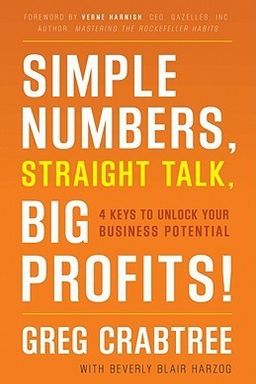
What if running your business didn’t require mountains of spreadsheets and anxiety-filled budget meetings—but instead could be a straightforward system built on four simple numbers? In Simple Numbers, Straight Talk, Big Profits!, CPA and entrepreneur Greg Crabtree challenges the traditional mindset that business success requires complex financial models. He argues that true profitability stems not from trick accounting or growth for its own sake, but from understanding a few clear, measurable principles that any business owner can master—no MBA required.
Crabtree contends that entrepreneurs consistently sabotage their companies with emotional decision-making and confusing metrics. They rely on revenue bragging rights instead of measuring labor productivity, or they hide poor results behind low owner salaries and euphemisms like “reinvesting in growth.” His core message: keep your numbers simple, honest, and focused on true pretax profit. When you pay yourself a market-based wage, protect cash flow, and maintain proper boundaries between salary, taxes, and profit distributions, you can finally see the real health of your business.
From Cash Cows to Sick Herds: Why Simplicity Matters
The book is built on the metaphor of a cow. A healthy business is a healthy cow—it produces steady milk (profits) over time. But when you treat your business like a barbecue—consuming all its resources for short-term satisfaction—you kill the cow. Simplicity allows you to track whether the cow is being fed (labor efficiency), milked properly (profit margins), and protected from waste (taxes and debt). Complex accounting hides these truths; simple, clear numbers expose them.
Crabtree repeatedly illustrates his points with real-world client stories from companies struggling between startup and $5 million in revenue—the most perilous stage he calls “the black hole.” Many founders assume growth will cure low profits; instead, growth amplifies inefficiency. Crabtree’s approach reorients entrepreneurs to master “business physics”: the immutable forces of cash flow, labor productivity, debt repayment, and taxes. Like gravity, these forces apply whether you understand them or not—but understanding them transforms chaos into control.
The Four Keys: Simplicity that Scales
The book’s foundation rests on four interconnected keys that unlock profitability: (1) owner compensation, (2) establishing real profit targets, (3) managing labor productivity, and (4) prioritizing cash flow. When these principles align, even small enterprises can grow toward sustained wealth. You’ll learn to stop confusing salary and distributions, aim for the true breakeven point—10% pretax profit—and manage labor dollars like an NFL coach under a salary cap.
Crabtree compares winning businesses to championship sports teams that allocate talent to maximize performance within strict limits. Like the New England Patriots under Bill Belichick, you must extract the highest productivity per dollar spent. Overhiring, labor creep, and emotional pay raises break the salary cap and send profits plummeting. Instead, disciplined measurement of gross profit per labor dollar turns employees from cost centers into growth engines.
Why Most Entrepreneurs Fail at Financial Clarity
Most entrepreneurs, Crabtree observes, misunderstand their own financials because they focus on vanity metrics or outdated accounting conventions. EBITDA, for example, looks sophisticated but ignores real costs like interest and depreciation—two factors that determine the survival of smaller firms. Traditional budgeting also lures owners into spending money they don’t have. Instead, Crabtree introduces forecasting as a dynamic process focused on what’s actually happening and what’s coming next. With regular rolling forecasts, small businesses can anticipate trends earlier than Wall Street analysts.
Throughout the book, Crabtree’s financial advice is grounded in human behavior. He knows entrepreneurs avoid tough choices when emotions interfere—whether that’s keeping an unproductive employee out of loyalty or dodging tax bills in fear. Simple numbers, he insists, strip away the emotional fog. When your data is straightforward, decisions become clear: cut waste, manage labor, build cash, and grow only from profits—not debt.
Why Simplicity Unlocks Prosperity
The core argument of the book is both philosophical and practical: simplicity isn’t just easier—it’s the only way to make enduring profits. You don’t have to be a financial expert to run a successful business; you just have to know what numbers actually matter. Crabtree’s approach democratizes good finance, making it accessible to anyone willing to look honestly at their data. The result is freedom—from debt, confusion, and fear of taxes—and a clear roadmap to build wealth over time rather than chasing temporary revenue spikes.
In Crabtree’s world, profits aren’t luck—they’re physics. Once you understand the variables, you can design a business that obeys natural laws: if your cow is fed (productive labor), clean (managed cash flow), and protected from predators (taxes and debt), it will thrive and multiply.
By the end, Crabtree offers entrepreneurs a liberating message: create a business that pays you properly, funds its own growth, and competes through efficiency—not desperation. Simple numbers, straight talk, and disciplined profitability don’t just make you rich; they make your work sustainable and meaningful. This is the clarity that every entrepreneur chasing stability—and sleep—has been looking for.