
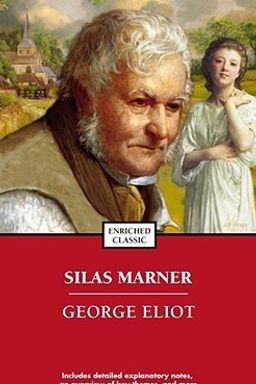
Silas Marner cover

Silas Marner

by George Eliot

Silas Marner, a tale by George Eliot, tells of a reclusive weaver whose life is transformed by the arrival of a child. As he learns to love and connect with his community, Silas discovers true wealth lies not in gold, but in the relationships he builds. This timeless story explores themes of redemption, love, and the power of unexpected family bonds.

Redemption Through Love and Human Connection

What happens to a soul that loses faith in both God and humanity? George Eliot’s Silas Marner asks this question through the story of a lonely weaver whose heart turns to stone after betrayal, only to be renewed years later by the touch of a child. Written in 1861, the novel isn’t just about religious faith—it’s about what happens when love, work, and community replace isolation and greed as the forces that give life meaning.

Eliot argues that salvation does not come from divine miracles or doctrines but through our earthly connections—with work that roots us, community that trusts us, and love that awakens us. The weaver Silas Marner descends from faith into despair and then rises again through affection, showing the redemptive power of human attachment. The novel unfolds in an age when England’s rural life was giving way to industrial modernity, asking whether spiritual wholeness could still survive in a world increasingly ruled by money.

Disillusionment and Exile

At the start, Silas lives as a devout man among narrow Puritans in Lantern Yard. His religion defines his moral world, but it also blinds him to human complexity. When his best friend frames him for theft—a dramatic betrayal in a congregation that confuses superstition with divine justice—Silas loses his faith entirely. His trust in God and man dissolves together. This spiritual collapse sets him wandering away from community into the isolated village of Raveloe, where he turns inward, obsessively hoarding coins in place of love. Eliot uses this early fall to explore how religious hypocrisy and social piety can wound the individual soul (comparable to the critiques of organized religion made by Thomas Hardy later in the century).

The Healing of Labor and Love

Work becomes both Marner’s cage and his solace. In his loom’s repetitive hum, he feels control and order, but this mechanical peace cannot satisfy human hunger for connection. When his gold is stolen by Dunstan Cass, a selfish younger son of the local Squire, Silas’s remaining comfort vanishes. Just as greed destroys his refuge, a new form of wealth arrives: a golden-haired infant. The orphaned child Eppie literally replaces the glimmer of coins with the warmth of life. Through raising her, Silas rediscovers what it means to love and to belong. His redemption isn’t supernatural—it grows organically out of daily care, humility, and shared emotion. In modern psychological terms, he heals from trauma through attachment and purpose.

Eliot’s Moral Vision

Eliot’s moral universe insists that goodness radiates outward through quiet, consistent acts rather than rigid creeds. As Silas’s love expands from Eppie to the village that once feared him, the community of Raveloe transforms in kind. His story mirrors the novel’s second plot, that of Godfrey Cass—a wealthy but weak-willed man whose moral failures make him Silas’s foil. Where Silas learns to love, Godfrey spends years evading responsibility until it is too late. Together they embody two paths of human choice: withdrawal or renewal, cowardice or courage, faithlessness or affectionate living. Eliot suggests that every human being, like Silas, can find moral regeneration through compassion.

A Modern Parable

At its heart, Silas Marner is a parable of the heart rediscovered. It speaks to anyone who has turned inward after betrayal, showing how affection and honest work can rebuild meaning where faith has failed. It also challenges modern readers to weigh material success against emotional truth. Eliot, far from sentimental, grounds redemption in the slow, cumulative moral actions of ordinary life. In an era increasingly skeptical of divine order, she redefines salvation as a human process—the weaving together of love, community, and forgiveness. Like the linen Silas creates, life’s beauty lies in its interwoven threads.


Faith Lost and Found

Silas Marner’s journey begins with devout faith and ends with quiet moral insight. His first spiritual world in Lantern Yard is all dogma and ritual—a microcosm of religious hypocrisy. When his friend William Dane betrays him by planting stolen money and framing him, the sect condemns him based on a random drawing of lots rather than evidence. Eliot here illustrates how a rigid view of divine will can destroy human solidarity. The betrayal leaves Silas stripped not only of faith but of all trust in people. Exiled to Raveloe, he lives for fifteen years without worship or companionship, weaving linen and watching his gold accumulate. His god becomes the glint of coins that he counts nightly, a replacement for the transcendent love he once felt.

The Limits of Religious Institutions

Through Lantern Yard’s injustice, Eliot critiques organized religion, showing that belief cut off from empathy turns into cruelty. The villagers of Lantern Yard rely on superstition masked as divine revelation; their ritual of drawing lots to determine guilt mocks true spiritual discernment. This mechanical dependence on signs contrasts sharply with the moral simplicity of Raveloe peasants, who may be ignorant but act according to kindness rather than creed. Eliot thus reverses the expected hierarchy of faith and ignorance, emphasizing moral feeling as superior to pious knowledge (a theme developed also in Adam Bede).

From Isolation to Inner Light

Marner’s rediscovery of goodness arrives not through prayer but through the dawning presence of Eppie. Her innocent need revives his capacity for devotion—a faith not in words or doctrines but in life itself. When Silas eventually revisits Lantern Yard decades later, he finds it destroyed by industrial expansion and its people dispersed. There is no divine revelation, only the realization that human love, not dogma, bridges the distance between loss and salvation. By linking faith to empathy, Eliot reveals belief as an evolving human experience rather than an abstract creed. You, too, she implies, will find your sense of divinity renewed only when you rejoin the web of human affection.


The Corruption of Gold and Greed

A central symbol in the novel is gold—first the metal that enslaves Silas, then the golden curls of Eppie that free him. After being cast out from Lantern Yard, Silas channels his love into accumulation. Each coin becomes a substitute for human connection, and counting them replaces prayer. Yet when his gold is stolen by Dunstan Cass, the act paradoxically saves him. The theft of money forces him to open his heart again; without it, he could never have welcomed the child who changes his life. Eliot uses the transformation of gold into a child’s hair as one of literature’s most poetic reversals of value.

Material Idolatry

The weaver’s obsession with money mirrors the moral decay of Raveloe’s upper class. Squire Cass’s household, rich and idle, wastes its fortune in indulgence. Godfrey Cass, the heir, compromises honor for convenience, hiding an early marriage to an opium addict and living under his brother’s blackmail. His moral cowardice contrasts sharply with Silas’s integrity, even in misfortune. Both men’s relationships to wealth show that money without meaning corrupts; when it becomes an idol—whether worshipped by a miser or relied on by a gentleman—it hollows the soul.

Redefining Treasure

When Silas loses his coins, he feels as if he has lost his child. Later, when the actual golden–haired child crawls into his home, the symbolism inverts itself: true wealth is now a living bond of love. Eliot thus recasts the moral economy of Victorian England, suggesting that value must be measured not in currency but in kindness. Greed isolates; generosity redeems. When Godfrey finally offers to claim Eppie years later, his fortune cannot buy back the years of affection that bind her to Silas. In every sense, Eliot writes, only love gives genuine interest on the investments of the heart.


Parenthood and Moral Responsibility

Two fathers define the moral structure of Silas Marner: Silas himself and Godfrey Cass. One is poor but faithful, the other rich but evasive. Their parallel stories explore what it means to take responsibility for others. When the opium-addicted Molly Farren freezes to death on her way to expose her secret marriage to Godfrey, her child wanders into Silas’s cottage. Godfrey, fearful of scandal, conceals the truth and allows Silas to raise the child. For sixteen years he avoids confession, embodying the moral paralysis of privilege. Silas, by contrast, embraces care as a sacred duty, though he has no obligation to do so.

Love by Choice Versus Blood

Eliot turns Victorian assumptions on their head: the true parent is not the biological father but the one who loves and nurtures. Silas’s adoption of Eppie springs from compassion; Godfrey’s claim, when it finally comes, is motivated by guilt. When he and his wife Nancy attempt to reclaim Eppie as their daughter, she refuses, insisting, “I can’t think o’ no happiness without him.” Her choice affirms that family is forged by affection, not inheritance. This reversal of lineage suggests that morality belongs to those who act from devotion rather than entitlement—a radical idea in Eliot’s class-conscious era.

Responsibility as Redemption

Godfrey’s confession comes too late, but his remorse sparks a quiet transformation. He supports Silas and Eppie without reclaiming them, acknowledging that repentance cannot rewrite the past. Eliot’s insistence on moral causality—every act leaves an indelible consequence—anticipates modern realist ethics. The novel’s conclusion, with Eppie’s marriage and Silas’s peace, contrasts divine forgiveness with human effort; redemption is possible, but only through recognition and reparation. For you as a reader, Eliot’s message is unmistakable: responsibility accepted, however late, is the truest form of grace.


Community and Belonging

Raveloe itself acts as a living organism in Eliot’s moral landscape. The villagers gossip, judge, and misunderstand, yet their rustic simplicity contains the seeds of moral wisdom that Lantern Yard lacked. When Silas first arrives, his strange appearance and solitary habits earn suspicion; he is seen as a kind of witch-like outsider. Over time, his honest work and later his care for Eppie thaw this distrust. The social network that once excluded him now becomes his protective web. Eliot suggests that belonging is not innate but cultivated through participation and mutual care.

The Healing Force of Sympathy

Dolly Winthrop, Silas’s kindly neighbor, personifies the warmth of Raveloe’s moral intuition. Her faith is unschooled but compassionate: she attends church because it feels right, not because she understands theology. Through her friendship, Silas reconnects to human fellowship before he can reconnect to any idea of God. Eliot thus suggests that moral progress begins in sympathy, not intellect. You do not need certainty to be kind; you need only presence, patience, and care. The small acts of kindness—a neighbor’s gift, a cup of broth, a conversation—build the bridge that theology alone could not restore.

The Web of Human Interdependence

By the novel’s end, the once-isolated weaver is the emotional center of Raveloe. The villagers, who earlier mocked him, now celebrate his happiness. This reversal underscores Eliot’s view of society as an interwoven fabric—each life threaded through the lives of others. The communal cheer at Eppie’s wedding represents the moral ideal of the novel: a community enriched not by wealth or rank but by shared feeling. In a world fractured by industrial progress, Eliot reminds you that humanity still resides in neighborliness—the strong warp that holds the social fabric together.


Eppie as Moral Symbol

Eppie, the laughing child who wanders into Silas’s home, is more than a character—she is Eliot’s symbol for natural goodness. Her innocence unites reason and compassion, bridging the moral and emotional gaps that separate the other characters. In her golden hair and bright laughter, Eliot fuses imagery of gold, sunlight, and spring—nature’s recurring motifs of renewal. Eppie redeems not just Silas but Raveloe itself: her presence awakens generosity, trust, and harmony wherever she goes.

Childhood as Redemption

In Victorian fiction, children often serve as moral catalysts (as seen in Dickens’s A Christmas Carol or Bleak House). Eppie performs that role through pure affection untainted by doctrine. She loves instinctively, teaching moral truths not by instruction but by example. Through her, Silas relearns empathy, while the Cass family faces the silent judgment of what they abandoned. Eliot implies that purity of heart can rebuild what intellect and religion have broken.

Freedom in Contentment

Eppie’s decision at the end—to renounce luxury and stay with her father—demonstrates another form of moral wisdom. She defines happiness not through wealth or comfort but through belonging and gratitude. Her words, “I can’t think o’ no happiness without him,” crystallize Eliot’s humanism: joy arises not from what you have but from whom you love. In this moral economy, Eppie is both Silas’s daughter and his salvation—a golden thread that mends the torn fabric of his faith.


Social Class and Moral Equality

Eliot continuously contrasts social rank with moral worth. The rural hierarchy—from Squire Cass down to the poor weaver—frames a world where birth and wealth predict privilege, not virtue. Yet it is the outcast weaver, not the landowner’s son, who achieves greatness of heart. By turning social order upside down, Eliot challenges her readers to reconsider what defines a “gentleman.” Moral integrity, she argues, can thrive in poverty just as corruption can wear fine clothes. True gentility comes from conscience.

The Decadence of the Gentry

The Cass household’s decline mirrors the broader decay of rural aristocracy in nineteenth-century England. Squire Cass’s indulgence and Godfrey’s evasions show the stagnation of privilege untempered by purpose. In contrast, Silas’s discipline and diligence embody the emerging virtue of industrious labor—the moral backbone of the working class. Eliot anticipates later realist authors like Hardy and Gaskell in portraying the working poor not as pitiable victims but as moral agents whose steadfastness sustains society’s fabric.

Democracy of the Heart

Through communal scenes—the tavern debates, Dolly’s domestic wisdom, Eppie’s wedding feast—Eliot envisions a moral democracy grounded in empathy. In such a world, the weaver’s cottage may contain more holiness than the manor’s grand halls. This vision still speaks to you today, urging respect not for wealth but for work, and trust not in rank but in decency. When Eliot closes her novel with harmony between poor and rich, she imagines a future society woven together by mutual recognition rather than separation.


Memory, Time, and Moral Growth

Eliot’s narrative spans decades, tracing how the moral seeds sown early bear fruit in later years. Silas’s stolen gold reappears after sixteen years; Eppie’s orphanhood leads eventually to renewal. The novel’s cyclical time structure—betrayal, loss, and restoration—mirrors natural patterns of decay and rebirth. This organic pacing reflects Eliot’s belief that moral change is gradual: transformation happens not in sudden conversions but through accumulated living. You cannot escape the past, but you can reinterpret it.

The Return to Lantern Yard

In the final chapters, Silas revisits his old home only to find it demolished by industrial progress—a poignant symbol of vanished certainties. He can no longer seek divine vindication; the moral universe that condemned him has literally been erased. Yet this void confirms Eliot’s realism: truth is not revealed from on high but reconstructed within human memory and relationship. Silas’s quiet acceptance—“I shall trusten till I die”—embodies the maturity of faith born from experience rather than doctrine.

Continuity and Renewal

The conclusion, with Eppie’s marriage and Silas watching peaceably by her side, seals life’s continuity. His past suffering becomes meaningful only through the love that followed. Eliot’s sense of time is moral, not linear: life redeems itself through patiently woven connections. Like the loom threads that turn flax into cloth, your experiences—painful or joyous—can interlace into wholeness if guided by sympathy and persistence. The weaver’s finished web, warm and durable, is the ultimate symbol of moral art.

Dig Deeper

Get personalized prompts to apply these lessons to your life and deepen your understanding.

Go Deeper

Get the Full Experience

Download Insight Books for AI-powered reflections, quizzes, and more.