
Idea 1
Power, Loyalty, and Legal Survival in the Trump Era
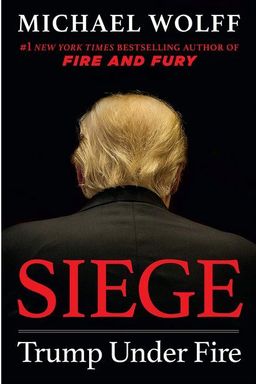
What happens when personal loyalty replaces institutional order at the highest level of government? In this book, you watch how Donald Trump’s presidency evolves through overlapping crises—legal, political, and moral—and how those around him attempt to survive them. The narrative shows how the special counsel investigation, media warfare, and international diplomacy all merge into one defining theme: power under pressure.
The Legal Machine and the Fear Economy
Robert Mueller’s special counsel team operates like a quiet, relentless engine—indicting Manafort, Flynn, Gates, and Papadopoulos while mapping evidence toward the Oval Office. In this world you learn the hierarchy of exposure: witness → subject → target. The fear that grips the West Wing isn’t abstract; people measure their distance from the grand jury room at 333 Constitution Avenue. Every meeting attended, every email sent, can become evidence. Mueller’s team even drafts a potential indictment of the president on obstruction charges, raising constitutional debates about whether a sitting president can be criminally prosecuted. (Note: this mirrors the Watergate-era tension between political immunity and legal accountability.)
The Lawyers, the Fixers, and the Chaos of Defense
Trump’s notion of law is theatrical: inspired by Roy Cohn’s ruthless loyalty and delivered through a cast of improvisational defenders. You see John Dowd, Ty Cobb, Jay Sekulow, and later Rudy Giuliani—each emphasizing loyalty and media combat over procedural rigor. Giuliani’s televised counterattacks turn legal defense into political theater. Meanwhile, Trump’s White House counsel Don McGahn struggles between institutional duty and personal protection, secretly cooperating with investigators while trying to prevent the president from firing Mueller or Rosenstein. The result is a do-it-yourself legal defense performed for the cameras and aimed as much at political optics as at courts.
Loyalty and the Fragile White House Culture
Inside Trump’s West Wing, loyalty overtakes truth. Hope Hicks, Rob Porter, and Michael Cohen illustrate how personal devotion becomes both armor and liability. Hicks confesses to telling “white lies,” Porter resigns under domestic abuse allegations, and Cohen—the fixer who kept secrets—is raided, flipped, and transformed into a witness. Staff learn that being “in the room” when anything controversial happens is a risk, not a privilege. Silence and strategic absence substitute for governance.
The Presidency of Media and Perception
Fox News, especially Sean Hannity, becomes Trump’s feedback loop. Television commentary informs tweets, and personal opinion guides national policy. Hannity’s constant contact shifts the president’s view of reality from intelligence briefings to cable narratives. Immigration policy and zero-tolerance enforcement illustrate how media framing can drive real governmental decisions, producing family-separation optics that dominate summer 2018. (In historical comparison, few presidencies have been this openly reactive to live television.)
International Disruption and Transactional Diplomacy
Abroad, Trump's instinct for showmanship derails traditional diplomacy. At NATO, London, and Helsinki, he substitutes personal bravado for structured engagement—praising autocrats and insulting allies. Jared Kushner’s personalized foreign channel magnifies this trend: direct contact with MBS, private financiers, and Kissinger mentorship bypasses institutions entirely. The model’s speed invites allegations of self-dealing and moral compromise, culminating in the Khashoggi murder crisis, where Kushner’s defense of MBS destroys moral credibility and exposes the fusion of money and diplomacy.
From Populist Strategy to Structural Collapse
Steve Bannon—exiled but influential—drives the populist logic: weaponize media outrage, claim loyalty to the base, and delay legal accountability through executive power. His advice to “delay, delay, delay” informs shutdown politics, emergency declarations, and midterm messaging about the Wall and migrant caravans. That political energy proves effective short-term but self-defeating in institutional endurance. The result: chaos in personnel management, hollowed-out governance, and crisis-level burnout among advisers.
The Mueller Report and Its Aftermath
After years of anticipation, Mueller’s report lands quietly. Barr’s four-page summary reframes it as exoneration—a political rather than legal victory. Yet multiple investigations persist, particularly in the Southern District of New York. What you learn is that modern governance intertwines legal exposure, personal loyalty, and television narrative. Trump’s presidency becomes a case study in how a powerful leader can survive by converting legal peril into political combat, at the cost of institutional integrity.