
Idea 1
The Lifelong Search for the Self
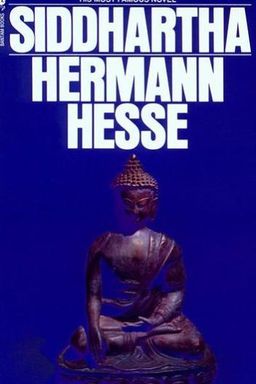
How do you truly come to understand yourself? In Siddhartha, Hermann Hesse explores one of humanity’s oldest and hardest questions: the journey toward self-knowledge and enlightenment. Written in 1922 after Hesse’s own encounter with Eastern philosophy and personal crisis, the novel presents the spiritual odyssey of Siddhartha—a man who abandons tradition, teachers, possessions, and even his beliefs to experience life directly. Hesse suggests that wisdom can’t be taught or inherited; it must be lived, suffered, and discovered by encountering the full cycle of existence.
In doing so, Hesse bridges East and West, combining Buddhist and Hindu ideas of unity and release with Western existential longing. The book is not a mere retelling of the Buddha’s life, though the protagonist shares his name. Rather, Hesse’s Siddhartha is every person seeking meaning beyond doctrines. The novel invites you to ask yourself: is knowledge attained through others’ teachings, or through the direct experience of joy, loss, and love?
Tradition, Rebellion, and the Limits of Learning
At the beginning of the novel, Siddhartha is the perfect Brahmin’s son—handsome, gifted, and loved by all. Yet his intellect leaves him empty. The teachings of his father and the sacred Vedas can describe the divine, but they can’t make him feel unity with it. When he joins the ascetic Samanas with his friend Govinda, he renounces the material world, fasting, meditating, and trying to dissolve his ego. But eventually, he realizes that asceticism, like ritual and scholarship, is still a form of attachment. Every path offered by teachers merely replaces old illusions with new ones.
This insight culminates in his meeting with Gotama, the Buddha. Siddhartha recognizes the serenity of enlightenment embodied in Gotama’s face—but he refuses to follow even the Buddha’s doctrine. He perceives that Gotama reached awakening through his own path, not by imitation. What he’s seeking isn’t something that can be transmitted through words or rules. It’s a realization that arises from living the truth personally. (Philosophically, this recalls Søren Kierkegaard’s idea that direct experience must precede faith.)
Experience as a Teacher
Rejecting teachers, Siddhartha plunges into life, discovering sensuality, wealth, and human love. With Kamala, the courtesan, and Kamaswami, the merchant, he experiences physical pleasure, power, and disillusionment. This middle stage mirrors the worldly desires in Buddhist cosmology—sansara—that bind souls through craving. Yet Hesse portrays this descent not as failure but necessity. Only through worldly attachment can Siddhartha learn detachment from life’s surface glitter. “I can think, I can wait, I can fast,” Siddhartha tells Kamala—his mantra of self-control—but eventually even this disciplined balance erodes in lust and greed. His wealth and indulgence leave him spiritually exhausted, leading him to contemplate suicide.
When he awakens beside a river, he rediscovers the sacred syllable “Om”—the symbol of completeness. The river becomes his teacher, embodying eternal life’s unity and constant change. Through the ferryman Vasudeva, Siddhartha learns to listen—not to mentors, but to the flowing rhythm of existence itself. The river “laughs” at the folly of striving; it shows him that all opposites—joy and sorrow, beginning and end, self and world—are one continuous current. This becomes his final stage: enlightenment through harmony rather than renunciation.
The Circle of Compassion
Siddhartha’s awakening extends beyond his own peace. When he later meets his rebellious son, he relives his father’s pain of separation, grasping that love and suffering are intertwined parts of the same unity. The longing he once tried to transcend now becomes his gateway to compassion. In accepting life fully—including pain—he transcends the dualities of spiritual versus worldly. Love, which he once called foolish, finally becomes his link to the eternal.
By the end, Siddhartha embodies the peace he once sought from others. His smile, compared to that of the Buddha, reveals that the divine cannot be sought outside oneself—it is realized when the self dissolves into the flow of all being. When his old friend Govinda finally recognizes this truth through a silent, mystical moment, Hesse concludes that enlightenment is wordless. It is lived, not learned; experienced, not explained.
Why Siddhartha’s Journey Matters
Hesse’s Siddhartha endures because it speaks to our modern hunger for authenticity. In an age crowded with knowledge, instruction, and gurus, it reminds you that no teaching can substitute for walking your own path. The novel’s cyclical structure—beginning with seeking teachers and ending with complete self-sufficiency—reflects that human growth is not linear but circular. Each experience, however painful or worldly, contributes to wisdom. If you have ever felt pulled between spiritual ideals and ordinary life, Siddhartha’s journey offers a simple insight: peace emerges not by escaping the world, but by recognizing yourself within it.