
Idea 1
Showing Your Worth Through Strategic Intention
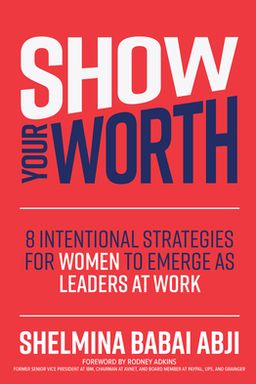
How can you prove your worth in a world that often overlooks the contributions of women—especially women of color, immigrants, or mothers juggling multiple roles? In Show Your Worth: 8 Intentional Strategies for Women to Emerge as Leaders at Work, Shelmina Babai Abji argues that women must be deliberate and strategic in how they define, pursue, and demonstrate success. She contends that leadership isn’t a birthright; it’s cultivated intentionally, one decision and one disciplined act at a time. The essence of her argument is that intention—what she calls “strategic intent”—can transform feeling undervalued into actively showing your value and emerging as a leader on your own terms.
Abji writes from lived experience. Raised in poverty in Tanzania by a mother with a fourth-grade education, she became a software developer, sales executive, and eventually a vice president at IBM, one of the most prestigious technology firms in the world. She did this while raising two children as a single mother. Through that journey, she discovered eight strategies grounded in intention that allowed her to rise above fear, self-doubt, and systemic bias. These strategies—intentional success, attention, work-life balance, value creation, growth, relationships, leadership branding, and promotion—form a roadmap for women who want to lead authentically and powerfully.
The Broken Rung and the Glass Ceiling
At the start of the book, Abji reframes the conversation around women in leadership. Instead of focusing only on the “glass ceiling,” which blocks senior leadership access, she examines a “broken rung”—the first managerial step that many women never get to climb. Fixing that broken rung, she emphasizes, is foundational for parity. As Linda Babcock and Sheryl Sandberg have similarly observed (in Women Don’t Ask and Lean In), gender equity fails not at the finish line but at the starting gate. By encouraging women to define success intentionally early in their careers, Abji provides the critical inner scaffolding needed to ascend without losing personal fulfillment.
Intention as Leadership Power
Intention, in Abji’s model, means putting deliberate thought behind every choice—allocating energy, time, and attention toward what will yield meaningful progress. The opposite, she warns, is running on autopilot, reacting to external expectations and workplace demands. This lack of intention leads to burnout, dissatisfaction, and stagnation. When you act intentionally, your goals connect to your personal definition of success, ensuring they’re not borrowed from others’ expectations.
“You’ll make meaningful progress every day toward your desired outcomes,” Abji advises, “when you combine intention with execution.”
Leadership Through Authenticity
One of the book’s major themes is authenticity. Abji challenges the notion that women must emulate male leadership archetypes. Instead, she calls on readers to lean into their uniqueness—whether that comes from cultural identity, motherhood, or personality. By building a leadership brand rooted in authenticity, women expand the definition of what leadership looks like. This echoes Brené Brown’s idea that vulnerability and courage are inseparable in leadership; Abji expands that lens through intersectionality, arguing that authenticity can be both strategy and strength.
Why These Ideas Matter
Abji’s framework matters because women still make up less than 10% of the highest leadership roles globally, and even fewer when considering women of color. Her book doesn’t simply encourage confidence—it teaches competence through actionable methods: create success definitions, allocate attention to priorities, craft a leadership brand, and prepare intentionally for promotions. It’s a blend of mindset transformation and tactical career guidance. If Sheryl Sandberg told women to “lean in,” Shelmina Babai Abji tells them exactly how to sustain the lean with structure, discipline, and resilience.
Throughout this summary, you’ll explore each of Abji’s eight strategies and see how they interlock like links in a chain. You’ll discover how defining success can quiet imposter syndrome, how managing your attention leads to measurable impact, and how balancing work and life becomes both survival strategy and competitive advantage. You’ll then learn how creating value intentionally lifts others while accelerating your growth, how relationships and branding amplify influence, and how promotions can reshape workplaces. Ultimately, Abji’s message is clear: You cannot be passive about success. You must build it, claim it, and—most importantly—show your worth every single day.