
Idea 1
Meat, Humanity and the Modern Dilemma
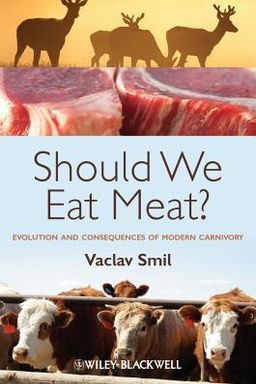
Why has meat become both indispensable and controversial? Vaclav Smil’s comprehensive exploration of meat’s role in human civilization traces its evolutionary origins, cultural transformations, nutritional importance and environmental burdens. For Smil, meat is more than food — it is a mirror of our species’ development, ingenuity, and ethical complexity.
Evolutionary roots and biological dependence
Smil begins by showing how meat entered human evolution. Early hominins scavenged and hunted millions of years ago, and the introduction of cooking transformed energy use and anatomy. High-density animal protein enabled smaller guts and larger brains — the expensive-tissue hypothesis first articulated by Aiello and Wheeler (1995) gains new meaning here. Meat catalyzed cooperation, social bonds and technological innovation, cementing its biological importance in the human story.
Stable isotopic evidence from Paleolithic skeletons confirms heavy reliance on animal protein for some populations, while others diversified diets with fish and plants. Meat, then, became a flexible but powerful strategy in human adaptability — not merely a taste choice.
Nutritional function and health trade-offs
Smil carefully distinguishes meat’s nutritional value from its health risks. It supplies complete, highly digestible proteins (PDCAAS ~0.92 for beef), micronutrients like heme iron, zinc and vitamin B12, all fundamental for growth, cognition and metabolism. Yet when consumed excessively or in processed forms, meat contributes to cardiovascular disease and cancer risks. He quotes meta-analyses confirming processed meats’ strong correlation with mortality compared to lean or unprocessed cuts.
The sensible solution according to Smil is not abstinence but moderation. Lean, fresh meats and balanced diets outperform extreme avoidance or indulgence. Animal protein still prevents stunting and deficiency in vulnerable populations; meat’s qualitative role is as crucial as its quantitative intake.
Industrialization and global consumption
Modern societies transformed meat through technology: mechanization, nitrogen fertilizer, refrigeration and international trade created mass production systems. Meat shifted from luxury to staple. Smil describes Japan’s jump from 2 kg per capita in 1939 to 45 kg by 2000 and China’s massive post-1980s increase — emblematic of how economic growth brings meat abundance.
Fast food globalized taste, spreading standardized foods such as hamburgers and fried chicken. Brands like McDonald’s and KFC became symbols of dietary transition and cultural homogenization. Chicken, efficient and cheap, now leads global consumption growth, reflecting economic rationality but raising environmental and ethical questions.
Environmental and ethical reckoning
Smil does not avoid the costs: massive land use, deforestation, water consumption, greenhouse gases and animal welfare abuses. Livestock occupy roughly a quarter of Earth’s ice-free land and dominate terrestrial biomass. Feed crops (corn, soy) absorb vast energy and water resources, while intensive systems concentrate waste and pollution.
Ethically, CAFOs and broiler densification raise moral alarms. Animal suffering is a design choice, not necessity. Yet Smil insists on pragmatism — he sees full global veganism as unlikely, instead advocating rational meat consumption (15–30 kg per person annually) alongside improved welfare, substitution with dairy, eggs and aquaculture, and technological innovation like cultured meats.
Core message
“Meat has fed our evolution, shaped our economies and tested our ethics. We can neither wholly reject nor wholly embrace it — only rationalize how we produce and consume it.”
Through historical evidence, data and practical realism, Smil’s book becomes a manifesto for balance — sustaining human nutrition while tempering excess. This journey from prehistoric hunters to industrial consumers reveals how a biological necessity evolved into a planetary challenge requiring informed moderation.