
Idea 1
The Power and Peril of Analogy
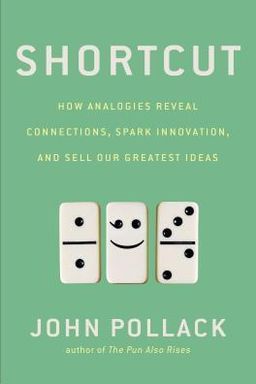
When was the last time you compared two things—a situation, an idea, a person—to make sense of a complicated world? Maybe you’ve said, “It’s like riding a bike” or “It’s a jungle out there.” In Shortcut: How Analogies Reveal Connections, Spark Innovation, and Sell Our Greatest Ideas, former presidential speechwriter John Pollack argues that analogy isn’t just a figure of speech—it’s the secret engine behind persuasion, creativity, and thought itself. Every decision, every innovation, and every argument we make depends on our ability to see patterns and connect seemingly unrelated ideas.
Pollack’s central claim is radical yet intuitive: analogy is the fuel and fire of human thinking. We use analogies every day to interpret data, evaluate risk, and communicate meaning—often without realizing it. But this instinct, while powerful, can mislead us when our comparisons are faulty. A bad analogy can send a nation to war, bankrupt a company, or distort public opinion. A good one, however, can reshape science, ignite innovation, and inspire social change.
How Analogy Governs Thought
Pollack begins with the biology of thinking. Drawing on psychologists like Leonard Mlodinow and Douglas Hofstadter, he explains that our brains process millions of raw bits of information per second, too much for reason alone. So we compress meaning using analogies, comparing new experiences to familiar ones. Whether we’re crossing a busy street, assessing risk, or guessing what others might do, we rely on analogies to guide action. They are how we turn sensory chaos into order.
Humans, unlike other animals, can make deep analogical connections—abstract links between things that share no obvious features. A crocodile’s snout and a floating log look similar, but only humans can reason that both serve as objects in a broader concept of ‘danger.’ This leap allows us to transfer logic from one domain (the forest) to another (the marketplace or the courtroom). In Hofstadter and Emmanuel Sander’s view, without analogy, understanding itself is impossible.
Analogy as Shortcut—and Trap
Pollack explains that analogies are cognitive shortcuts. They save mental energy, but they’re double-edged: by simplifying, they risk distortion. This becomes clear in examples like Ford’s disastrous Edsel automobile. Intended to symbolize modern sophistication, it was mocked for resembling a toilet seat—an analogy that stuck and doomed millions in investment. Similarly, political analogies like “Three strikes and you’re out” or “war on terror” sound decisive but oversimplify complex realities, sometimes with tragic results. As Pollack puts it, the analogies we accept “shape outcomes in significant ways.”
Pollack bridges psychology and persuasion. In law, business, and politics, analogies act as invisible arguments. When Judge John Roberts compared judges to baseball umpires, he framed himself as a neutral arbiter of fair play—a powerful image that helped win his Supreme Court confirmation. Yet as critics noted, judges make rules, while umpires follow them. The analogy was emotionally satisfying but logically false. Pollack invites you to question such frames and recognize how analogy “structures not just how we talk about arguments, but how we actually argue.”
Analogy and Innovation
Beyond persuasion, Pollack reveals analogy’s role in discovery. Gutenberg saw, metaphorically, that pressing ink into paper was like pressing juice from grapes—giving birth to the printing press. Darwin equated natural selection with selective breeding, clarifying evolution’s gradual process. Henry Ford borrowed the slaughterhouse’s disassembly method to invent the moving assembly line. Steve Jobs compared computers to “bicycles for the mind,” explaining technology as a tool to amplify human creativity. Each innovation, Pollack argues, depended on seeing how one system mirrored another.
The Stakes of Our Comparisons
Pollack’s closing challenge is both intellectual and moral. Analogies influence not only ideas but institutions, economics, and ethics. Comparing markets to “ecosystems” can justify laissez-faire capitalism; likening them to “gardens” invites stewardship and care. Our metaphors define what society believes is natural. As he writes, “people who become truly adept at analogy are better able to avoid costly missteps, free their imaginations, and persuade others more effectively.”
In essence, Shortcut is about the art of connecting dots—just as Jobs told graduates at Stanford that creativity means trusting those dots will link up later. Pollack teaches you how to make that leap consciously. By mastering analogy, you learn not just to think better, but to see your world anew—and to recognize when someone else’s comparison is leading you astray.