
Idea 1
The Race for Space and National Identity
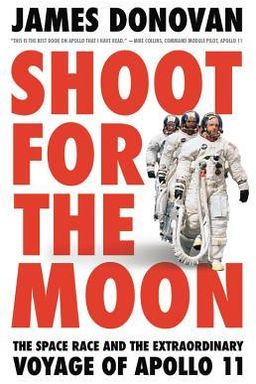
What does it take for a nation to turn fear into innovation? In this sweeping narrative of America’s space race, you follow politicians, scientists, engineers, and astronauts as they transform the shock of Sputnik into one of history’s greatest technological triumphs. The book argues that space exploration was never merely about science—it was about identity, power, and survival. When the Soviet Union launched Sputnik in October 1957, it humiliated the United States in ways no weapon or speech could. That metallic beep overhead became a catalyst for national mobilization, forcing America to fuse politics with engineering, prestige with progress.
Sputnik: The spark that rewired ambition
Steve Bales, a young Iowan who would later make crucial calls in Mission Control, remembered Sputnik as the moment the world changed. Senators like Lyndon Johnson turned outrage into policy. Congress passed the National Defense Education Act, pouring funds into science and math. The message was simple: whoever controlled space controlled the future. Eisenhower privately knew the U.S. wasn’t actually behind in missile capability, but public perception forced the creation of new agencies and new ambitions—culminating in NASA’s foundation in 1958.
Von Braun’s legacy and the rebirth of rocketry
You meet Wernher von Braun, the German engineer whose wartime genius came with moral complexity. He brought Peenemünde’s rocket science—and its shadow—to America via Operation Paperclip. Under his leadership, the Redstone, Jupiter-C, and eventually Saturn rockets emerged. Von Braun’s blend of vision and charisma made him indispensable, but his past haunted the program. His teams converted the destructive logic of the V-2 into pathways toward exploration, proving that technical brilliance often demands uncomfortable political shelter. (Note: Von Braun’s public rehabilitation through Disney collaborations and Collier’s articles exemplifies how narrative management helped preserve scientific progress.)
Building NASA: culture, heroes, and hardware
NASA’s birth out of NACA brought a new type of engineering institution—where calm precision met political urgency. The Space Task Group, led by Robert Gilruth, Max Faget, and Chris Kraft, embodied this blend. Their challenge was unprecedented: design a craft for human spaceflight from scratch. The Mercury capsule’s blunt-body design—a simple cone with an ablative heat shield—became an icon of scientific pragmatism. You learn how astronauts, first treated as passengers, fought for control, demanding windows, manual hatches, and authentic pilot input. Faget’s couches, Kraft’s operational rules, and animal predecessors like Ham the chimp all reveal the relentless balancing of human biology and machine tolerance.
From fear to method: the Mercury Seven’s role
NASA’s first astronauts—Shepard, Grissom, Glenn, Carpenter, Cooper, Schirra, and Slayton—weren’t just pilots. They represented science as patriotism. The selection process at Lovelace Clinic was brutal, pushing both body and psyche to limits unseen outside military flight. Their celebrity status fueled public investment but also created tension inside NASA: the engineers saw them as test subjects, the media as heroes. This dual perception built the “astronaut myth”—a powerful motivating symbol that sustained both funding and morale when politics wavered.
Gemini, Apollo, and the evolution of mastery
The book connects these early missions to Gemini’s experiments in rendezvous, docking, and EVA—skills essential for Apollo. You meet engineers like John Houbolt, whose lonely crusade for lunar orbit rendezvous reshaped the entire lunar plan. Gemini proved endurance, teamwork, and orbital precision; Apollo tested ethics, leadership, and resilience after tragedy. When the Apollo 1 fire killed Grissom, White, and Chaffee, NASA had to rebuild itself from the inside out. Gene Kranz’s “tough and competent” call set a new moral standard—where accountability became the foundation of progress.
Culture, control, and redemption
NASA’s later victories—Apollo 8’s daring lunar orbit, Apollo 11’s descent—stemmed from trained human intuition. Mission Control evolved into the true brain of spaceflight, where distributed authority and simulation transformed risk into precision. When Jack Garman and Steve Bales resolved the 1201/1202 alarms during Apollo 11’s descent, they validated a decade of preparation. Armstrong’s manual takeover and calm decision-making epitomized how human judgment, not automation alone, secured triumph. By the time “Tranquility Base” reported touchdown, the race that began with fear and humiliation had ended with confidence and grace.
What it all means
Across its span, the book teaches that technological progress is inseparable from social and emotional currents. The space race wasn’t just a Cold War contest—it was a human experiment in ambition, ethics, and control. You see how reform, loss, and endurance forged a resilient culture capable of transcending politics. In that sense, Apollo represents more than exploration: it’s a mirror of what collective imagination can achieve when fear turns into discipline and courage converges with science.