
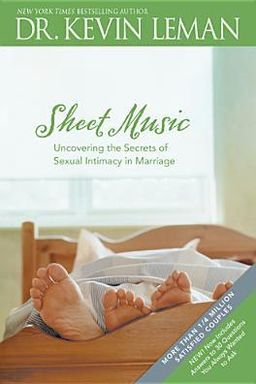
Sheet Music cover

Sheet Music

by Kevin Leman

Sheet Music by Kevin Leman guides Christian couples in unlocking marital bliss by harmonizing their sex lives. Through communication, empathy, and creativity, couples learn to deepen their emotional and physical connections, fostering a joyful and lasting relationship.

Sex as Sacred Music: Building Intimacy Through God’s Design

What if the key to a thriving marriage wasn’t just love or communication—but rhythm, harmony, and passion, like a well-composed piece of music? In Sheet Music: Uncovering the Secrets of Sexual Intimacy in Marriage, psychologist and marriage expert Dr. Kevin Leman argues that sex isn’t merely a physical act—it’s a divine and psychological composition filled with emotion, vulnerability, and spiritual purpose. He contends that great sex between a husband and wife is not accidental but learned, practiced, and refined over time, like learning to play an instrument.

Leman’s central message is simple but transformative: God designed sex to be a symphony of physical joy and spiritual connection between two lifelong partners. To play it well, couples must understand their personal histories, let go of inhibitions, communicate openly, and embrace the idea that sexual intimacy is both holy and deeply human. But this harmony doesn’t happen naturally—it requires maturity, freedom, and humor to overcome misunderstandings and shame.

The Gift and Purpose of Sex

Throughout the book, Leman presents sex as one of the Creator’s greatest gifts. He pushes back against the myth that piety and passion are at odds, and reminds readers that the Song of Songs in the Bible showcases erotic love within marriage as something to be celebrated, not silenced. As he humorously points out, “If your idea of holiness doesn’t include sex, then your theology needs tuning.” In this way, Leman reframes marital intimacy as a spiritual discipline—a form of communication, forgiveness, and worship made physical.

Why Sex Matters to Marriage

According to Leman, good sex acts as a marital glue. It binds spouses emotionally, reduces conflict, and even improves patience and generosity outside the bedroom. He warns that neglecting sexual intimacy can silently poison marriages, leading to resentment and detachment. In one memorable case study, Leman contrasts “Jim and Karen,” a couple whose mutual desire and playful experimentation keep their marriage vibrant, with “Mark and Brenda,” whose lack of intimacy slowly pulls them apart. The moral? Sex is both an indicator and a driver of relational health.

Overcoming Shame and Inhibition

Leman devotes several chapters to helping couples confront the emotional and spiritual baggage that dampens desire. From Victorian parents who taught that “sex is dirty” to religious guilt passed through generations, he shows how early experiences shape current attitudes. He encourages readers to “edit their rulebook”—the subconscious set of beliefs about what is acceptable in sex and marriage. By identifying the parental, religious, or personal influences that created sexual shame, couples can free themselves to experience pleasure as God intended. (Similarly, in The Wounded Heart by Dan Allender, survivors of abuse are urged to reclaim their bodies without guilt—a parallel Leman warmly endorses.)

The Music Metaphor

The metaphor of sex as music runs throughout the book. Each spouse represents one hand on a piano—different but designed to play together. When they learn rhythm, timing, and the joy of improvisation, they create “a symphony only they can hear.” Leman emphasizes practice, laughter, and grace: no couple plays flawlessly the first time. But if they approach sex as both art and relationship, mistakes become chords of growth rather than discord.

Faith, Humor, and Real Talk

Though he writes from a Christian lens, Leman’s tone is refreshingly direct and humorous. With stories of awkward honeymoons and candid advice (“Nice guys finish last, but great lovers let their wives finish first”), he breaks the taboo around talking openly about sex while maintaining respect for its sacred nature. His approach blends psychological insight, biblical wisdom, and real-life comedy—turning bedroom conversations into instruments of deeper love. Ultimately, Leman wants every couple to feel that sexual intimacy is not dirty or shameful but holy, hilarious, and worth learning as a lifelong duet.


Unpacking Your Sexual Rulebook

One of Leman’s most powerful ideas is that each person brings invisible rules about sex into marriage—rules shaped by parents, religion, birth order, and early memories. He calls this the sexual rulebook, and it controls how you think, feel, and act in bed long before you realize it. These rules explain why one spouse views sex as sacred and spontaneous while another views it as mechanical or even shameful.

Parental and Cultural Imprinting

If your parents treated sex as taboo or shameful, you likely internalized those fears. Leman recounts stories of wives who cringe during intimacy because they imagine their parents’ judgment. He urges spouses to “cut the apron strings” and stop letting mom or dad’s attitudes dictate adult pleasure. Similarly, couples from religiously rigid backgrounds may feel anxiety about what is “allowed.” But within marriage, he reminds readers, God designed sex to be a source of joy, not guilt.

Birth Order and Early Childhood

Borrowing from his research in The Birth Order Book, Leman shows that firstborns often seek control in bed, middles avoid conflict, and lastborns crave surprise. Early memories also leave emotional fingerprints—promises broken, rejection, or abuse—all shaping expectations of trust and affection. Recognizing these roots helps couples replace fear-based behaviors with openness. It’s the first step toward rewriting old “rules” that limit intimacy.

Editing Your Rulebook

To truly change, Leman suggests small, courageous experiments: the conservative wife who keeps towels on the bed tries spontaneous sex once in the kitchen. The controlling husband lets his wife take charge for a night. These micro-acts of rebellion against inherited shame build confidence and trust. Spiritual healing also plays a role. He invites readers to connect with God’s forgiveness, noting that faith offers powerful cleansing from past mistakes and guilt. Over time, editing your rulebook isn’t just about sexual freedom—it’s about emotional maturity and spiritual renewal.

“Life is a series of choices,” Leman writes. “You can’t say ‘I can’t’—only ‘I won’t.’ And if you won’t, that’s your choice.”

Through introspection and patience, couples learn that rewriting their sexual rulebook isn’t rebellion—it’s redemption. They stop letting inherited fear steal today’s joy, realizing they can play new music built on freedom, not guilt.


Turning Off the Turnoffs

Leman’s chapter “Turning Off the Turnoffs” is a liberating guide for couples weighed down by inhibition. It answers a simple but profound question: Are you letting your past steal your future? He categorizes common sexual blockages into parental, religious, friendly, and personal inhibitions—and then shows how to silence them through love, humor, and gentle courage.

Parental Inhibitions

Many women dread intimacy because they fear their parents’ disapproval. Leman’s playful advice? “Cut the apron strings.” He reminds couples that marriage, not parental tradition, now defines what’s appropriate. Instead of imagining mom’s shocked face, focus on your spouse’s joy. Liberation comes when you realize that your parents aren’t your audience—the person you’ve vowed to love is.

Religious and Social Inhibitions

Old religious norms once treated pregnancy or passion as shameful subjects. Leman cites Jewish marital rights and biblical texts to affirm that God permits—and encourages—pleasure within marriage. He challenges readers to reject “Christian sexual police” mentalities, reminding them that sensitivity and love, not strict lists, define morality in bed. (In contrast to puritanical fear, he points to scholars like Keil and Delitzsch, who interpret Proverbs 5:19 as endorsing “sensual love” within marriage.)

Friend and Personal Inhibitions

Peer pressure can sabotage pleasure. Women often fear gossip from friends, but Leman warns: discussing bedroom details outside marriage feels like betrayal to men. He urges wives to reclaim privacy and pride, reminding them that their husband’s happiness matters more than a friend’s approval. As for personal inhibitions—embarrassment, modesty, propriety—he reframes them as growth opportunities. Wear the lingerie. Take the lead once. Laugh through awkward moments. In doing so, you rewrite fear as affection.

Choosing Maturity

Above all, “Turning Off the Turnoffs” teaches that love is a choice, not a feeling. You can mature out of shame by deciding to please your partner wholeheartedly. The result isn’t just better sex—it’s freedom. As Leman puts it with humor and tenderness, “When you’re behind closed doors, open the floodgates and let the water flow.” That vivid metaphor sums up his invitation: give yourself permission to enjoy the sacred and the silly, because both deepen love’s melody.


Learning to Make Music Together

In one of the book’s defining parables, Leman compares learning great sex to learning the violin. Your first attempts may sound awkward—“just noise.” But with practice, communication, and patience, you’ll soon create beautiful music together. That metaphor drives his guidance for newlyweds and long-time couples alike: intimacy must be learned deliberately.

Sex as a Skill, Not an Instinct

Modern culture teaches that sex should be spontaneous and flawless from day one. Leman dismantles that myth. “Nobody plays perfectly the first time,” he reminds readers. He uses humorous stories from his honeymoon in Yuma, Arizona—baseball games, cheap motel rooms, and nervous fumbling—to emphasize that first nights rarely match fantasy. What matters is a spirit of learning, not performance.

Practical Advice for Beginners

Couples should enter marriage with clear expectations. Leman’s advice to newlyweds includes medical preparation (understanding anatomy), emotional patience, and humor. For men, sex should be “ASAP—As Slow As Possible.” For women, enthusiasm and communication matter most. He warns against unrealistic porn-driven fantasies and urges both partners to focus on tenderness, talk, and laughter. A shared bath, a candlelit massage, or a whispered prayer can mean more than technique.

The Role of Vulnerability

Leman portrays marriage as “the most terrifying act in the world”—inviting someone into your body and soul. Sexual trust mirrors emotional trust. When partners strip away masks, they encounter real intimacy and the psychological safety necessary for pleasure. For him, sex and emotion are inseparable: couples who learn gentleness under the sheets cultivate kindness in daily life too. (This echoes teachings from John Gottman on emotional attunement fostering physical intimacy.)

Ultimately, “learning to make music” means practicing empathy, rhythm, and fun. The more attentive you are to your partner’s unique harmony, the richer your duet becomes.


The Big "O": Understanding Pleasure and Control

Few chapters are as candid as “The Big ‘O,’” where Leman demystifies orgasm—especially the female kind. He tackles myths about climax, control, and compatibility with warmth and realism, turning physiology into a lesson in emotional trust.

Why Women’s Pleasure Matters

Leman argues that many women never experience full orgasm not because they’re broken, but because sex has been framed as a male pursuit. He teaches wives to understand their bodies and husbands to be patient, likening orgasm to “a pelvic sneeze”—a natural release of tension. For women, this means exploring their own responses through touch and communication. For men, it means learning delight in their wife’s pleasure rather than their own speed or ego.

Sex Education Beyond Porn

Rejecting cultural shortcuts, Leman insists intimacy be learned through authenticity, not fantasy. Masturbation, he explains, can be healthy when used as exploration within marriage—but destructive if fueled by selfishness or pornography. His goal is not titillation but wholeness: knowing one’s body as a gift to a spouse, and learning mutual control and consent.

Men’s Control: The Stop-Start Method

For husbands who struggle with premature ejaculation, Leman prescribes simple behavioral retraining—Kegel exercises, the squeeze technique, and patient cooperation. His humor makes it approachable: “You can’t control a semi-truck downhill without brakes—so learn to steer before you press the gas.” He reframes male mastery not as dominance but self-discipline that honors the partner’s pace.

This chapter transforms physical mechanics into emotional wisdom: real satisfaction comes not from simultaneous orgasms but from unselfish rhythm. The best lovers, he says, “get more pleasure from watching their spouse reach ecstasy than achieving their own.”


Your Sexual IQ and the Power of Communication

Leman’s concept of Sexual IQ reframes intelligence in terms of empathy and awareness rather than skill or experience. Despite our culture’s abundant sex information, he says most people are ignorant about one crucial subject: their spouse.

Knowing Your Partner’s Language

Magazines may teach anatomy, but only conversation teaches intimacy. Leman provides diagnostic questions—preferred lighting, smells, fantasies, positions—to help couples map each other’s desires. The emphasis isn’t on trivia but intimacy: knowing your partner’s turn-ons and turn-offs shows care. He humorously warns, “If you think your wife likes candlelight and she secretly prefers daylight, you’re not romantic—you’re blind.”

Breaking the Silence

Couples, he notes, spend 99.9% of their sexual relationship doing it and only 0.1% talking about it. He urges frank, kind discussions of embarrassment, dissatisfaction, and fantasy using “softening phrases” like “I could be wrong, but…” and the “Ten Magic Words”: “Do you know what I would love to try sometime?” This playful phrasing transforms critique into exploration, turning awkward communication into erotic curiosity.

Seduction as Psychology

Finally, Leman teaches the psychology of seduction—how visual, auditory, tactile, and emotional cues awaken desire. Presentation matters: lingerie, tone of voice, cleanliness, and environmental details all shape mood. He even recounts how his wife’s mastery of visual aesthetics—from wrapping gifts to curating her bedroom—creates irresistible allure. Men, he adds, can seduce by cleaning the house or running a bath. Seduction isn’t manipulation; it’s mindful attention to what makes your spouse feel cherished.

Raising your Sexual IQ means replacing fear with curiosity and replacing routine with artistry. Talking, listening, and presenting love consciously—those are the hallmarks of emotional intelligence in bed and beyond.


Sex’s Greatest Enemy: Weariness and Busyness

The modern plague destroying marriages, Leman insists, isn’t lust or infidelity—it’s exhaustion. In “Sex’s Greatest Enemy,” he argues that busyness and stress have replaced eros as the defining rhythm of family life, leaving couples “too pooped to whoop.” He prescribes intentional rest and play as spiritual disciplines of love.

The Culture of Hurry

Families today, he observes, act like taxi services—rushing between sports, school, and church events until intimacy becomes another item on a calendar. He jokes that if you’re having sex less than twice a week, “you’re too busy.” Behind the humor lies urgency: when schedules squeeze out affection, resentment follows.

Slowing Down and Getting Away

Leman urges couples to simplify life ruthlessly: drop half your extracurriculars, take quarterly “hotel Sabbaths,” hire babysitters or swap childcare. A weekend away may cost money, but divorce, he warns, costs far more. Even modest gestures—a note, an afternoon escape—reignite desire. He likens rest to fuel: you can’t make music on an empty battery.

Sacrifice and Priorities

For women, weariness often stems from being “Velcro people,” stuck to everyone’s demands. Leman champions saying no—with faith that protecting intimacy is righteous self-care. For men, he points to a subtler fatigue: lack of imagination. The antidote is creative pursuit and appreciation, not guilt or routine.

In essence, reclaiming sexual energy means reclaiming life’s rhythm. When couples rest, play, and re-center their schedules, desire naturally reawakens—the music resumes.


Maturity, Humor, and Lifelong Rhythm

In the closing chapters and epilogue, Leman ties his themes together with disarming humor and hope. Sex, he suggests, evolves through seasons—spring passion, summer stamina, autumn depth, and winter warmth. The best marriages embrace every tempo with gratitude.

Sex in the Winter

Age doesn’t end romance—it refines it. Even as bodies soften and stamina changes, emotional synchronization deepens. Older couples, he writes, often enjoy better communication and slower, richer lovemaking. Men may need patience as erections slow and women may need lubrication, but laughter and years of knowledge create tenderness impossible in youth.

Humor and Body Acceptance

His playful humility about aging (“I’m like a beached whale in the sand”) reminds readers that self-acceptance is foundational. Frequent sex, smiles, and gratitude keep couples young—a truth supported by psychology research linking orgasm frequency and perceived youthfulness. Confidence, not perfection, is the real aphrodisiac.

Sacred Continuity

The book ends with prayer—a reminder that sex is more than pleasure; it’s covenantal celebration. “Dear God,” Leman writes, “help me to know what will please my mate tonight—and give me the desire to do it.” With that blessing, he transforms sex from performance into partnership. It’s the lifelong rhythm of grace—a melody that matures, improvises, and endures until the final note.

Dig Deeper

Get personalized prompts to apply these lessons to your life and deepen your understanding.

Go Deeper

Get the Full Experience

Download Insight Books for AI-powered reflections, quizzes, and more.