
Idea 1
Shakespeare and the Making of American Identity
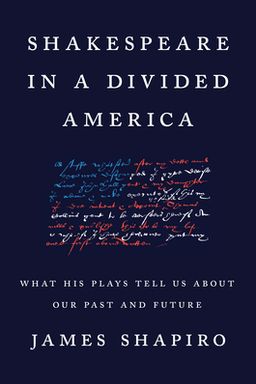
What does it mean that Shakespeare has become America’s shared civic text? Across this book, you trace how the Bard’s words and characters have been mobilized to define morality, citizenship, race, gender, and belonging. Shakespeare is not merely imported literature; he is the mirror through which Americans have tried to see themselves. His plays surface at moments of national crisis—revolution, slavery debates, civil war, immigration battles, and culture wars—each time revealing what Americans most fear or desire about their society.
From colonial classrooms stocked with battered anthologies to Broadway musicals and twenty-first-century political theatre, Shakespeare’s lines have been recast in settings far from Elizabethan England. You discover that Americans do not simply read Shakespeare for aesthetic pleasure—they use him. His works provide a public vocabulary for private conflict, a way to talk about national identity when direct confrontation feels too dangerous. In that sense, Shakespeare has functioned as the country’s unofficial moral grammar.
From revolution to reconstruction: Shakespeare as civic toolkit
During the Revolutionary period, quotations from Hamlet and Julius Caesar armed both Loyalists and Patriots; the Bard’s language lent legitimacy to utterly opposed agendas. Throughout the nineteenth century, Shakespeare’s themes of authority and rebellion continued to resonate. Presidents read him aloud to sharpen moral reasoning; reformers mined him for political parables. As Alexis de Tocqueville noted, even backwoods cabins contained mismatched Shakespeare volumes—proof that literature had become part of democratic self-fashioning.
By midcentury, the theater itself—America’s most public form of entertainment—became an arena for negotiating class and national identity. Edwin Forrest, Macready, and later Charlotte Cushman staged not only plays but ideologies of manhood, while the 1849 Astor Place riot turned dueling performances into street warfare. The lines between art and politics blurred so completely that a performance could ignite bullets.
Race, gender, and empire in the national mirror
Few plays exposed national contradictions as sharply as Othello. John Quincy Adams’s essays against Desdemona’s interracial marriage show how even abolitionists clung to racial hierarchy; Fanny Kemble’s plantation journal revealed the hypocrisy of Southern masters fathering mixed children while preaching purity. When soldiers at Corpus Christi staged Othello, their casting dilemmas—Ulysses S. Grant rehearsing Desdemona—mirrored anxieties about masculinity, empire, and moral weakness. Theater and politics fused into one rehearsal of national character.
Gender performances deepened these tensions. Charlotte Cushman’s acclaimed Romeo redefined female strength and provoked panic about women “unsexing” themselves. The persistence of such debates shows how Shakespeare’s scripts became laboratories for social experimentation: cross-dressing, race-mixing, and defiance of patriarchy offered both danger and promise. Each performance unsettled the boundary between civic virtue and personal liberty.
Tragedy, assassination, and moral imagination
Nowhere did Shakespeare’s moral vision cut deeper than in the fateful pairing of Lincoln and John Wilkes Booth. Both men lived inside his words—Lincoln seeking consolation in Macbeth and Richard II, Booth identifying with Brutus and haunted avengers. Their collision at Ford’s Theatre turned Shakespearean tragedy into national ritual: Booth cast himself as Brutus liberating Rome, but the public reframed Lincoln as Duncan, the gentle ruler murdered by treachery. Through Shakespeare, Americans mourned a martyr rather than rationalized political violence. The plays became scripture for modern democracy’s soul-searching.
The immigrant century and assimilationist Shakespeare
In the early twentieth century, new immigration waves reopened the question of who counted as American. The Tempest supplied the template: Prospero as teacher, Caliban as the uneducated immigrant. Percy MacKaye’s 1916 masque Caliban by the Yellow Sands claimed communal theater could forge unity through shared performance, yet it excluded working-class and immigrant troupes, staging elite acts of discipline rather than inclusion. Henry Cabot Lodge likewise cited Shakespeare to argue for literacy tests and quotas, binding the Bard to white Anglo-Saxon identity. Cultural uplift merged seamlessly with coercion.
That assimilationist impulse continued to echo. Civic performances like MacKaye’s used beauty and spectacle to sanctify restriction, proving that culture can mask exclusion as enlightenment. When critics declared, “the audience itself is Caliban,” they implied that art’s promise of transformation easily becomes a mirror of power.
Modern reinventions and cultural flashpoints
Postwar America recycled Shakespeare to negotiate domestic anxieties. Kiss Me, Kate (1948) reframed The Taming of the Shrew for the era’s fragile gender order: Bella Spewack and Cole Porter allowed glimpses of feminist rebellion but closed with public submission, expressing the tug-of-war between independence and conformity after World War II. By the late twentieth century, films like Shakespeare in Love faced the new gatekeepers of Hollywood morality—Harvey Weinstein’s studio power softening queer and adulterous material to protect box office safety.
Recent decades have seen renewed battles over who may inhabit these roles. Joe Papp’s color-blind casting once symbolized progress; by the 2010s, diverse productions became political lightning rods. The 2017 Delacorte Julius Caesar, staging a Trump-like ruler, provoked national outrage. What once invited civic dialogue now risks instantaneous digital warfare—tweets replacing pamphlets, sponsors replacing censors.
Core insight
Across four centuries, Americans have wielded Shakespeare as both unifier and weapon. To read or watch him here is to enter a debate about the nation itself—its race and gender hierarchies, class divisions, and fragile democratic ideals. The plays endure not because they resolve these tensions but because they continually reopen them.
In short, Shakespeare in America is never just art. It is an evolving civic conversation where every quotation and staging is a political act, reminding you that culture is one of the places a democracy tests its conscience.