
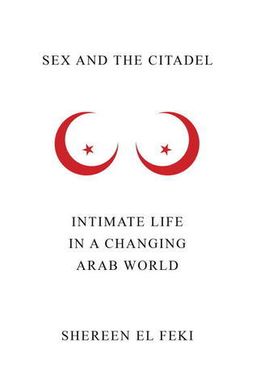
Sex and the Citadel cover

Sex and the Citadel

by Shereen El Feki

Sex and the Citadel reveals the intricate dynamics of sexuality in the Muslim world, focusing on Egypt. Shereen El Feki explores the historical, cultural, and personal narratives that shape intimate lives amidst taboos and repression, offering a window into the tension between tradition and modernity, and the hope for sexual liberation.

Sex, Power, and Private Life

How do revolutions reshape intimacy, and how does private life reveal a nation’s politics? In Sex and the Citadel, Shereen El Feki argues that the story of sexual life in the Arab world is inseparable from questions of power, identity, and reform. She explores how sex—what people do, fear, and desire—becomes a lens on politics, religion, and social change. If you look closely at who controls bodies, words, and bedrooms, you see who really governs citizenship and freedom.

El Feki uses fieldwork in Cairo, Casablanca, Beirut, and Tunis to map how families, clerics, doctors, NGOs, and youth negotiate sexuality amid cultural tightropes. The Arab Spring revealed that liberty in the street demands liberty behind closed doors. Yet, as Michel Foucault observed, sexuality is “a dense transfer point for relations of power.” That’s what El Feki proves: the way citizens love, marry, and protect their bodies mirrors the way states control dissent.

Revolutions and intimate rights

In Egypt’s Tahrir Square, calls for “freedom,” “justice,” and “dignity” echoed what sexual reformers have long demanded. Sexual rights—choice, consent, freedom from violence, access to health—are fundamental democratic rights. Yet these values meet fierce resistance from moralists who claim sexual openness equals Western corruption. The tension between “freedom within a frame” (as a Muslim Brotherhood leader phrased it) and total autonomy defines today’s Arab landscape.

A long historical arc

The modern moral strictures didn’t start yesterday. El Feki traces a rich sexual heritage back to the Abbasid “golden age,” when physicians and poets wrote frankly about desire. Colonialism and nineteenth‑century Western influence recast sexual culture through foreign moral codes. Reformers like Rifa‘a al-Tahtawi admired European civility yet condemned its sexual permissiveness. Later, Islamist revivalists such as Sayyid Qutb turned sexual anxiety into ideological fuel. Over centuries, candid knowledge gave way to suppression, leaving taboos where wisdom once stood.

Society, marriage, and survival

You learn quickly that marriage is the cornerstone of respectability and sexual legitimacy. Yet economic hardship creates widespread “waithood”—prolonged singlehood due to joblessness and high wedding costs. Young people stretch religious norms through alternative unions like ‘urfi, misyar, and mut‘a contracts—semi-legal adaptations that allow intimacy without formal recognition. These workarounds show pragmatic faith: people reinterpret religion to satisfy both moral codes and material constraints.

Gender and control

The book’s moral heart lies in its portrayal of women’s bodies as battlegrounds. Female genital cutting, virginity rituals, and abortion restrictions express how female sexuality becomes politicized. Reformers, doctors, and clerics (like Ali Gomaa or Chafik Chraibi) wrestle between custom and human rights. For women, dignity depends not only on law but on changing social imagination.

New voices and technologies

Youth use social media, online forums, and peer networks to learn and challenge sexual norms. Bloggers like Marwa Rakha and organizations like Muntada Jensaneya use private screens as classrooms. Yet harassment and surveillance remain real dangers. Technology offers rebellion, but also exposure.

Core thread

Across every story—from summer marriages to sex‑worker outreach, from gay networks to trans identity—the lesson repeats: intimate reform requires civic reform. Change in bedrooms must parallel change in constitutions, clinics, and courts.

Ultimately, El Feki argues for slow, culturally grounded progress. Privacy is the seed of freedom, and sexual rights are civic rights. Revolutions may shake power, but sustainable transformation begins in the private domain—where consent, compassion, and knowledge redefine what it means to be free.


History and Moral Tightening

El Feki revives a forgotten chapter in Arab intellectual history. Centuries ago, sexuality was woven into theology, medicine, and art. Physicians and poets in Baghdad discussed anatomy, pleasure, and affection without shame. Abdelwahab Bouhdiba notes that openness once reflected a confidence in faith and reason. But colonial and modern nationalisms redefined morality as respectability. To appear civilized, societies curtailed speech about desire.

Colonial mirror and reaction

Europe’s gaze both exoticized and condemned Eastern sexuality. Gustave Flaubert painted Orientalist fantasies of licentiousness; reformers like al-Tahtawi internalized embarrassment. Later, Islamists read colonial decadence as proof Western culture corrupted youth. Sayyid Qutb’s discomfort in America produced a theology of chastity that still shapes norms. This long filtering replaced expressive tradition with anxiety and silence.

Core reflection

Bouhdiba calls recovery of sexual discourse vital to cultural renewal. Reclaiming balanced, knowledge‑based perspectives—without mimicking Western extremes—could revive intellectual confidence and reduce fear around intimacy.

When you trace this arc, you see how debates over sex today are really debates about identity and historical pride. To move forward, societies must accept that Islamic heritage already hosts diversity of thought about pleasure, ethics, and gender—resources waiting to be rediscovered.


Marriage, Money, and Alternatives

Marriage stands as the gateway to adult legitimacy. If you’re Egyptian, it marks economic readiness and moral status. Yet financial strain delays marriage for millions. Job scarcity, housing costs, and inflated social expectations trap youth in “waithood.” The result is ingenuity—creative forms of union between faith and necessity.

Cultural centrality

Religious texts extol marriage; families enforce its primacy. The famous Tahrir placard—“Go, I want to get married”—was political as well as personal: freedom meant access to partnership and livelihood.

Adaptive unions

Forms like ‘urfi, misyar, and mut‘a arise where formality is unaffordable. Students sign secret contracts to avoid scandal; migrants use temporary marriages to combine piety with desire. These bypass laws but expose women to legal vulnerability—no inheritance, weak divorce protections.

El Feki’s portraits—matchmaker Amr Abdel Megeid balancing demand and tradition—show marriage as both dream and market. Reforming this institution means addressing economy first. You can’t preach morality to hungry youth.

(Note: Similar dynamics occur globally; anthropologists call these “moral economies of intimacy.”) In this context, economic fairness equals sexual stability—a link policymakers often overlook.


Women’s Bodies and Control

The politics of female bodies dominate El Feki’s middle chapters. Practices like female genital cutting (FGM), virginity rituals, and abortion restrictions define how culture maintains control under religious and moral banners. These are not isolated customs—they reveal how social and state power regulates women’s choices.

Persistence of FGM

Despite bans and fatwas, cutting persists among older Egyptian cohorts. Practitioners like Magda perform it as tradition; others medicalize it. The moral justification varies: some clerics defend old habits, others—like Grand Mufti Ali Gomaa—denounce them as harmful. Legal prohibition alone cannot override cultural belief.

Virginity, honor, and market response

Virginity policing—through rituals like dukhla baladi or surgery—turns bodily integrity into family reputation. Hymen repair industries thrive on fear. Some imams permit operations to spare women from ruin; others condemn deception. The conflict reveals how morality trades in appearances more than ethics.

Abortion and rights contrast

Tunisia’s liberal laws allow safe procedures and education; Egypt’s restrictiveness drives risky clandestine work. Activists like Chafik Chraibi push reforms around rape or fetal impairment, using health outcomes to shift moral boundaries. The lesson: sustainable progress must merge medicine, law, and pedagogy.

Central dilemma

When culture treats women’s chastity as communal property, personal agency disappears. Reformers must therefore redefine honor around choice, not control.

For policymakers, this means integrating education, healthcare, and religious dialogue. Laws protect bodies only when belief systems evolve alongside them.


Sexual Economies and Exploitation

El Feki exposes the shadow economies where sex overlaps with poverty and power—from summer marriages to clandestine prostitution. These arrangements show how survival, not desire, drives exploitation.

Summer marriages

Families in towns like Hawamdiyya broker short-term unions for Gulf tourists. Cash payments substitute for dowries; lawyers supply religious cover. Samia’s ordeal—violence, coercion, humiliation—illustrates the moral hypocrisy behind these trades. Enforcement without economic change only pushes exploitation deeper underground.

Sex work and public health

Tunisia’s Rue Sidi Abdallah Guech keeps legal brothels monitored by doctors; Egypt and Morocco criminalize but tolerate hidden markets. NGOs like ALCS in Casablanca distribute condoms and education to protect women while avoiding moral backlash. Doctors like Zahaf use HIV prevention as a legitimate entry point for defending sex workers’ safety. It’s pragmatic reform—health first, stigma second.

Lives behind the trade

Jihane, a recovering addict, and Red Sea “beach boys” show the diversity of survival economies. Drugs, violence, and police abuse create cycles of vulnerability. Without addiction treatment, safe shelter, and fair alternatives, moralization achieves nothing. The only realistic path is harm reduction combined with economic opportunity.

(Note: El Feki’s approach echoes Amartya Sen’s idea of “freedom as capability.” Empowering people economically and medically expands genuine choice.)


Sexual Diversity and Public Space

The book’s later chapters widen to LGBTQ lives and gender nonconformity. Here, El Feki documents voices rarely heard: gay men, trans women, and organizers who navigate stigma through cautious networks.

Men who have sex with men

Classes divide safety: elites behind private doors, working-class men exposed to raids. The Queen Boat trial of 2001 epitomized persecution—anal exams as shaming rituals, vague morality laws as tools of state power. Clinicians clash between reparative therapy (Awsam Wasfy) and affirming practice (Nabil Elkot). The battle mirrors global debates around science versus ideology.

Lebanon as a cautious model

Organizations like Helem and Meem prove that progress grows from shelter and service. Marsa Clinic offers HIV care and gynecological assistance without judgment. Lebanon’s freer association laws enable activism elsewhere impossible. Reform here blends medical outreach, legal defense, and quiet visibility—a combination spreading regionally.

Trans experiences

Randa’s story in Beirut shows that gender transition in Arab contexts is an act of survival. From historical mukhannathun precedents to modern repression, trans people face family expulsion and unsafe hormone practices. Religious authorities diverge—Khomeini’s permissive fatwa contrasts with Sunni caution—but bureaucracies resist legal recognition. Safety demands medical access and anti-discrimination protections.

Practical lesson

Health services and privacy rights are the surest path to expanding tolerance in conservative environments; they lower moral panic while saving lives.

Through these accounts, El Feki demonstrates that progress rests not in confrontation but in creating sustainable, protective spaces for people to live truthfully and safely.


Reform, Privacy, and Long Change

El Feki concludes at the Citadel in Cairo, reflecting on the slow pace of transformation. Political revolutions may remake regimes, but intimate cultures shift one conversation at a time. Privacy—deeply embedded in Qur’anic ethics—offers a bridge between faith and freedom. When reinterpreted positively, it shields personal choice from public intrusion.

Education and institutions

Real liberation comes through better schooling, gender‑aware healthcare, and honest policing. You need environments where therapy, counseling, and free expression coexist safely. El Feki’s call echoes development theory: democracy depends as much on private rights as public votes.

Religion and reinterpretation

Figures like Olfa Youssef advocate ijtihad—renewed reasoning—to reconcile scripture and sexuality. Clerics like Shaykh Ahmad embody “hate the sin, love the sinner” compassion, using pastoral methods to limit shaming. When faith encourages understanding rather than control, moral discourse becomes humane.

Enduring truth

“Safety is in slowness; regret is in haste.” Social change, El Feki reminds you, is generational. Law alone cannot outpace culture; reform must grow from within homes, schools, and hearts.

The book’s final vision binds public health, civic education, and religious empathy. To secure dignity and choice across the Arab world, nurture privacy first—because the quiet freedom of one house today may light the path to collective liberty tomorrow.

Dig Deeper

Get personalized prompts to apply these lessons to your life and deepen your understanding.

Go Deeper

Get the Full Experience

Download Insight Books for AI-powered reflections, quizzes, and more.