
Idea 1
The Brain’s True Purpose: A Story of Prediction, Connection, and Creation
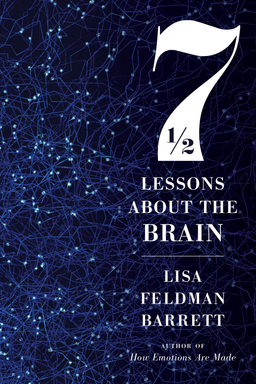
How often have you thought of your brain as a sophisticated thinking machine, endlessly analyzing, reasoning, and interpreting the world? In Seven and a Half Lessons About the Brain, neuroscientist Lisa Feldman Barrett flips this assumption upside down. Rather than a detached computer for thoughts, your brain’s primary mission is something far more primal—and profound. It is not built for thinking but for survival: managing your body’s resources to keep you alive and well in an unpredictable world.
Barrett argues that everything you think, feel, and experience—every flash of insight, memory, or emotion—is downstream from this fundamental mission. Your brain evolved as a budgeting system, predicting your body’s energy needs and controlling thousands of internal processes before they happen. Thinking, feeling, and imagination are evolutionary bonuses, tools to optimize this metabolic economy.
From Worms to Humans: The Brain’s Origin Story
Barrett begins with a ‘half lesson,’ an evolutionary tale starring a primitive creature: the amphioxus, a tiny wormlike chordate that survived without eyes, ears, or a real brain. When predators emerged in the Cambrian period, creatures needed a faster way to sense, move, and predict their environment. Those who could anticipate rather than just react survived. This set the stage for the evolution of neurons and, eventually, complex brains. In short, your brain exists to predict and regulate—to run your body like an economic portfolio of energy investments and withdrawals. Evolution rewarded the creatures that could regulate their body budgets efficiently.
Shattering Myths About “Higher” and “Lower” Brains
We often picture our brains as layered in evolutionary history—a primitive lizard brain at the core, a mammalian emotional system in the middle, and a rational neocortex on top. Barrett calls this “the most successful and widespread error in all of science.” Drawing on genetic and developmental research, she reveals that we have one integrated brain, not three. Every vertebrate brain follows a single manufacturing plan. What differs is the developmental timing: how long certain “construction stages” last across species. The human neocortex isn’t an add-on of rationality but a scaled evolution of ancient tissue found in many other animals. Your neurons aren’t morally superior to those of a lizard or rat—they’ve just evolved around a different body and environment.
The Brain as a Dynamic Network
Next, Barrett reframes the brain as a living network of 128 billion neurons, not a collection of isolated parts. These neurons never rest—they continuously communicate through patterns of electrical and chemical activity, forming hubs of efficiency similar to an airline’s global network. Some regions act as “major hubs,” processing vast information efficiently, but when one fails, ripple effects can cause serious disorders. Flexibility, not hierarchy, defines brain intelligence. Each neuron can change roles, demonstrating what scientists call degeneracy—different sets of neurons can create the same experience or behavior.
From this network, Barrett introduces the concept of complexity: a brain’s ability to create infinite combinations of neural patterns. This complexity fuels memory, creativity, and adaptability. Your brain is not rigid like a pocketknife (with fixed tools) nor uniform like meatloaf (with no structure). It’s alive with evolving combinations, constantly reorganizing to meet new demands—explaining why humans thrive in such diverse environments.
How Little Brains Learn from Big Worlds
Human brains are born unfinished. Unlike baby horses that run within hours, our infants arrive with blank wiring that will be tuned and pruned by caregivers and culture. Through every cuddle, gaze, and lullaby, caregivers teach babies how to regulate their body budgets, pay attention, and interpret the world. Deprivation, as in the Romanian orphan crisis, can stunt brain growth and emotional capacity—evidence that children’s social environments literally build their neural architecture. As Barrett writes, “We have the kind of nature that requires nurture.”
Predicting the World Before It Happens
Your brain is a predicting machine—it constructs reality first and senses second. Barrett illustrates this with a vivid story of a Rhodesian soldier who mis-saw a shepherd boy as an armed guerrilla, proving that perception is a “controlled hallucination.” Our past experiences and predictions sculpt what we see, feel, and decide before sensory input even arrives. This predictive architecture, rooted in centuries of evolution, means that free will exists—but only insofar as we shape our future predictions through new experiences, learning, and empathy.
Brains Work in Social Harmony (and Conflict)
Barrett expands mind beyond the skull: your brain secretly works with other brains. From synchronized heartbeats between lovers to the metabolic relief of social trust, our nervous systems co-regulate one another. Words, too, have physical consequences—they can calm someone’s heartbeat or, through chronic verbal hostility, cause real neural harm. Freedom of speech and biological interdependence thus collide in modern society, urging us toward personal responsibility in how we speak, act, and treat others.
Many Brains, Many Minds, One Species
From the diverse ways cultures define emotion to individuals with autism or schizophrenia, Barrett shows that there is no single “human nature.” Variation isn’t a flaw—it’s evolution’s insurance policy. The mind is a product of a physical brain embedded in its social world, shaping countless ways of being human.
Our Superpower: Creating Reality Together
In her final lesson, Barrett unveils the human brain’s crowning achievement: the ability to create social reality. Using what she calls the “Five Cs”—creativity, communication, copying, cooperation, and compression—we impose meaning on the physical world. These shared fictions, from money to nations, become real through collective belief. Yet this gift also carries moral weight: every boundary or law we invent shapes who thrives or suffers within the system. As Barrett concludes, social reality is humanity’s greatest invention—and its greatest responsibility.
"Your thinking cap is for much more than thinking."
Barrett’s work reminds you that your brain is not a detached mind processor but a living, social, and predictive organ that keeps your body—and our shared worlds—alive. Each moment of empathy, each word spoken, and each boundary drawn literally reshapes collective reality.