
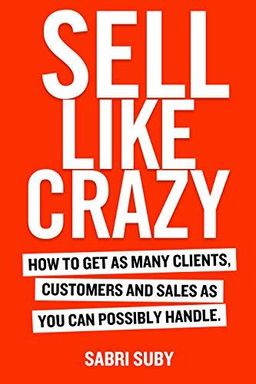
Sell Like Crazy cover

Sell Like Crazy

by Sabri Suby

Sell Like Crazy is your ultimate guide to transforming business growth. Discover proven strategies to convert visitors into loyal, high-paying clients through tailored sales funnels and value-based marketing. Learn to attract and nurture leads, ensuring scalable and sustainable success in a competitive market.

Sell Like Crazy: The Art of Turning Advertising into Profit

Why do some businesses explode with sales while others—often selling equally good products—flounder? In Sell Like Crazy, entrepreneur and marketer Sabri Suby argues that the difference lies not in what you sell but how you sell. He claims that anyone, regardless of industry, can generate an endless stream of clients and sales if they understand the psychology behind buyer behavior and apply a proven, automated system for converting strangers into loyal customers.

Drawing from his experience scaling his Australian digital agency, King Kong, from his bedroom to one of the nation’s fastest-growing companies, Suby breaks down his eight-phase system for predictable and scalable sales. His message is blunt: sales trump everything. Without a reliable way to generate revenue, passion and talent are meaningless. Rather than relying on fleeting marketing trends or gimmicks, Suby offers a timeless, psychology-driven playbook for modern business growth.

A Wake-Up Call for Business Owners

Suby begins with a sobering truth: most businesses fail not because their products are bad but because they cannot sell effectively. Only 4% of businesses survive ten years, and fewer still ever reach meaningful revenue milestones. The underlying cause, he says, is that many founders act as practitioners—chefs, builders, consultants—rather than marketers. They love their craft but neglect the skill that actually keeps a business alive: acquiring customers.

If you want to thrive, Suby insists, you must think and act differently. He urges entrepreneurs to view themselves as marketers first and technicians second. From this perspective, your job isn’t just to bake bread or design software; it’s to sell those things to a market that understands their value. Without this mindset shift, your business becomes a job you created for yourself—not a scalable, wealth-generating enterprise.

The 4% Rule and the Power of Focus

One of the book’s cornerstone ideas is drawn from the Pareto Principle, or the 80/20 rule. Suby refines it further: only 4% of your activities generate 64% of your revenue. These “Highly Leveraged Activities” might include writing compelling sales copy, designing irresistible offers, or nurturing key client relationships. Everything else—checking emails, micromanaging operations—can and should be delegated or automated.

This radical prioritization echoes the philosophies of high-performance thinkers like Tim Ferriss and Dan Sullivan, who stress leverage over labor. Yet Suby’s take is particularly actionable: calculate the value of your time, then ruthlessly outsource or eliminate anything that doesn’t directly produce revenue. In doing so, you create room for “deep work”—the creative, strategic effort that grows a business exponentially rather than incrementally.

Thinking Like a Billionaire

To help readers rewire their thinking, Suby invites them to study how billionaires allocate their scarcest resource—time. He shares stories of entrepreneurs like John Paul DeJoria (cofounder of Paul Mitchell and Patrón Tequila) who built two billion-dollar brands without even owning a smartphone. The lesson: focus on the few decisions and actions that create massive leverage and delegate the rest.

For aspiring entrepreneurs, this means carving out time to work on marketing systems, sales funnels, and customer acquisition strategies. Instead of reacting to what’s urgent, prioritize what’s profitable. Suby contrasts the average founder—constantly firefighting—with the elite business builder who installs automated systems to attract clients, freeing them to focus on growth.

From Selling One-to-One to Selling One-to-Many

Suby’s own journey—from cold-calling in a shipping container to generating hundreds of millions in digital ad revenue—illustrates the book’s central pivot: moving from linear, one-to-one sales to scalable, one-to-many persuasion. By transferring your salesmanship into copy, video, and systems, your message can work for you 24/7. As he puts it, your ads become an army of “salesmen soldiers” delivering your pitch to thousands at once.

This idea, reminiscent of Claude Hopkins’s “Scientific Advertising” or Eugene Schwartz’s “Breakthrough Advertising,” reframes marketing as “salesmanship multiplied.” Technology changes—Facebook replaces radio—but the psychological triggers beneath human decision-making remain constant. By mastering persuasive communication and automating delivery, you build a predictable engine that converts attention into income.

Why This System Works

Suby’s eight-phase framework is universal, adaptable, and data-driven. It works because it reflects timeless sales psychology: people only buy when they trust you, believe your solution will work for them, and see more value in your offer than in their money. Each of the book’s phases—from identifying your dream buyer to creating irresistible offers and deploying automated email follow-ups—targets these psychological checkpoints.

He’s unapologetically pragmatic: this system won’t make you rich overnight, but it gives you measurable control over revenue growth. In a world obsessed with hacks and trends, Sell Like Crazy offers something more reliable—a process you can test, track, and scale. It’s demanding, but it’s real. As Suby says, “If you can put $1 in and get $3 back, you don’t have a marketing budget—you have a money-printing machine.”

If you’ve ever asked, “How can I get more clients without relying on luck?” this book provides a concrete answer. The upcoming key ideas unpack each phase of Suby’s system—from understanding your dream buyer and crafting magnetic offers to mastering sales conversions and automating growth. By the end, you’ll see that selling like crazy isn’t about manipulative tactics—it’s about building trust, delivering value, and setting up systems that make success inevitable.


The 4% Rule: Focus on What Moves the Money Needle

Suby’s 4% rule is one of the book’s most transformative principles. He argues that if you audit every task you perform in your business, you’ll discover that only a tiny fraction directly generates profit. The rest—emails, admin, and meetings—only consume your time. The challenge, then, is to identify the 4% of activities that drive 64% of your revenue and dedicate yourself to those relentlessly.

Identifying High-Leverage Work

In his own agency, Suby found that his top money-making tasks included writing sales copy, crafting offers, producing videos, and designing funnels. These high-leverage tasks multiplied revenue because they directly influenced how effectively his business could acquire and convert customers. Everything else—from scheduling meetings to processing invoices—was delegated or automated.

He encourages entrepreneurs to perform what he calls a “King’s Audit”—a systematic review of their calendars and workloads to identify time-wasting habits. Once you’ve calculated your hourly value, anything that costs less than that—like cleaning your house or running errands—should be outsourced. Every hour reclaimed is an hour reinvested in growth.

Thinking Like an Investor

Suby compares time to capital. Just as investors expect returns on financial investments, entrepreneurs should expect returns on time investments. Wasting a $100-hour on a $10 task is self-sabotage. This perspective echoes Peter Drucker’s famous dictum: “Do first things first—and second things not at all.”

Ultimately, the 4% rule is about ruthless prioritization. When you focus on what moves the money needle, your weekly output compounds. Instead of working harder, you work sharper. Over time, this discipline creates exponential (rather than incremental) business growth.

Key takeaway:

Your business will explode the moment you stop doing 96% of what doesn’t matter. Replace busywork with power moves, and you’ll finally have time to lead, strategize, and scale.


The Godfather Strategy: Making Irresistible Offers

One of Suby’s most powerful revelations is the art of crafting an “offer they can’t refuse”—a concept he calls the Godfather Strategy. Inspired by the movie’s famous line, the strategy means constructing an offer so compelling, so loaded with value and risk reversal, that saying “no” feels irrational.

Building Value and Reducing Risk

Most businesses, Suby observes, make weak, generic pitches like “quality service” or “fast delivery.” These don’t move anyone. Instead, he insists that every offer must contain seven elements: rationale, value building, clear pricing, easy payment options, attractive bonuses, a power guarantee, and genuine scarcity. The goal is to make buying feel safe and exciting.

Consider Casper’s mattress trial: “Get America’s best-reviewed mattress, delivered free, for a 120-night trial.” That is a Godfather Offer. Suby used a similar strategy for a client, Enso Homes, guaranteeing to build houses within 30 weeks or pay clients $5,000. The result? A $7 million leap in eight months. The key was specificity, confidence, and aligning the offer with the customer’s core fear: delayed home completion and financial stress.

Guarantees as Trust Builders

Suby redefines guarantees not as a liability but as an asset. Whether it’s Domino’s “30 minutes or it’s free” or LifeLock’s $1 million protection promise, guarantees transfer risk from the buyer to the seller and neutralize skepticism. In crowded markets, the boldest promise wins attention, builds trust, and converts fence-sitters.

(This principle recalls avant-garde advertiser Claude Hopkins, who said, “Make your offer so great that only a lunatic would refuse to buy.” Suby brings that century-old wisdom into the digital era.)

Action as a Habit

Ultimately, the Godfather Strategy transforms sales from persuasion into facilitation. You’re not twisting arms—you’re removing barriers. When prospects fully believe your offer will solve their problem, the sale becomes an act of relief, not resistance. For Suby, that’s what separates amateurs from professionals: the courage to stake your reputation on your promises.


The Larger Market Formula and the 97%

Suby’s Larger Market Formula shatters one of the biggest misconceptions in marketing: that you should only target people ready to buy. In reality, this ‘3%’ of any market is already being fought over by every competitor. The goldmine, he explains, lies in the remaining 97%—the ones who aren’t ready yet but will be soon if educated properly.

The Buyer Pyramid

At the top, 3% are active buyers. The next 17% are information gatherers who know they have a problem but need more clarity. Another 20% are “problem aware” but not yet ready to act. The rest—about 60%—don’t realize they even have a problem. Most businesses shout at the 3%, leaving huge opportunity untouched.

Suby’s method? Create education-based marketing that gradually moves prospects up the pyramid. By offering helpful content through what he calls High-Value Content Offers (HVCOs)—like free guides, reports, or videos—you attract attention without pressure. You’re not selling; you’re teaching. The result? Increased trust, engagement, and ultimately, conversions.

Turning Cold Leads into Hot Buyers

Suby demonstrates how a simple shift in wording—say, from “Get a quote” to “Download our expert 11-point buyer’s guide”—can triple conversion rates. By giving value first, you position your brand as the trusted expert rather than a pushy salesperson. When the 97% are finally ready to act, they call you first.

This approach parallels Robert Cialdini’s concept of “reciprocity”: people feel compelled to return value when they first receive it. It also mirrors Gary Vaynerchuk’s “Jab, Jab, Right Hook” ethos—give, give, give, then ask. As Suby puts it bluntly: “Show them you can help by actually helping them.”


The Magic Lantern Technique: Building Trust at Scale

How do you transform skeptical strangers into enthusiastic buyers—without pushy sales tactics? Suby’s answer is the Magic Lantern Technique, a content-driven system that builds trust automatically. The name refers to the old invention that projected light to tell stories; in Suby’s metaphor, your marketing must similarly illuminate the path from a prospect’s problem to their dream outcome.

Educate, Don’t Sell

After someone downloads your High-Value Content Offer, most companies immediately spam them with sales emails. Suby suggests the opposite: drip out a short video series that provides genuine education. Each video solves one small pain point, builds credibility, and subtly leads to your core offer. People begin to trust you before you ever ask for the sale.

He illustrates this with a PR consultant example: first teach how to audit social media, then share “11 things never to say to a journalist,” then provide a template for contacting influencers. Each piece moves the prospect closer to their goal—getting featured in the media—while reducing skepticism. By the time you present your offer, you’ve already proven you can deliver results.

Trust Through Sequencing

The brilliance of the Magic Lantern Technique lies in sequence design. It meets people where they are (cold, warm, or hot traffic) and nurtures them step by step. This principle echoes Donald Miller’s StoryBrand framework, where the business becomes the guide, not the hero. When executed well, this approach can increase conversion rates dramatically—without adding more traffic or ad spend.

Practical payoff:

You stop chasing clients. They start chasing you—because your marketing has already delivered value and demonstrated expertise before the sales call even happens.


Sell Like a Doctor: The Psychology of Conversion

One of the most refreshing parts of Sell Like Crazy is Suby’s comparison between master salespeople and doctors. He argues that too many entrepreneurs act like medicine pushers, prescribing before diagnosing. A real professional, by contrast, asks questions, listens deeply, and recommends a solution only after understanding the problem fully. This approach doesn’t just increase conversions—it builds long-term trust.

Diagnose Before You Prescribe

In Suby’s model, sales calls follow a diagnostic flow: identify pain, explore root causes, illuminate the cost of inaction, and envision the desired future. Only then do you present your “prescription”—your product or service—as the logical solution. This method transforms selling from manipulation into consultation. Prospects feel heard and understood, not pressured.

Deliver Value Before Payment

Suby even encourages giving value during the call itself—offering insights or resources that create an “aha” moment. By doing so, you trigger the reciprocity principle and prove credibility instantly. The close, then, becomes frictionless. As he puts it: “Prove you can help by actually helping.”

When someone says yes, they’re not buying your product—they’re buying certainty. And certainty comes from empathy and expertise, not hype. This consultative approach reflects what modern behavioral economists like Dan Pink and Daniel Kahneman have noted: people decide emotionally but justify rationally. Selling like a doctor addresses both dimensions seamlessly.


Automate and Multiply: The Power of Email

At the top of Suby’s automation stack stands the humble email. In a world obsessed with social media trends, he reminds us that email remains the highest-ROI marketing channel—offering a reported 4,400% return on average. More than any platform, it allows personal, scalable communication that builds long-term relationships and turns leads into repeat buyers.

Owning the Relationship

Suby warns against building your business on rented land like Facebook or Google, where algorithm changes can wipe out traffic overnight. Your email list, by contrast, is an asset you own. It’s insurance against platform volatility and the foundation of consistent sales. As he puts it, “Don’t leave the fate of your business in someone else’s hands.”

Writing Emails People Actually Read

The secret, he says, is to write emails that feel personal, entertaining, and human. Ditch corporate templates and talk like a friend. Share stories. Be bold. In his agency, plain-text emails outperformed flashy designs because they bypass spam filters and feel authentic. He applies the same principles that govern great ads: curiosity, empathy, and consistent value.

Suby’s “P vs. C” concept distinguishes personal-looking emails (P group) from commercial-looking ones (C group). People read the first group, delete the second. If you want your emails opened, you must sound personal—even if you’re sending to thousands. Combine this with clear calls to action and persistent follow-up, and your email list becomes a perpetual profit machine.


A Business Builder Mindset: From Ownership to Freedom

In the book’s conclusion, Suby brings everything full circle. Building a successful company isn’t just about more money—it’s about creating the freedom to live fully. Yet freedom, he notes, comes not from avoiding hard work but from building systems that reward it. The difference between a business owner and a business builder is leverage: owners work in their business; builders work on it.

Business as a Vehicle for Mastery

For Suby, entrepreneurship is the ultimate form of personal development. It demands resilience, discipline, and clarity. The challenges that test you—cash flow crises, client failures, burnout—also sharpen you. Like the athletes and warriors he admires, Suby sees pressure as fuel. High performers, he says, “learn to relish pressure.”

Taking Relentless Action

If there’s one message he leaves readers with, it’s this: nothing works unless you do. The book’s methods aren’t get-rich-quick tricks; they’re tools demanding consistency and grit. Suby’s own work ethic—shaped by his single mother’s sacrifices and his 4 a.m. mornings—threads through every chapter. He calls it the “single-parent-mother work ethic”: an unrelenting commitment to make things happen no matter what.

When you combine that work ethic with Suby’s systems—automated marketing, irresistible offers, and a focus on revenue-driving work—you don’t just sell like crazy; you build a business that sustains your time, impact, and freedom. In other words, you build a life worthy of the effort.

Dig Deeper

Get personalized prompts to apply these lessons to your life and deepen your understanding.

Go Deeper

Get the Full Experience

Download Insight Books for AI-powered reflections, quizzes, and more.