
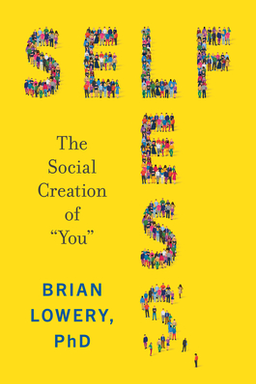
Selfless cover

Selfless

by Brian Lowery

Dive into ''Selfless'' and explore how relationships, communities, and technology construct and shape your identity. Brian Lowery illuminates the social creation of self, offering fresh perspectives on understanding who we truly are.

Self Is a Social Creation, Not a Solitary Essence

Who are you—really? When you close your eyes, is there a singular 'you' guiding every thought, decision, and emotion? In Selfless: The Social Creation of “You”, Stanford psychologist Brian Lowery flips one of humanity’s most cherished ideas upside down: he argues that the self is not a fixed essence living inside your head, but a social creation continually forged and reshaped in your interactions with others.

That simple but radical claim transforms how you might think about identity, freedom, morality, and meaning. Lowery contends that we’re not self-contained islands, nor masters of our own inner world. Instead, we exist as dynamic networks of relationships. Every glance, conversation, and social rule subtly molds who we are. And because our selves are social, they reveal as much about power, inequality, and history as they do about personality or choice.

The Social Mirror: How Others Make You

Lowery builds on sociologists like Charles Cooley (who coined “the looking-glass self”) and George Mead, explaining that we only see ourselves through others’ reflections. Your self is a hall of mirrors: when people treat you with warmth, respect, or fear, you absorb those cues into your sense of identity. When social psychologist Margaret Shih had Asian-American women identify as “Asian” before a math test, they performed better; when they identified as “women,” they scored lower. Their self—and performance—shifted with the social reflection surrounding them. Each role you inhabit (parent, employee, friend) is activated by context, producing multiple selves.

Freedom Isn’t What You Think

If every self depends on others, is freedom even possible? Lowery pushes readers to confront that paradox. We dream of radical autonomy—being “unapologetically ourselves”—but he suggests this craving is partly delusional. The desire for freedom rests on relationships, since without shared norms to define who we are, we’d be lost. He compares a world without structure to a coloring book without outlines: there’s no picture to fill in. True freedom lies not in escaping relationships but in recognizing their power to define and sustain us.

How Context Shapes Selfhood

The book draws on experiments and stories—from a rubber-hand illusion that merges someone else's body into yours, to studies showing that social exclusion makes people see both themselves and others as less human. You aren’t a fixed entity dropped into relationships; you are constituted by them. Your sense of morality, for example, forms through shared stories—helping a stranger might make you a “good person” in one culture and a “naïve sucker” in another. Lowery even connects these subtle mental patterns to broader systems: race, gender, technology, and the state—all powerful social mirrors that continually rewrite the story of “who” we can be.

Why This Matters

This theory of the self has profound implications. It helps explain why inequalities endure: some people wield disproportionate power to define social norms and thus control identity formation (drawing on insights from philosophers like Michel Foucault and psychologists such as Claude Steele). It clarifies our struggles with belonging and freedom—we crave community yet resist its constraints. And it reframes ethical life: responsibility isn’t just personal but relational. You help shape others every time you interact.

In the pages ahead, Lowery examines three levels of this social creation—You and Your Self, You and Them, and You and Everything. He explores how relationships construct personal identity, how groups and society amplify or restrict who we can become, and how the tension between structure and freedom shapes meaning itself. By the end, you’ll see that the 'true self' isn’t something to find inside you—it’s something we build together, moment by moment, hand in hand.


The Illusion of the Inner Self

Most of us think we have a solid core—a private, unchanging 'me' beneath the shifting surfaces of life. Lowery dismantles that comforting illusion. You may feel certain that the voice in your head, the person making choices and forming opinions, reveals who you truly are. But research and history tell a different story: identity is fluid, socially constructed, and perpetually rewritten.

From Philosophy to Psychology: The Crumbling Core

Tracing ideas from René Descartes to the self-help gurus of today, Lowery shows how Western individualism built the myth of the inner self. Descartes’ famous “I think, therefore I am” separated mind from world; Enlightenment thinkers like Immanuel Kant equated reason with moral law and autonomy. By the 20th century, capitalism and consumer culture transformed this philosophy into an economic doctrine of self-determination (echoing Adam Smith’s “invisible hand”). Your success or failure became proof of your personal worth.

Contrast this with ancient societies: as historian Christopher Gill notes, Greeks and Romans located identity in social roles rather than private feelings. There was no 'I-centered' self. St. Augustine’s revolutionary Confessions helped invent introspection. The modern sense of selfhood—internal, emotional, limitless—was born. Today, we see the result: people believe they can manifest reality merely by thinking positively. Rhonda Byrne's The Secret epitomizes this obsession with inner power, offering the seductive but false promise that mental energy alone can shape the universe.

The Neuroscience Trap

Even science reinforces the fantasy of self-containment. The 'Decade of the Brain' in the 1990s promised to map where identity 'lives' in neuronal networks. Yet, as Lowery warns, locating thoughts in the brain doesn’t capture what it means to be human. He describes how functional MRI was used to visualize thinking—as if you could watch the 'little person at the controls.' In reality, much of what drives us happens in the unconscious, inaccessible to introspection. We literally don’t know why we do what we do.

Memory and the Self You Invent

Philosopher David Hume argued centuries ago that the self’s continuity is a fiction built from memory. Each recollection subtly changes with every retelling. Experiments confirm this: people can be induced to remember crimes that never occurred. If your identity depends on your memories, and they’re fluid, then so are you. You’re not discovering a permanent core; you’re creating a coherent story in retrospect.

Lowery’s diagnosis is humbling. We are meaning-making creatures who fill in gaps for comfort, constructing selves that feel stable because we crave stability. The danger is mistaking that narrative for truth. When we cling to the illusion of an inner, unchanging essence, we lose sight of our relational origins—and risk denying that we are products of ongoing social co-authorship.


Freedom: A Paradox of Connection

Everybody wants to be free—to speak, move, and choose without constraint. Yet in Selfless, Lowery reveals that freedom is inseparable from connection. Without structure imposed by relationships, we would have no coherent self to begin with. Your autonomy depends on others recognizing and constraining you.

Freedom Is Not Isolation

Lowery’s own story—a 17-year-old frisked by Chicago police—illustrates the misunderstanding of freedom as mere absence of interference. Yes, he lost his physical liberty, but his sense of freedom had already been shaped by racial and social hierarchies. Real constraint often works through invisible scripts: what class you occupy, how others perceive your body, the expectations of your community. You can't be free from these forces because they define who you are.

Even internal compulsions show this paradox. You may 'freely' choose coffee every morning—but if that choice is driven by addiction or cultural ritual, where does freedom end and habit begin? Our desires mirror the systems around us, not pure willpower. And when we link morality to personal choice (“I’m a good person because I donated”), we forget that goodness itself is socially constructed.

Freedom’s Social Architecture

A world without constraint would be psychologically impossible. Without shared rules—traffic laws, norms of conversation—life becomes chaos. To be 'free' means living within predictable systems that provide order. Humans need that order to feel that actions matter. In studies on compensatory control, when people lost their sense of structure, they perceived random patterns as meaningful just to restore coherence. We build manageable worlds because the feeling of freedom demands it.

The conclusion, unsettling but liberating, is that relationships are both hugs and straitjackets. They bind us, yet they make life livable. You can’t be yourself by yourself. To live freely, you must accept the constraints that give your identity shape—and participate consciously in the web that builds it.


Hugs, Straitjackets, and the Power of Relationships

When Lowery says relationships are both hugs and straitjackets, he means they comfort and confine us simultaneously. Every bond—family, friendship, love, even brief encounters—imposes limits while providing meaning. You’re constantly trading freedom for coherence.

The Need for Connection

The COVID-19 pandemic proved how much we depend on others. Studies show that social exclusion doesn’t just make you sad—it makes you see yourself and others as less human. In Lowery’s words, “our humanity depends on recognition from others.” Even a virtual ball-toss game with strangers demonstrated this: neglected players later conformed more in group tasks, desperate to reconnect. We barter autonomy for belonging because belonging sustains our selfhood.

Relationships Quietly Rewrite Us

From posture mirroring to speech shifts, we unconsciously adjust to others. In one study, participants changed their automatic racial associations depending on whether the researcher’s T-shirt read “Eracism.” A simple cue reconfigured their implicit biases. What we think of as authentic opinion or personality is partly borrowed from the ambient culture of our interactions. Every conversation reshapes the mirrors that constitute you.

So relationships are not optional—they create structure, help you navigate the social maze, and make you understandable to others. But they also limit who you can be. The trick, Lowery suggests, is to recognize constraint as creation—a hug, not a prison. Within those boundaries, real freedom emerges: the power to participate in shaping who we all become.


Building Selves Within Close Bonds

What happens in our most intimate relationships—family, partners, lifelong friends—is where the architecture of the self is most visible. Lowery examines how our selves overlap with others, often so profoundly that losing or changing those relationships can feel like losing part of our body.

Overlap and Inclusion

Psychologists like Arthur Aron describe close relationships as 'including others in the self.' Lowery takes this literally: our identities are composite mosaics. You might speak with your mother’s tone, mirror your partner’s humor, adopt your mentor’s worldview. We define ourselves against difference, but much of what we think is uniquely 'ours' is actually shared overlap disguised as individuality.

Tension and Change

Close relationships also expose how social influences can harm. Gaslighting, described through the film Gaslight, shows what happens when someone manipulates your perception of reality until you feel insane. Similarly, Eileen Pollack’s account of sexism in Yale’s physics department illustrates how relationships within institutions can erode selfhood. When environments persistently define you as less capable, they deconstruct who you believe yourself to be.

You can’t protect a core self from others’ influence, but you can diversify your network. Each new relationship shifts your self, diluting harmful mirrors. Rather than trying to shield identity from others, broaden the circle of reflection.


I Am Because We Are: Collective Identity

Lowery borrows the Zulu phrase “Umuntu ngumuntu ngabantu”—“I am because we are”—to capture how deeply our group memberships shape our selves. Family is immediate, but social identity stems from belonging to larger collectives: ethnicity, nation, gender, religion. These structures extend who you are across time and space.

The Invention of Groups

Social groups aren’t discovered—they’re invented. Borders, races, nations, even genders are stories people agree to keep telling. Lowery recounts how race in U.S. law was literally decided in court (the 1878 In re Ah Yup case ruled Chinese people weren’t 'white'). Scientific advances like genetic testing don’t erase these boundaries—they often repackage them, as when companies claim your creativity is encoded in DNA. These narratives grant meaning and belonging but also impose hierarchies.

Race, Gender, and Belonging

The Rachel Dolezal controversy perfectly illustrates how identity depends on acceptance. Dolezal proclaimed herself Black based on cultural affinity, but when her community withdrew recognition, that identity disappeared. Group boundaries are guarded fiercely because they protect members’ sense of self. Challenges to those boundaries—whether a trans woman competing in sports or immigrants claiming national belonging—feel existential because they threaten the shared structure that makes identity meaningful.

Group identities are not just about limitation; they extend the self through connection and continuity. Belonging to a nation, culture, or religion ties your life to past and future generations. The price of coherence is constraint—but the reward is being part of something larger than yourself.


Technology and the State as Identity Architects

In our hyperconnected age, Lowery brings identity into the digital and political realm. Technology and nation-states together curate who we see, what we remember, and ultimately, who we become.

Technology: The Mirror with a Billion Faces

Social media was once hailed as liberation—a space where anyone could reinvent themselves. Early users like writer Emily Lloyd celebrated the ability to be 'Butch for a day' online, freed from physical constraints. Yet algorithms evolved to feed familiarity, not freedom. Addictive platforms like TikTok deliver curated comfort zones instead of diversity. Even your memories are now managed: your phone chooses which photos to resurface, editing your past and narrowing future possibilities. The paradox of endless choice becomes paralysis; your options are filtered through data predicting who you already are.

Nationhood: The Political Self

Nation-states institutionalize identity. They regulate intimacy (as Georgia’s sodomy laws did), define family (through marriage statutes), and wield force to enforce belonging. Philosopher Max Weber described the state as holding a monopoly on legitimate violence, but Lowery adds: its true power lies in shaping belief. Constitutions begin with 'We the People'—a collective self whose boundaries determine justice and inclusion. When those boundaries move, as in debates over immigration or race, citizens feel personal dislocation. Protecting the nation often means defending one’s own sense of self.

Technology and governance fuse modern identity: digital mirrors reflect selective versions of our community, and political narratives define who counts as human, citizen, or “real” patriot. To see yourself clearly, Lowery suggests, you must look at who controls the lenses you use.


Meaning, Mortality, and the Social Continuum

When everything—from personality to nationality—is socially built, what gives life meaning? Lowery turns to mortality to find out. Death, he argues, clarifies the relationship between self, freedom, and purpose.

Death and Meaning

He recounts the self-immolation of Buddhist monk Thích Quảng Đức and the despair of Tunisian street vendor Tarek Bouazizi. Both deaths catalyzed revolutions, yet they reveal different experiences of meaning: one deliberate and serene, one desperate and enraged. For meaning to exist, life must feel coherent and connected to something beyond the self. We seek purpose because it ties our brief existence into the social web that transcends it.

Freedom in Purpose

Lowery tells of a man diagnosed with HIV who kept planting tomatoes despite expecting not to live long enough to eat them. He found meaning not in outcome but in agency—the freedom to tend life amid limitation. Similarly, Viktor Frankl’s insistence that the last human freedom is choosing one’s attitude demonstrates how even constrained lives retain dignity through intentional choice.

The Self Beyond Death

Death, Lowery concludes, doesn’t kill the self completely. Relationships persist in memories and influence. You live on when others act through you—friends quoting your words, students recalling your lessons. Physical death ends consciousness, but social death comes later, when your impact finally dissolves from collective memory. Meaning, therefore, is social immortality: sustaining coherence through relationships that outlast our bodies.

Ultimately, life matters because we matter to others. We build selves through connection, lose them through isolation, and preserve them through love. To live meaningfully is to participate fully in this web—to give generously, and leave gracefully.

Dig Deeper

Get personalized prompts to apply these lessons to your life and deepen your understanding.

Go Deeper

Get the Full Experience

Download Insight Books for AI-powered reflections, quizzes, and more.