
Idea 1
The Joy of Rational Parenting: Why Having More Kids Can Make You Happier
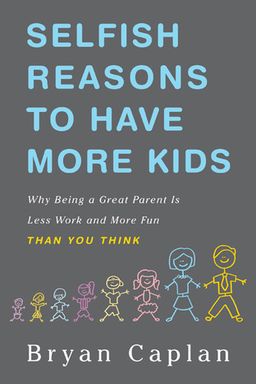
Have you ever felt torn between the joy of raising children and the fear of losing control over your own life? In Selfish Reasons to Have More Kids, economist and behavioral scientist Bryan Caplan challenges the modern narrative that parenthood is a joyless grind of sacrifice and sleepless nights. He argues that not only is parenting less powerful in shaping a child's destiny than we assume, but that less effortful parenting can actually make both parents and children happier. If you embrace evidence from behavioral genetics and adjust your expectations, you might even discover that having more children enriches your life rather than overwhelms it.
Caplan’s thesis turns the guilt-driven message of modern parenting manuals on its head. He suggests that parents’ obsession with control—the constant micromanaging, supervising, and anxiety over every decision—is misguided. Drawing from twin and adoption studies, he confidently declares that nurture matters far less than nature in determining how children turn out. Most of what makes your children who they are comes from their genetics and their own choices, not your parenting style. The upshot? Relaxation is not neglect—it’s rational.
Rethinking the “Parenting Trap”
Modern parents, Caplan points out, are working harder than ever. Time diaries show that mothers today spend more hours on childcare than mothers in the 1960s, even though most now have outside jobs. Fathers have doubled their effort too. Yet despite this unprecedented devotion, surveys reveal that parents today are only slightly less happy than the child-free. Why the mismatch? Because Today’s Typical Parents are trying to live up to unsustainably high standards. They treat parenting like a professional competition rather than an experience to enjoy.
Caplan invites you to imagine a simpler model. Instead of seeing kids as clay to be molded, picture them as flexible plastic—resilient yet naturally inclined toward their inherited tendencies. Push too hard, and they may temporarily comply; relax, and they’ll bounce back to who they are meant to be. The illusion of control is powerful, but destructive. He urges parents to see through it, ease up on themselves, and reclaim both joy and sanity.
The Science Behind “Relaxed Parenting”
At the book’s core is a sweeping review of behavioral genetics research—particularly twin and adoption studies—which separates genetic influences from environmental ones. Decades of research show that twins raised apart tend to resemble one another as adults just as much as twins raised together. Adopted children, who share their parents’ environment but not their genes, display little resemblance to their adoptive families in intelligence, personality, or long-run success. Over time, early differences fade. Caplan calls this process “fade-out”: parents can influence short-term behavior, but long-term outcomes regress toward the genetic mean. An adopted child raised by Nobel laureates will likely grow up smarter than most, but not much smarter than her biological peers.
This doesn’t mean parents don’t matter at all. They shape how children feel about them—the affection, respect, and memories that last a lifetime. But you can’t engineer a child’s intellect or happiness through excessive effort. The best parenting, he argues, recognizes the limits of control and replaces perfectionism with presence.
From Fear to Freedom: Kids Are Safer Than Ever
Caplan uses hard data to confront what he calls “the parental anxiety epidemic.” Contrary to the sensationalism of media headlines, he shows that children today are five times safer than they were in the so-called “idyllic” 1950s. Child mortality, kidnapping, and even violent crime have all plummeted, largely thanks to medical progress and public safety innovations. Yet parents fret more than ever, curtailing freedom and fun in the name of protection. Caplan argues that anxiety, not danger, has become the real parental hazard.
Drawing inspiration from Lenore Skenazy’s Free-Range Kids, he encourages parents to practice prudence, not paranoia. Expose yourself gradually to your fears—let children walk to school, stay home alone, or even explore the neighborhood unsupervised. The goal isn’t recklessness but a balanced confidence in the real (and very low) risks of modern childhood.
Why Selfishness Can Be a Force for Good
Caplan’s provocative use of the word “selfish” isn’t a license for neglect—it’s a correction against unhealthy martyrdom. He reminds readers that “parents count too.” If you neglect your own happiness, you transmit stress, not virtue. “Secondhand stress,” he writes, can be as toxic as secondhand smoke. Children want parents who are calm and loving, not exhausted and irritable. Relaxation, delegation, outsourcing chores, and even screen time aren’t moral failings—they’re pragmatic tools for preserving harmony. A happier home isn’t just better for you—it’s better for your kids.
A New Deal for Families
Ultimately, Caplan invites parents to strike a new balance between effort and enjoyment, between freedom and control. If you loosen your grip, recognize that genetics shoulders much of the developmental work, and stop tormenting yourself with guilt, you may realize that children are a better bargain than you thought. And if parenting takes less work than you feared, why not “stock up”? In a world obsessed with doing less for more gain, few investments promise as rich a return on happiness as one more child.
Key Message
You don’t need to be a perfect parent—you just need to be a happy one. Relax, enjoy your children for who they already are, and you might rediscover the fun in family life. According to Caplan, it’s not only morally acceptable to take it easy—it’s scientifically sound and psychologically wise.