
Idea 1
Seinfeldia and the Fictional Life of Reality
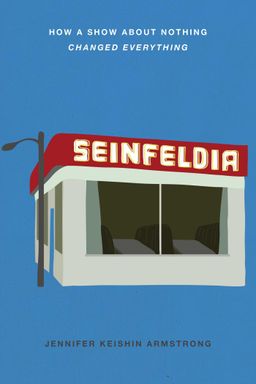
What happens when a television sitcom becomes a living world? In Seinfeldia, Jennifer Keishin Armstrong argues that Seinfeld created more than comedy—it built an alternate cultural dimension where jokes, characters, and props migrated into everyday life. She calls that realm Seinfeldia: a porous zone between television fiction and civilian reality.
The birth of a world built on jokes
Armstrong begins where Seinfeld itself began: Jerry Seinfeld and Larry David swapping jokes about breakfast cereal and supermarkets at Westway Diner in 1988. That banter became a blueprint for a show about nothing—a sitcom where plot bowed to conversation. Seinfeld defied network formulas, relying on Rick Ludwin’s support at NBC and surviving early skepticism by sheer novelty. From that informal beginning came a television grammar of observation, irony, and social minutiae.
(Note: Armstrong echoes cultural analysts like Pierre Bourdieu and Umberto Eco, showing how popular art becomes collective language.)
From creation to cultural contagion
You see the contagion unfold as the series gains traction. First, Armstrong traces the fragile pilot—a four-episode experiment salvaged by Ludwin’s budget shuffle. Then she shows how precise casting, from Jason Alexander’s neurotic George to Michael Richards’ kinetic Kramer and Julia Louis-Dreyfus’ luminous Elaine, created personalities strong enough to rewrite sitcom ensemble norms. They didn’t fill roles; they made archetypes.
With Tom Cherones’ direction and Jonathan Wolff’s slap bass rhythm, Seinfeld developed an aesthetic—semi-cinematic while keeping live-audience pacing. The tone was unorthodox: bleakly funny, socially self-aware, allergic to emotional closure. Larry David’s “no hugging, no learning” decree made Seinfeld a manifesto of modern irony. Those rules built a blueprint for countless later comedies, from Friends to 30 Rock.
Networks, fandoms, and the cultural industry
Seinfeld didn’t just amuse; it invented new economics for television. Armstrong tracks how its slow rise—from cult status to NBC’s Thursday-night anchor—reshaped ratings logic. As the show grew, NBC learned that experimental humor could pay off. Syndication transformed Seinfeld from weekly event into global infrastructure. By its fifth rerun cycle, stations worldwide were paying record rates. That syndication success also altered how comedies were written and sold: self-contained, rewatchable, endlessly quotable.
Larry David’s departure and the tonal shift
Armstrong captures the creative rupture when Larry David left before season eight. Without his rewriting hand, Jerry Seinfeld and new writer-producers like Alec Berg and Jeff Schaffer rebuilt the workflow. Scenes shortened; pace accelerated; visual gags took center stage. Director Andy Ackerman introduced Steadicams, crane shots, and even toilet POVs, creating a latter-day Seinfeld that was brisk, surreal, and filmic. That evolution split fans—some loved the spectacle, others missed David’s moral bleakness.
Cultural friction and controversy
Because it was ubiquitous, Seinfeld drew cultural scrutiny. Armstong recounts clashes around race, religion, and gender—from Danny Hoch’s protest against a stereotyped accent to outrage over “The Puerto Rican Day Parade.” Jewish identity debates centered on whether Seinfeld’s worldview was deeply ethnic or merely New York-coded. Some episodes, like “The Bris,” forced introspection; others like “The Outing” won GLAAD praise for satirizing homophobia. The show’s contradictions mirror modern creative dilemmas—can satire punch without wounding?
Legacy and the rise of Seinfeldia
When the finale aired—an ironic courtroom punishment written by David—Seinfeld closed as both moral reckoning and crowd spectacle. Yet closure was temporary. In syndication and online revival, Seinfeld escaped television altogether. Armstrong’s concept of Seinfeldia explains how fragments of the show live in Brooklyn baseball nights, Festivus rituals, meme accounts, tourism, and merchandise empires. The real Kramer sells tours; the Soup Nazi sells autographs; fans share emoji apps. Every callback becomes an industry.
Core insight
Armstrong’s book isn’t just television history—it’s anthropology of modern fandom. You live in Seinfeldia anytime a line, face, or gesture from a screen organizes real social behavior. Fiction became civic reality, and Seinfeld built the passport.
In summary, Seinfeldia shows that a sitcom can mutate into cultural architecture. Through Armstrong’s narrative—from diner banter to billion-dollar syndication—you see how creative collaboration, network leniency, and fan participation transformed everyday absurdity into a shared social language. Seinfeld didn’t just depict life’s quirks; it became one of them.