
Idea 1
Seeking Wisdom: Creativity as a Spiritual Path
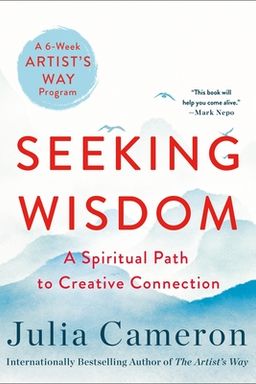
Have you ever wondered whether creativity could be more than just self-expression—whether it might be a form of prayer? In Seeking Wisdom: A Spiritual Path to Creative Connection, Julia Cameron extends the legacy of her landmark work, The Artist’s Way, to explore one radical idea: that creativity and spirituality are not separate paths but one and the same journey. This six-week guide is equal parts spiritual manual, recovery workbook, and creative discipline—a call to talk directly with the God of your understanding and let that conversation transform your art, faith, and life.
Cameron contends that true creative freedom arrives only when we step beyond the self and collaborate with a Higher Power—or, as she puts it, “the force that through the green fuse drives the flower.” This book invites you to explore that force through writing, walking, prayer, and playful adventure, renewing both faith and creative productivity. Structured as a six-week course, each section builds a bridge from personal experience to divine guidance, using accessible spiritual practices to dissolve creative and emotional blockages.
When Creativity Meets Divine Dialogue
Early in her life, Cameron hit a personal bottom—an alcoholic writer blocked by fear, perfectionism, and despair. Through sobriety and prayer, she discovered a creative recovery that became both her vocation and her ministry. In finding her own Higher Power, she redefined prayer from a stiff religious ritual into a living conversation: honest, colloquial, vulnerable, and surprisingly playful. For Cameron, “talking to God” eventually meant picking up a pen and writing on the page. Writing wasn’t something she did instead of praying; writing became the prayer itself.
In this book, that discovery becomes her central message. She asserts that everyone—artist or not—has access to divine connection through creativity. Our acts of writing, painting, or designing can serve as vessels for the Creator’s energy. You don’t need to kneel, memorize formal prayers, or even believe in a personal God. You can pray to energy, nature, Good Orderly Direction, or “sunspots,” as her friends once joked. The important thing is what Cameron calls authentic contact—an honest attempt to communicate with something larger than yourself.
Six Pathways to Spiritual Creativity
Across six weeks, Seeking Wisdom guides readers through a spiritual apprenticeship. It begins by examining and redefining your “God concept,” moves through types of prayer—petition, gratitude, and praise—and culminates in seeing creativity itself as a dialogue with the divine. Week One invites you to redesign your personal God into a companion rather than a punisher. Week Two teaches prayers of petition: how to ask authentically for what you need (“Please guide me,” “Please help my mood,” “Please protect me”). Week Three cultivates gratitude, showing that thankfulness is a gateway to abundance. Week Four focuses on praise—learning to see the miraculous in daily life. Week Five reveals creativity and spirituality as partners; Week Six closes with “marching forth” into everyday prayerful living.
Each week features Cameron’s signature blend of story, practice, and “Try This” exercises. She reintroduces her timeless tools from The Artist’s Way—Morning Pages (three pages of stream-of-consciousness writing), Artist Dates (solo outings of fun and inspiration), walks (for clarity and divine listening), and writing out guidance (hearing from the Higher Power on the page). These aren't religious commandments but creative rituals that make spiritual connection habitual. Their simplicity masks their transformational power. Morning Pages help you clear mental clutter for divine whisperings; Artist Dates foster joy and playfulness, the language of the soul; walking cultivates silent communion; writing guidance opens channels for clarity and divine friendship.
Why This Matters Now
We live in a world of chronic distraction, self-doubt, and creative burnout. Many people, like Cameron once was, are “blocked”—mired in resistance or fear that their ideas are unworthy. Seeking Wisdom insists that the antidote to such paralysis lies not in more discipline but in more surrender. By talking to God (or whatever name you choose for creative spirit), you open a current of grace that dissolves fear and replenishes imagination. The universe, she promises, is “friendly to our dreams.”
Cameron’s method resonates beyond artists because it offers a spirituality of direct experience rather than dogma. Her God is not distant or punitive but conversational—a supportive collaborator as invested in your unfoldment as you are. She often tells skeptics: “You don’t need to do this perfectly. You just need to show up.” That principle, echoing ancient contemplative traditions (Teresa of Ávila’s “practice of presence,” Thich Nhat Hanh’s mindfulness, and 12-step recovery programs), makes Seeking Wisdom feel timeless yet deeply practical. By practicing brief moments of awareness—through prayer, writing, gratitude, or creative play—you reconnect with what she calls “the benevolent rhythm of divine timing.”
If The Artist’s Way was about reclaiming creativity, Seeking Wisdom is about deepening that recovered creativity into spiritual intimacy. It’s an invitation to live a life that is itself a prayer—where every word, brushstroke, or walk outdoors becomes dialogue with a compassionate Creator. As Cameron writes in the closing chapters, “We blossom in God’s garden, one bloom among many.” Her aim isn’t to convert but to reconnect: to remind you that your creativity is God’s gift to you, and your use of it is your gift back.
In the end, Seeking Wisdom is both manual and memoir, both mystic’s journal and artist’s therapy. It calls you to sit with your doubts, write through your fears, and ask humble questions of the universe—because in doing so, you will find that the act of asking is itself the answer.