
Idea 1
From Devout Islam to the Cross: Nabeel Qureshi's Search for Truth
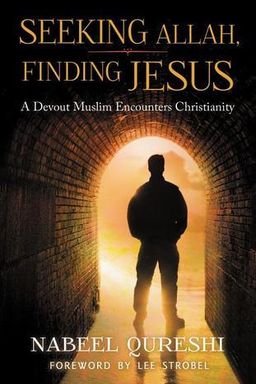
What happens when everything you've believed since childhood is called into question? This is the soul-shaking question at the heart of Seeking Allah, Finding Jesus, Nabeel Qureshi’s powerful memoir of faith, loss, and discovery. The book traces how a devout Muslim, trained in Islamic apologetics and deeply embedded in his religious culture, came to embrace the faith he once vowed to refute. But Qureshi’s story is more than a conversion narrative—it’s an exploration of the intellectual and emotional cost of seeking truth wherever it leads.
Raised in a loving Pakistani-American family within the Ahmadiyya sect of Islam, Qureshi was taught from infancy to see Islam as perfect, Muhammad as sinless, and the Quran as the infallible word of God. His parents modeled hospitality, devotion, and prayer, and by adolescence, Nabeel saw himself as an ambassador for Islam. Yet his desire to defend the faith with rigor eventually led him to question the very foundations that upheld it.
Faith Seeking Understanding
Through a series of encounters in college—especially with his friend and debating partner David Wood—Qureshi began to expose himself to Christian apologetics and historical investigation. What started as a rational debate over doctrine slowly became a personal pilgrimage. Conversations about the Quran’s preservation, Muhammad’s life, and the historical evidence for Jesus’ divinity and resurrection tested every intellectual fiber of his being. But as his arguments for Islam failed to withstand scrutiny, something deeper began to stir: a longing for relationship with a God who was not distant, but near.
Seeking Allah, Finding Jesus stands at the intersection of faith and reason, Islam and Christianity, East and West. Qureshi’s story captures the tension between cultural identity and spiritual belief—between loyalty to family and devotion to truth. Ultimately, his journey illustrates a principle echoed in the Christian Gospel of Matthew: that whoever seeks, finds; whoever knocks, a door will be opened.
The Structure of a Journey
Qureshi divides his story into ten parts, each reflecting a stage of his transformation—from his early formation as a Muslim child, to his development into an Islamic apologist, to his crisis of faith, and finally his acceptance of Christ. The first sections, Called to Prayer and An Ambassador for Islam, immerse readers in the beauty, discipline, and communal joy of devout Islamic life. We see Islam through loving eyes, through the rhythm of daily salaat, Quranic recitation, and fasting during Ramadan. Qureshi’s family embodies the virtues of faithfulness and generosity, giving the reader a humanized view of the Muslim devotion often misunderstood in the West.
Yet as he grows older, Qureshi feels the pressures of living between two worlds. As an American-born Muslim navigating Western education and culture, he struggles with a “third culture” identity. His mother reminds him constantly: “You are an ambassador for Islam.” In high school and college, he fulfills that role with pride, using logic and apologetic skill to argue that Jesus was not God, that the Bible is corrupted, and that Muhammad was a prophet of peace.
The Collision of Worlds
The turning point comes after 9/11, when Qureshi’s friendship with David deepens into a series of intellectual duels that uncover more than either anticipates. While defending Islam, Nabeel confronts historical evidence that contradicts its central claims: the Quran’s textual preservation, Muhammad’s moral example, and the nature of early Islamic expansion. At the same time, he learns that the New Testament—far from being corrupted—has some of the best manuscripts and eyewitness attestations of any ancient text. He encounters historical methodologies, the works of scholars like Gary Habermas and Michael Licona, and the cumulative case for Jesus’ death, deity, and resurrection. This intellectual wrestling is paralleled by emotional turmoil: every truth he discovers seems to chip away at the family and faith he loves.
Revelation through Vision and Dreams
When rational argument can take him no further, Qureshi experiences what millions of Muslims have described in modern times—God speaking through dreams and visions. Three symbolic dreams and one vision begin to confirm the truth of the gospel, culminating in his “narrow door” dream drawn directly from Luke 13:22–29. Yet Qureshi resists conversion, torn between love for his parents and the conviction of truth. Only when God’s word pierces his heart through Scripture does he surrender, confessing Christ in the quiet of his room. The result is both liberation and loss: spiritual rebirth entwined with the heartbreak of watching his parents weep with grief.
Why This Story Matters
Qureshi’s story is important for at least three reasons. First, it offers a rare insider’s account of Islam lived with love, showing both its beauty and its theological limits. Second, it bridges the modern chasm between faiths through relational empathy. Third, it reveals the human cost of conversion in cultures where family honor and faith are deeply intertwined. In an age of polarization, where religion is often caricatured, Seeking Allah, Finding Jesus invites you to walk beside someone who discovered not a new set of doctrines but a living relationship with the God who calls Himself Father. It reminds every reader—Muslim, Christian, skeptic, or seeker—that truth can withstand scrutiny, and faith can transform even when it breaks the heart.