
Idea 1
Deep Curiosity: The Superpower to Heal, Connect, and Transform
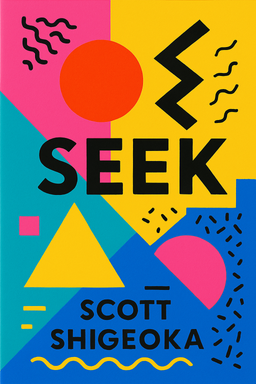
When was the last time you asked a question that truly changed how you see another person—or yourself? In Seek: How Curiosity Can Transform Your Life and Change the World, Scott Shigeoka argues that curiosity is not just a personality trait or intellectual quirk—it’s a profound human capacity that, when deepened, can heal divisions, mend relationships, and guide personal growth. Shigeoka contends that our modern culture suffers from what he calls an “era of incuriosity,” a widespread reluctance to engage meaningfully with others across differences. The antidote, he insists, is deep curiosity—a way of seeking understanding that goes beyond gathering information to create true connection and transformation.
As a researcher, professor, and self-described “spiritually queer Asian American from Hawai‘i,” Shigeoka brings academic rigor and lived experience into his exploration. His own road trip across politically divided America—visiting small towns, faith communities, and even Trump rallies—serves as a narrative backbone for understanding how curiosity can disarm fear and build bridges. Along the way, he translates five years of research with the Greater Good Science Center at UC Berkeley into an actionable model for practicing curiosity in everyday life.
The Era of Incuriosity
Shigeoka warns that we live in a time when judgment has replaced genuine inquiry. Friendships fracture over politics, families avoid hard conversations, and social media rewards outrage rather than understanding. This widespread incuriosity, he notes, is not only eroding democratic societies but is also physically and emotionally harmful: research shows it can shorten lifespans and contribute to loneliness, anxiety, and stress. Incuriosity leads to polarization, while deep curiosity—rooted in compassion and openness—can reverse these effects by fostering empathy and resilience.
Shallow vs. Deep Curiosity
According to Shigeoka, our culture has confused curiosity with information-seeking. Most people exhibit what he calls shallow curiosity—the desire to collect facts or satisfy simple wonder, like Googling the population of Iceland or identifying the dog breed you saw on your walk. In contrast, deep curiosity invites transformation. It asks questions that open hearts and relationships, like “What values guide your decisions?” or “What makes you come alive?” Deep curiosity is not about being right—it’s about being real. It leads us to see others in their full humanity and to confront our own biases, fears, and emotional wounds.
The DIVE Model: A Framework for Practicing Curiosity
Shigeoka organizes the practices of deep curiosity into the DIVE Model, an easy-to-remember structure designed to help you “exercise” your curiosity muscles every day:
- Detach – Let go of your ABCs: assumptions, biases, and certainty. Empty your mental cup so new perspectives can flow in.
- Intend – Approach curiosity with purpose by setting your mindset and physical environment for success.
- Value – See the dignity in every person, including yourself. Recognize the inherent worth of each individual.
- Embrace – Welcome discomfort and uncertainty. Growth requires courage and emotional honesty.
Each element is both distinct and interconnected, forming a cycle that, when practiced, leads to personal transformation and deeper relationships. The DIVE model is the book’s practical heart, a road map that bridges Shigeoka’s philosophical insights with everyday application.
Curiosity’s Biological and Social Power
Drawing from neuroscience, Shigeoka reminds us that curiosity is not just learned behavior—it’s biologically wired into us for survival. Dopamine, the brain’s reward chemical, is triggered when we explore new ideas or possibilities. This means curiosity literally feels good, reinforcing exploration and learning from childhood to old age. Yet modern life often suppresses this instinct through fear, division, and overwork. In what psychologist Jean Piaget once called a “drive state,” curiosity evolved as essential for human adaptation—helping our ancestors survive, learn, and communicate. By reclaiming it consciously, we can heal our fragmented modern world.
Why Deep Curiosity Matters Now
With rising polarization, loneliness, and burnout, deep curiosity is a radical act. It requires humility in a culture obsessed with certainty and empathy in a world preoccupied with winning. It asks us to replace “What do you believe?” with “What experiences led you to believe that?” and to approach even our opponents with authentic listening. Whether bridging political divides, reviving marriages, or managing teams, Shigeoka shows that deep curiosity doesn’t make us softer—it makes us stronger, wiser, and more human. As he quotes Rumi, “What you seek is with you.” Curiosity, he suggests, is not about searching outward for answers but inward and beyond for connection.
“Curiosity is a superpower hiding in plain sight.”
Scott Shigeoka’s central message is both urgent and hopeful: when directed deeply, curiosity can change lives and even reshape societies. To reconnect—to ourselves, to others, and to what’s beyond—we must learn to seek with openness instead of judgment, empathy instead of ego, and courage instead of fear.