
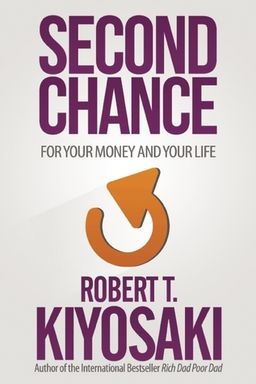
Second Chance cover

Second Chance

by Robert T Kiyosaki

Second Chance reveals the systemic issues behind the growing wealth gap and empowers readers with strategies to climb the economic ladder. Offering a fresh perspective on money, it teaches asset acquisition and debt leverage for financial success.

Money, Education, and Humanity’s Second Chance

What if everything you were taught about money was designed not to make you rich—but to keep you working for those who are? In Second Chance, Robert T. Kiyosaki—a student of futurist Buckminster Fuller and author of the classic Rich Dad Poor Dad—argues that we are living through the collapse of an old financial order and the birth of a new one. This transition, he says, offers every person a genuine second chance: the chance to free themselves from financial ignorance, to use the new tools of the Information Age, and to live with freedom instead of fear.

Kiyosaki’s central claim is that the old Industrial Age formula—go to school, get good grades, find a secure job, save money, and retire comfortably—is obsolete. After the U.S. dollar was disconnected from gold in 1971, modern money itself became debt. Since then, those who understand the new rules have used debt and financial education as leverage, while the financially uneducated have remained stuck in a cycle of taxes, inflation, and shrinking opportunity.

From Wealth Heist to Financial Awakening

Much of the book revisits the insights of Fuller, the visionary who warned of what he called GRUNCH—an acronym for “Gross Universal Cash Heist.” GRUNCH describes the invisible global forces—banks, corporations, and governments—that legally siphon value from ordinary people via an unbalanced economic system. To Kiyosaki, this isn’t a conspiracy theory but a systemic reality: the structures of money and education are designed to benefit the rich by keeping others financially blind. The antidote, he insists, is financial education that reveals both sides of the coin, helping you understand how money really works in the modern world.

The Architecture of a Second Chance

Kiyosaki structures the book as a journey through the Past, Present, and Future. The past explains how humanity entered the current financial crisis, the present invites readers to assess their own balance sheets honestly, and the future offers concrete steps for creating wealth through knowledge, leverage, and purpose. At the foundation of this transformation is Fuller’s idea that “education must draw out the genius in every person.” For Kiyosaki, the capacity to think differently about money—seeing assets, liabilities, and cash flow as living forces—is what separates the rich from everyone else.

Learning to See the Invisible

One of Fuller’s guiding lessons to Kiyosaki was this: “You cannot get out of the way of things you cannot see moving toward you.” The financial changes shaping our lives—automation, technology, globalization, and debt manipulation—are largely invisible to those without financial literacy. Kiyosaki argues that while millions of people still chase job security or savings accounts, the world has moved into what he calls the Information Age, where knowledge is the new money. The shift demands that we use leverage—debt, technology, brands, and networks—to “do more with less,” echoing Fuller’s principle of ephemeralization.

Why the Past Matters

To understand the coming economic storms, we must study history. Kiyosaki recounts milestones like the removal of the gold standard in 1971, the birth of 401(k) plans, the crash of 2007, and the endless cycle of government bailouts—all as symptoms of systemic fragility. Each event transferred wealth upward and widened the gap between “the few who know how to play the game of money” and everyone else. These patterns reveal what Kiyosaki calls the “cash heist” of our times—where inflation, taxes, and debt quietly rob the uneducated, leaving them poorer no matter how hard they work.

Your Second Chance

The message of Second Chance is both urgent and hopeful. Like a butterfly emerging from its chrysalis, every person can undergo a “financial metamorphosis” by changing how they learn, think, and act. Instead of accepting the roles of employee or debtor, you can choose the mindset of entrepreneur and investor—what Kiyosaki’s Cashflow Quadrant model calls the B and I sides. Through real-life stories, diagrams, and interviews, he invites readers to reject fear and embrace self-education as their most powerful asset. The book ultimately challenges you to stand, as Fuller advised, on the edge of the coin—to see both heads and tails, risk and reward—and to become an architect of your financial future rather than its victim.


The Rich Don’t Work for Money

Kiyosaki opens his argument with a provocative claim: the rich don’t work for money—because they understand that money itself is no longer real. After 1971, when President Nixon took the U.S. off the gold standard, the dollar became debt. Every new dollar is now created when banks issue loans, making those who understand debt rich—and those who fear it, poor. The poor and middle class trade their time for a paycheck, then lose that money’s value through taxes and inflation. The rich, by contrast, use financial education to acquire assets that produce cash flow, not paychecks.

The Trap of Hard Work

Most people are taught a single path: go to school, get a good job, save money, and invest for the long term. Kiyosaki calls this model a trap designed by the “Gross Universal Cash Heist” (Fuller’s GRUNCH). Because money itself loses value, savers are punished while debtors who understand leverage are rewarded. Inflation and taxes stealthily siphon wealth from workers, ensuring that those who labor hardest for money often have the least to show for it. This is not moral failure—it is systemic design.

Cash Flow vs. Paychecks

Through simple diagrams and stories from his two “dads”—his poor dad, a salaried academic, and his rich dad, a self-made entrepreneur—Kiyosaki introduces the language of financial literacy: assets, liabilities, and cash flow. The key question: if you stopped working today, would money flow into your pocket or out of it? True assets produce income even when you don’t work. Liabilities consume money. By focusing on acquiring assets (like rental properties, businesses, or royalties), you move beyond the “rat race” of trading hours for dollars.

Knowledge as the New Currency

“Knowledge is the new money,” Kiyosaki declares. The poor have labor and time, the rich have information and leverage. In today’s world—where social media, brands, and technology can multiply results—the person who knows how to turn knowledge into assets has the ultimate advantage. Fuller called this ephemeralization: doing more with less. Kiyosaki translates it into financial terms: building wealth not through toil, but through intelligence, networks, and systems that scale without your constant presence.

Standing on the Edge of the Coin

Fuller often said, “Intelligence is being able to stand on the edge of the coin.” Kiyosaki applies this metaphor to finance. On one side of the coin lies fear, the need for job security, and blind faith in savings. On the other lies freedom through understanding money as a game of debt, taxes, and leverage. Standing on the edge—seeing both sides—gives you perspective. This book’s primary goal is to pull you out of the rat race and place you on that edge, where you can finally choose which game to play.


Seeing the Invisible

A recurring lesson from Buckminster Fuller in Second Chance is that we must learn to see the invisible. Kiyosaki writes that most people are like drivers looking only in their rear-view mirror—they can’t anticipate what’s coming. Fuller trained him to perceive unseen systems: the relationships beneath the surface of visible events. To see these patterns, you must shift from using your brain to using your mind—moving beyond tangible facts to grasp invisible forces like debt, inflation, and technological disruption that shape our financial reality.

The Invisible Giants

Fuller’s “invisible giants” are massive systems operating beyond ordinary awareness: the derivatives market, central banks, and corporate monopolies that quietly direct the flow of wealth. Kiyosaki explains how these markets can destabilize entire economies without the average citizen even noticing. For example, the 2007 global crash wasn’t just a real estate meltdown but a derivatives implosion—what Warren Buffett had called “financial weapons of mass destruction.” When you cannot see these invisible systems, you cannot get out of their way.

Words as Tools of Vision

Seeing the invisible begins with words. Both Fuller and Kiyosaki insist that most people are trapped by their vocabulary. If you can’t distinguish between an asset and a liability, or between capital gains and cash flow, you are financially blind. Words are tools for shaping thought; poor language produces poor thinking. Learning the language of money—terms like depreciation, leverage, and ROI—literally changes how you perceive opportunities. As Kiyosaki writes, “Words make you rich or poor.”

From Fear to Foresight

When you learn to see the invisible, fear diminishes. Crashes no longer terrify you; they become opportunities. During the 2007 recession, Kiyosaki’s team bought hundreds of millions of dollars in real estate using low-cost debt—while others were paralyzed by panic. Fuller’s principle of emergence through emergency explains this: crises break old shells so new opportunities can emerge. “The future,” Kiyosaki concludes, “belongs to those whose minds can see what their eyes cannot.”


Good Debt, Bad Debt, and the Power of Leverage

If money today is debt, then understanding debt is essential to mastering wealth. Kiyosaki distinguishes between good debt—debt that makes you richer—and bad debt—debt that makes you poorer. Buying assets like rental real estate with borrowed money that produces monthly cash flow is good debt. Using credit cards to buy consumer goods that lose value is bad debt. This simple distinction—ignored in most schools—defines the economic divide between the rich and the poor.

Ephemeralization and Leverage

Fuller’s principle of ephemeralization—doing more with less—is reimagined here as leverage. The rich use leverage to expand their means, while the poor and middle class shrink theirs by working harder for money. Leverage exists in many forms: financial (using other people’s money), intellectual (using knowledge), and social (using people and brand). For example, Kiyosaki built Rich Dad into a global brand through licensing, allowing a small team to reach millions without massive overhead. That, too, is leverage.

Infinite Returns

One of Kiyosaki’s favorite examples comes from an early real estate deal: buying a $50,000 house with $5,000 down, renovating it, and refinancing to pull out $25,000 tax-free while keeping the property’s positive cash flow. Because none of his own money remained in the investment after refinance, his return on investment was infinite. “Knowledge is the new money,” he writes, reminding readers that financial education, not capital, creates wealth. Without knowledge, “get out of debt” advice removes a person’s most powerful tool.

The Law of Compensation

Kiyosaki invokes what he calls the “Law of Compensation”: the more you learn, practice, and take on calculated risk, the more your intelligence and compensation grow. This is why his wife Kim, once a beginner investor, built a multimillion-dollar portfolio through disciplined learning and leverage. Debt, in this worldview, is like fire or electricity—a force that can either cook your dinner or burn down your house. The key is education and control.


Entrepreneurs, Employees, and the Cashflow Quadrant

To make his abstract ideas practical, Kiyosaki introduces the CASHFLOW Quadrant, a simple model dividing the world of work into four quadrants: E for Employee, S for Self-Employed, B for Business Owner, and I for Investor. The left side (E/S) trades time for money and pays the highest taxes. The right side (B/I) builds or owns systems and pays the least.

Specialists vs. Generalists

Most people stay on the left side because they were trained to be specialists. Schools reward narrow focus: the accountant who knows accounting, the engineer who knows engineering. But entrepreneurs must become generalists, understanding a little about everything—from sales and finance to leadership and law. Fuller warned that “over-specialization leads to extinction.” The great entrepreneurs, like Steve Jobs or Henry Ford, were generalists who built teams of specialists around them.

Mission, Team, and Leadership

Transitioning from an S to a B requires developing three core integrities—mission, team, and leadership—the outer framework of Kiyosaki’s B-I Triangle. Individuals can strengthen these skills not just in business but through volunteer work, the military, or even network marketing organizations that train leaders without relying on paychecks. True B-quadrant entrepreneurs, like the lion leading a pride, do not hunt alone; they lead teams that hunt together.

From Security to Freedom

“The opposite of job security is financial freedom,” Kiyosaki writes. The more security you seek, the less freedom you have—just as maximum-security prisons offer maximum confinement. The journey from E to B is daunting but liberating: it replaces the illusion of safety with the reality of control. For your second chance, the question is simple: will you choose specialized education for security or generalized education for freedom?


Financial Education and the Courage to Fail

Schools train people to avoid mistakes, yet the real world rewards those who learn from them. Kiyosaki calls this inversion the “Power of Mistakes.” In school, success means getting the most answers right; in life, success comes from experimenting, failing, and adapting. His first real estate seminar in 1973 exemplified this: after evaluating 100 properties in 90 days, he found just one worth buying. That one purchase, made mostly with debt, launched his path to wealth. Each error along the way was tuition in his self-directed education.

The Cone of Learning

Kiyosaki cites educator Edgar Dale’s “Cone of Learning,” which shows that people retain far more by doing than by listening or reading. Traditional classrooms sit at the bottom of the cone (least effective), while simulations and real experience sit at the top. This is why Kiyosaki created his board game CASHFLOW: it’s a safe simulation of investing, a place to make mistakes with play money before making them with real money.

Emergence Through Emergency

Fuller believed “emergence through emergency” drives human growth. Crises push us to evolve, just as a chick breaks its shell under pressure. Kiyosaki’s own low points—living out of a car, struggling in business—forced him to develop courage, creativity, and financial intelligence. Losing and learning are inseparable; those frightened of failure never grow. “In school,” he says, “the person who makes the fewest mistakes wins. In life, the person who makes the most mistakes wins.”

Practice, Not Perfection

Just as athletes rehearse before a game, investors and entrepreneurs practice deals, negotiations, and business strategies. The opposite of financial ignorance isn’t perfection—it’s practice. For readers, the lesson is liberating: you don’t need perfect timing or credentials to start your second chance. You need only the willingness to act, fail, and learn faster than those still waiting for life to be safe.


Expanding Means Instead of Living Below Them

Conventional experts say, “live below your means.” Kiyosaki calls that advice spiritually suffocating. The rich don’t shrink their dreams to fit their income—they expand their means to match their dreams. You expand your means by taking control of your asset column. Instead of giving your savings to Wall Street or settling for job paychecks, you build or buy assets that generate recurring cash flow. This shift—from trimming expenses to multiplying income—is how you do more with less.

Assets That Pay for Liabilities

Kiyosaki recounts showing three young construction workers how his apartment building “paid for” his Ferrari. His point: let your assets buy your luxuries. Acquire properties or businesses that produce enough to cover not just essentials but also lifestyle costs. What most people call “delayed gratification,” he reframes as “productive gratification”—using creativity and investment to elevate your quality of life without destructive debt.

The Velocity of Money

Another concept Kiyosaki borrows from rich investors is the velocity of money: wealth grows when money keeps moving. Savers “park” their money, where it stagnates and loses value. Entrepreneurs circulate money through businesses, investments, and communities, multiplying returns. This circulation benefits everyone—it fuels economies, creates jobs, and invites new opportunities. Fuller’s dictum “Don’t fight forces—use them” applies here: letting money flow is harnessing the force of exchange itself.

Faith in Abundance

Finally, Kiyosaki treats expansion as a matter of mindset. Fuller believed “God wants all of us to be rich.” That doesn’t mean greedy; it means operating from faith in abundance. When you approach life creatively—asking “How can I afford it?” instead of “I can’t afford it”—you engage the genius Fuller said lies dormant in every person. Living richly, then, is not about consumption but about contribution—doing more, helping more, and creating more for others by first expanding yourself.


Generosity, Cooperation, and the Real Meaning of Wealth

Another major reversal in Second Chance is Kiyosaki’s challenge to the belief that “the rich are greedy.” True wealth, he says, stems from generosity and cooperation. Drawing from both Fuller and his “rich dad,” he contrasts two mindsets: the poor compete for scarce resources, while the rich collaborate to expand abundance. In school, cooperation is called cheating; in real life, it’s how empires are built.

Cooperation as Leverage

Rich dad solved problems by asking for help from people smarter than he was—bankers, attorneys, accountants, and brokers. Poor dad struggled alone, proud but unleveraged. Kiyosaki urges readers to assemble teams of advisors, mentors, and partners because collective intelligence compounds faster than individual effort. As Fuller wrote, “Specialization precludes comprehensive thinking.” We need specialists—but only when directed by generalists who can integrate their knowledge.

The Spiritual Dimension of Wealth

For Kiyosaki and Fuller, the ultimate measure of wealth isn’t money but contribution. Fuller’s question to humanity—“Are you spontaneously enthusiastic about everyone having everything you can have?”—captures this ethic of abundance. Kiyosaki equates tithing and teaching with investing: giving multiplies returns. Hoarding, by contrast, blocks flow and breeds fear. Wealth expands when shared, whether through knowledge, jobs, or service.

A Second Chance for Humanity

Through Fuller’s eyes, the evolution of wealth mirrors human evolution—from survival to awareness. The future demands people who use business not merely to profit but to solve global problems. Social entrepreneurs, like Kiyosaki’s advisors Lisa and Josh Lannon, embody this spirit by building companies that heal addictions and communities alike. When money becomes an instrument of cooperation rather than competition, Kiyosaki suggests, it restores its sacred role as energy—an invisible current flowing toward human progress.


Emergence Through Emergency: Turning Crisis Into Opportunity

Kiyosaki ends where Fuller often began—with crisis as catalyst. Humanity, he warns, is living through a global emergency: unsustainable debt, technological displacement, and ecological strain. Yet every emergency holds the seed of transformation. Fuller’s “Generalized Principle of Emergence Through Emergency” teaches that when systems fail, new ones are born. The same is true for individuals. Economic collapse can either break you or wake you.

Emerging From the Shell

Fuller once likened humanity to a chick trapped in its egg, panicking as its shell closes in, unaware that the pressure is preparation for flight. Kiyosaki adapts this image to our personal lives: when jobs disappear or investments collapse, there is an opening to reinvent ourselves. His own emergence—from bankrupt entrepreneur to global educator—proves that breakdown precedes breakthrough.

Architects of the Future

Fuller called on people to be “architects of the future, not its victims.” Kiyosaki extends this challenge to readers: stop waiting for politicians or corporations to save you. Start solving problems. Entrepreneurship, he insists, is spiritual work—the art of serving others through creative action. Whether your crisis is financial or personal, the same law applies: action and learning transform fear into freedom.

Staying Hungry and Foolish

Echoing Steve Jobs’ advice—“Stay hungry. Stay foolish.”—Kiyosaki reminds us that foolishness, guided by curiosity and courage, is the gateway to genius. Every second chance begins when you let go of certainty and step into the unknown. Crisis, then, is not punishment but invitation—a nudge from the universe to evolve. “You have the freedom,” he writes, “to be yourself, your true self, here and now.” That is both the risk and reward of life’s greatest investment.

Dig Deeper

Get personalized prompts to apply these lessons to your life and deepen your understanding.

Go Deeper

Get the Full Experience

Download Insight Books for AI-powered reflections, quizzes, and more.