
Idea 1
The Sea Connects All Nations
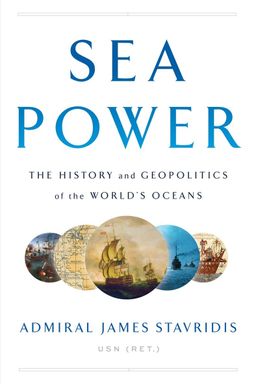
What if you viewed the world not as land divided by borders, but as water connecting every shore? Admiral James Stavridis asks you to begin with that transformation. His central argument—captured in the simple phrase “the sea is one”—is both poetic and geopolitical. He contends that oceans form a continuous medium through which humanity’s trade, culture, and security intertwine. Your body and your planet are mostly water; this book makes you see that the same continuity underlies global affairs.
Holding two strands together
Stavridis weaves together two threads: the personal awe of sailors and the strategic calculus of states. On the personal side, the sea teaches humility and connection; all mariners—from Halsey and Cook to the author himself—stare at the same horizon. On the geopolitical side, the sea explains empire and power: control of maritime chokepoints such as Hormuz, Suez, or the Greenland-Iceland-United Kingdom gap has always meant control of commerce and influence.
From experience to insight
Stavridis’s lessons came from both classroom and bridge. A British navigation instructor at Annapolis taught him that every ocean is part of one hydrospheric web; decades later, commanding fleets reinforced that truth through operations across the Mediterranean, Pacific, and Indian Oceans. You realize that global strategy, shipping, and environmental stewardship must be seen as aspects of a single maritime system.
Why this unity matters
Every crisis ripples through the water system: piracy near Somalia affects insurance and shipping costs; smuggling through the Caribbean shapes domestic crime; tension in the South China Sea alters global supply chains. Treat the oceans as one continuous landscape. When you analyze any headline—North Korea’s missile tests, India’s port projects, Russian Arctic bases—ask how the seas connect those events.
Emotion and strategy merge in this worldview. The sailor’s sense of distance becomes a metaphor for policy: isolation breeds risk, and connectedness fosters resilience. Britain’s maritime self-image, America’s carrier doctrine, or China’s island reclamation projects all reflect how emotion and strategy entwine. The ocean is both frontier and fabric.
Core insight
"The sea is one" is not a slogan—it’s a strategic lens. It means that what happens in the Pacific reverberates in the Arctic, and what spills in the Gulf of Guinea affects fisheries and economies across the globe. Thinking oceanically sharpens your grasp of modern geopolitics.
Preview of the voyage
The book sails through history and geography: the Pacific, cradle of migration and theater of future rivalry; the Atlantic, highway of empire; the Indian Ocean, emerging focal point of trade and conflict; the Mediterranean, schoolhouse of sea warfare; and the Arctic, frontier of climate and resources. Along the way, you explore the South China Sea’s flashpoints, the Caribbean’s renewal, and the global problems of piracy, illegal fishing, and environmental decay.
Stavridis closes his voyage with America’s evolving approach to sea power—an integrated model of military credibility, alliance-building, and rule of law. He teaches you to pair empathy and analysis: sense the human continuity of sailors while calculating the hard metrics of strategy. If you learn to think like that—emotionally connected yet geopolitically precise—you will see the oceans not as boundaries but as the bloodstream of civilization.