
Idea 1
ADD as a Developmental and Relational Condition
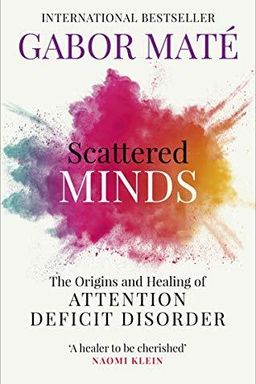
Why do some minds find it impossible to focus, sit still, or relate calmly to time? In Scattered Minds, Dr. Gabor Maté argues that what we call Attention Deficit Disorder (ADD or ADHD) is not a fixed genetic illness but the developmental consequence of a child’s early relational and emotional environment. His thesis reframes ADD as a story of arrested brain development shaped by disrupted attachment and attunement, rather than a permanent biochemical flaw.
Maté’s model expands the medical perspective by weaving together neuroscience, developmental psychology, and attachment theory. Genes contribute temperament—especially sensitivity—but experience sculpts the brain’s wiring. The circuits that regulate attention, impulse control, and emotional balance develop primarily after birth, in a dialogue between the infant’s nervous system and their caregivers. When that dialogue is stressed, inconsistent, or emotionally unresponsive, neural maturation is derailed.
The Brain Grows in Relationship
Modern neuroscience confirms that neurons ‘fire together and wire together.’ The infant brain forms billions of new connections based on lived experience, particularly during exchanges of gaze, facial expression, tone, and touch. Daniel Siegel and Stanley Greenspan’s research shows how “right-brain-to-right-brain” resonance builds emotional regulation networks. Marian Diamond’s animal studies reveal that enriched, safe environments physically expand cortical tissue—even into adulthood. For Maté, this demonstrates why healing remains possible: development can resume when relational conditions improve.
How Environment Shapes Symptoms
Stressful pregnancies, maternal depression, war trauma, or chronically distracted caregiving interfere with this wiring process. Maté’s own infancy in wartime Budapest—marked by separation from his mother and her subsequent depression—illustrates how early fear can sculpt lifelong patterns of tuning out, restlessness, and shame. Across his clinical cases he sees the same pattern: hyperactivity as alarm, inattention as dissociation, and impulsive behavior as escape.
He adds that modern Western culture amplifies such conditions. Frantic work schedules, minimal parental leave, media saturation, and economic anxiety all diminish attunement time between adults and children. The result is a society that both generates and rewards distracted minds—what he calls an “ADDogenic culture.”
The Function of Sensitivity
Heredity plays its part through sensitivity. Children born with heightened nervous systems register subtler cues and suffer more acutely from relational discord. This sensitivity—analogous to an emotional allergy—can either become a gift for intuition and empathy or a liability if the environment is chaotic. Families that misunderstand sensitivity as weakness often shame it, reinforcing the child’s defensive withdrawal or resistance.
ADD as a Coping Strategy
Maté presents tuning out not as failure but survival. When an infant’s emotional needs repeatedly exceed what caregivers can meet, dissociation offers psychic relief. Over time, this adaptive “tuning out” becomes habitual—the child’s attention system learns to disengage under stress. Likewise, hyperactivity emerges as a state of physiological overarousal: the nervous system keeps moving to fend off intolerable stillness or fear of rejection.
Shame, another key feature, develops from repeated ruptures in connection (“You’re bad,” “Why can’t you sit still?”). Each experience of disapproval engrains low self-worth, keeping the child oscillating between frantic performance and quiet withdrawal.
A Shift in Healing
Maté’s developmental model invites you to rethink treatment. Stimulant medication can temporarily energize dormant prefrontal networks (the 'traffic cop' in the orbitofrontal cortex), but it cannot establish the social-emotional scaffolding needed for maturity. True healing occurs when environments become consistently attuned, safe, and engaging—conditions that allow the brain to complete unfinished developmental tasks.
This means parents and teachers move from fixing behavior to restoring connection; adults with ADD learn to self-parent with compassion, routine, and mindful awareness. Across life stages, the same theme resounds: attention is born in relationship and restored through relationship. Understanding this transforms ADD from a static diagnosis to a living process of renewal and growth.