
Idea 1
The Scarcity Brain and the Modern Trap
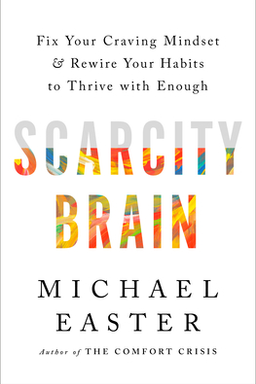
Why do you keep refreshing, scrolling, or reaching for one more? Michael Easter’s Scarcity Brain argues that your cravings and compulsions are not flaws of willpower—they are ancient survival systems running on modern overdrive. The same mechanisms that once kept you alive in a world of scarcity now work against you in an age of abundance engineered to exploit them.
Easter builds his thesis around what he calls the scarcity loop—a behavioral cycle that keeps you chasing unpredictable rewards. From slot machines and social media to processed food and online shopping, the loop’s architecture has been unwittingly (and often deliberately) woven into modern life. The result is a species wired for survival behaving like addicts in an ecosystem of infinite lure.
The Three-Part Cycle
At its core, the scarcity loop runs on three gears: Opportunity → Unpredictable Reward → Quick Repeatability. You glimpse a chance at gain (a match, a like, a jackpot). The outcome is uncertain, so your attention spikes. Then the action can be repeated instantly, keeping the system alive. Casinos perfected it with digital slots—thanks to innovators like Si Redd—and tech firms later copied it through infinite scrolls, push notifications, and variable likes.
That pattern wouldn’t take hold without deeper roots. Experiments by B. F. Skinner and Thomas Zentall showed that animals prefer risky, unpredictable outcomes over stable, sure ones—even when the math is worse. In the ancestral world, this uncertainty preference drove persistence in foraging; in ours, it fuels compulsive checking, eating, and buying.
From Stone Age to Silicon Age
Easter threads neuroscience and anthropology to explain how evolution primes you for this loop. Dopamine—long miscast as a pleasure chemical—is actually a pursuit chemical. It fires most in anticipation, not satisfaction. You get your biggest rush not when you win, but while waiting to see if you might. That’s why near‑misses on slot reels, partial notifications, and irregular feedback keep you hooked. The suspense itself becomes addictive.
Where early scarcity rewarded exploration and thrift, modern abundance converts the same instincts into burnout and loss of control. The scarcity loop has migrated far beyond casinos—into your pantry, your phone, and even your sense of self-worth.
The Loop in Daily Life
Easter travels from Las Vegas labs like Black Fire Innovation to Bolivian villages, showing how the loop operates across domains. Slot engineers test every microelement—speed, lighting, near‑miss frequency—to fine‑tune engagement. Social media platforms adopt those same levers through variable feedback and nonstop repetition. Processed foods, Easter shows through NIH researcher Kevin Hall, pack calorie density and mouthfeel that quicken food’s velocity from plate to bloodstream—another kind of “spin button.”
Leidy Klotz’s research extends the pattern cognitively: you default to adding when solving problems because scarcity once demanded accumulation. In abundance, that reflex yields excess—too many possessions, meetings, or tasks. Whether through eating, scrolling, or planning, more feels right even when it burdens you.
Redesigning the System
Breaking the scarcity brain isn’t about rejection; it’s about reengineering context. Easter profiles people and systems—from Niantic founder John Hanke’s health‑oriented game design to Benedictine monks’ simple rhythm of ora et labora—that transform the loop into a force for meaning rather than compulsivity. In each case, the fix alters one gear in the loop: removing opportunity, regulating rewards, or slowing repetition.
He argues for abundance loops: feedback systems that still involve uncertainty and effort but yield physical, social, or creative dividends. Trail running, art, gardening, or craft work can satisfy the same brain circuits that digital temptations hijack—but toward sustainable satisfaction.
A Map Out of Mindless Abundance
The book’s arc moves from diagnosis to prescription. First you learn to see the scarcity loop everywhere; then you uncover its evolutionary engine; finally you practice rewiring it through deliberate constraint, slower living, and purposeful risk. The closing message is clear: your cravings are ancient, but they need a modern habitat designed with awareness.
Core message
When everything is engineered to feel scarce, true abundance comes not from getting more but from mastering the loops that once kept you alive and now keep you chasing.