
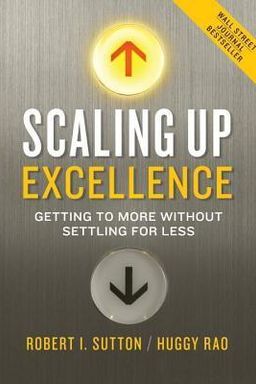
Scaling Up Excellence cover

Scaling Up Excellence

by Robert I Sutton and Huggy Rao

Scaling Up Excellence offers leaders a comprehensive guide to effectively propagate best practices within their organizations. Through a combination of cutting-edge research and real-world examples, Sutton and Rao provide a roadmap for overcoming scaling challenges, fostering innovation, and cultivating an enduring culture of excellence.

Understanding Parkinson’s: The Brain’s Slow Unraveling

What happens when the brain slowly forgets the rhythm of movement? In Brain Storms: The Race to Unlock the Mysteries of Parkinson’s Disease, Jon Palfreman embarks on a dual journey—as a veteran science journalist and as a man newly diagnosed with Parkinson’s. The book is both scientific detective story and human narrative, exploring two centuries of research, from James Parkinson’s initial 1817 account to the most cutting-edge therapies of today. Palfreman argues that understanding Parkinson’s offers a window into how the brain works—and, perhaps, how it might heal itself. He contends that while a cure remains elusive, the quest itself has redefined what we know about neurodegeneration, resilience, and the human spirit.

At its heart, the book is about the intersection of science and humanity. Palfreman takes readers from the labs where dopamine was first linked to motor function, to hospital wards where L-dopa transformed ‘living statues’ into moving people again. He meets patients, clinicians, and researchers who together tell a story of persistent curiosity, failure, and breakthrough. The key argument: Parkinson’s is not just a movement disorder—it is a whole-body, whole-mind condition shaped by genetics, environment, and the brain’s own complex chemistry. But it’s also a story of how science can restore hope where once there was none.

The Disease and the Discovery

Palfreman begins with history. He recreates London in 1817, where physician James Parkinson carefully documented six patients with a peculiar 'shaking palsy.' Later, Jean-Martin Charcot gave this syndrome a name—Parkinson’s disease—and discovered its defining symptoms: tremor, rigidity, slowness, and postural instability. These early clues laid the foundation for a 200-year investigation. Palfreman’s narrative shows science building like a long relay—each era passing the baton of discovery.

By the twentieth century, researchers had identified the disease’s core pathology: the death of dopamine-producing neurons in a tiny midbrain structure called the substantia nigra. This loss impairs communication between the brain’s motor circuits and muscles, leading to the classic symptoms of Parkinson’s. But even that revelation only raised more questions. What kills those cells? Why does it happen to some people and not others? Is it genes, toxins, aging—or some combination?

The Empirical Revolution

The next seismic shift came from chemistry. In the 1950s and 1960s, Swedish scientist Arvid Carlsson and Austrian researchers Oleh Hornykiewicz and Walther Birkmayer laid out the dopamine hypothesis: Parkinson’s results from dopamine deficiency. Their work led to one of medicine’s greatest breakthroughs—L-dopa therapy. Palfreman vividly describes early patients ‘awakening’ after their first dose. The transformation was so dramatic that neurologist Roger Duvoisin compared it to resurrection. Yet L-dopa’s miracle came with costs—wild mood swings, uncontrolled body movements, and diminishing returns over time. Palfreman calls this a Faustian bargain: trading a better present for a more difficult future.

The discovery of dopamine also changed neuroscience itself. It suggested that complex mental and physical actions could be explained by chemicals and circuits—a shift from philosophy to biochemistry. This paved the way for understanding other disorders (like depression and addiction) and for designing pharmaceutical treatments, but it also trapped Parkinson’s within the narrow frame of a “dopamine disease.” Palfreman’s mission is to free it from that cage.

Science, Humanity, and the Living Laboratory

Palfreman’s personal diagnosis reframes everything. As both observer and participant, he enters a world where data meets daily life. He learns from fellow “Parkies”—dancers, athletes, and doctors—who adapt through creativity. Dancer Pamela Quinn, for instance, reprograms her body through movement and music, using rhythm as medicine. Their experiments in motion echo the brain’s own plasticity: a capacity for rewiring and compensation that challenges scientific fatalism.

This theme of adaptation runs parallel to science’s own learning curve. When Palfreman revisits old cases—like the 'frozen addicts,' drug users whose contaminated heroin caused sudden parkinsonism—he reveals how tragedy can illuminate biology. That event led to the first reliable animal models using the toxin MPTP and renewed understanding of dopamine pathways. Each chapter of discovery, he argues, is a human story disguised as data.

Why It Matters

For Palfreman, Parkinson’s is the model neurodegenerative disease. Because it is measurable, visible, and partly treatable, it gives researchers a foothold in the broader battle against disorders like Alzheimer’s and ALS. He suggests that what we learn from Parkinson’s—about protein misfolding, cellular stress, and resilience—may one day illuminate all of aging itself. But his core message is also personal: that knowledge, movement, and purpose are the best defenses against decline.

Ultimately, Brain Storms is both biography and manifesto. It celebrates discovery without glorifying false hope, urging readers to see Parkinson’s not as a thief but as a teacher. As science inches closer to understanding rogue proteins like alpha-synuclein and new therapies like deep brain stimulation or exercise, Palfreman invites you to see medicine as an evolving conversation—between cells and circuits, patients and scientists, despair and determination. His final call is simple: to live well, you must learn—and teach your brain to dance again.


From Shaking Palsy to Modern Science

Every great mystery starts with observation. James Parkinson’s careful 1817 sketches of “shaking palsy” patients launched a 200-year investigation into what happens when the brain loses its rhythm. A century later, Jean-Martin Charcot transformed Parkinson’s loose cluster of symptoms into a recognized disease, naming it after its discoverer and documenting its four primary features: tremor, rigidity, slowness, and balance problems. Charcot also dared to treat it—his “shaking chair” and herbal concoctions being quaint precursors to modern therapy.

The story Palfreman tells is part anatomy lesson, part detective tale. He shows how Constantin Tretiakoff’s 1919 autopsies linked Parkinson’s to a tiny patch of darkened tissue in the midbrain: the substantia nigra, or “black stuff.” Inside those cells, later scientists discovered Lewy bodies—mysterious protein deposits that still mark the disease today. This early anatomical detective work established the foundation for everything that followed.

Chemical Clues and Levodopa’s Awakening

By the 1950s, the scientific spotlight shifted from anatomy to chemistry. Arvid Carlsson’s experiments with reserpine-paralyzed rabbits revealed that dopamine wasn’t just a by-product—it was essential for movement. Austrian researchers Oleh Hornykiewicz and Walther Birkmayer proved the link by analyzing human brains. Parkinson’s patients had lost nearly all dopamine-producing neurons. This led to a revolutionary idea: restore dopamine, and you might restore motion.

Their logic gave rise to L-dopa, a molecule that crosses the blood-brain barrier and is converted into dopamine. The results were breathtaking. Patients once frozen by disease stood up and walked. The “miraculous awakening,” captured in Oliver Sacks’s later writings, was both scientific triumph and ethical dilemma. Relief came with severe side effects—dyskinesias, hallucinations, and the cruel on-off fluctuations of drug potency. Neuroscience had learned to turn motion back on but not to sustain it.

The Frozen Addicts and the Chemical Bombshell

Palfreman’s journalistic roots shine in recounting one of medicine’s strangest accidents: the “frozen addicts” case of the 1980s. A batch of synthetic heroin accidentally contaminated with the compound MPTP turned healthy young users into rigid statues overnight. Neurologist Bill Langston realized the toxin destroyed dopamine neurons in the substantia nigra, perfectly mimicking Parkinson’s. While tragic, the discovery gave researchers a powerful animal model and proved that chemical toxins could induce the disease. It revived debates over environmental triggers and accelerated drug testing.

Langston’s work also linked human tragedy to scientific renewal. His observations made dopamine’s delicate circuitry tangible and gave researchers methods to simulate and study Parkinson’s in animals. For neuroscience, this was the equivalent of discovering fire—it allowed them to experiment, measure, and model the disease systematically. Mahlon DeLong’s later work using MPTP-induced monkeys revealed the overactivity of the subthalamic nucleus, knowledge that later inspired deep brain stimulation therapies.

As Palfreman puts it, every patient’s suffering became a lesson. From Tretiakoff’s autopsies to Langston’s frozen addicts, science advanced by listening to the body’s failures. These discoveries not only mapped Parkinson’s but also made it the Rosetta Stone for understanding how the brain’s chemistry and circuitry dance together—and what happens when the music falters.


When Good Therapy Turns Faustian: L-Dopa’s Double Edge

Few scientific breakthroughs have been as dramatic—or as ambivalent—as L-dopa. When first introduced in the 1960s, it was hailed as a medical miracle. Bedridden people literally rose and walked. The drug replenished dopamine lost to neuron death, restoring movement as if by magic. Yet, as Palfreman explains, this seeming resurrection carried a hidden cost. After the euphoric “honeymoon period,” side effects took over—tremors morphed into violent writhing (dyskinesias), and patients began to alternate unpredictably between mobility and rigidity, the so-called on-off syndrome.

Roger Duvoisin’s films of patients before and after L-dopa reveal the paradox. In one, a man transformed from lifeless statue to smiling dancer after just weeks on the drug—but a year later, he twisted uncontrollably from excess dopamine stimulation. Palfreman shows how a single therapy both saved and complicated millions of lives. It turns out that treating Parkinson’s is not just about restoring chemicals, but about mimicking the brain’s subtle rhythms—something no pill can yet do.

The Dopamine Dilemma

The body’s dopamine system is delicate. In healthy people, dopamine pulses in measured bursts. L-dopa floods the brain in irregular surges, overwhelming receptors. Over time, this irregularity rewires brain circuits, creating dependency and side effects. Palfreman likens it to an orchestra forced to follow an erratic conductor. Even supplements to smooth dopamine delivery—such as dopamine agonists like pramipexole or enzyme inhibitors—bring their own troubles, from compulsive gambling to hypersexuality. Dopamine, the molecule of reward and movement, proves both medicine and mischief-maker.

Patients Speak: Learning to Live with the Tradeoff

Through patient voices, the cost becomes tangible. Support group discussions reveal gamblers who lost savings to agonist-induced compulsions, insomniacs tormented by hallucinations, and spouses learning to coexist with two personalities—the medicated and unmedicated versions of their loved one. Still, most defend L-dopa fiercely. It turns paralysis into possibility. Palfreman calls it the “Faustian choice”: trading a smoother present for a turbulent future. Yet for many, there is no choice at all. Without dopamine restoration, life itself shrinks.

The moral, he concludes, is humility. Every drug is a deal with biology, never an escape from it. L-dopa transformed Parkinson’s into a chronic, manageable illness—and opened the door for patients, scientists, and advocates to form a modern movement demanding both longevity and quality of life.


Mind Over Matter: Rewiring the Diseased Brain

What if you could dance your way past degeneration? In one of Brain Storms’ most compelling chapters, Palfreman introduces Pamela Quinn, a professional dancer who reshaped her life—and her neurology—after diagnosis. She uses rhythm, imagery, and conscious movement to bypass damaged brain circuits. Her exercises—like walking “heel-toe” to music or visualizing herself as a fashion model—help reprogram motor habits so that the cortex (the conscious brain) takes over tasks once managed automatically by the basal ganglia.

This is mind over matter, not metaphorically but neurologically. Neuroscience, explains Palfreman, shows that the basal ganglia, damaged by dopamine loss, normally automates movement sequences (like a skilled tennis stroke). When those circuits break, the cortex can step in. Quinn teaches herself—and others—to consciously rebuild these patterns. It’s like teaching a pianist to play again one note at a time. The results confirm a central insight: Parkinson’s may impair automaticity, but not creativity.

Kinesia Paradoxica and the Power of Focus

Quinn’s success fits a mysterious pattern called kinesia paradoxica—the ability of some patients to move in certain conditions (like dancing or cycling) but not others. Dutch neurologist Bastiaan Bloem filmed a man who could barely walk unaided but rode a bicycle flawlessly. The difference, researchers think, lies in external cues: visual markers, rhythm, or motivation that helps recruit alternative neural pathways. When the beat of music or the wheel’s rotation gives feedback, the brain finds a rhythm to lock onto.

These observations prove that even a damaged brain can innovate. The basal ganglia may falter, but the cortex learns detours. Palfreman reframes this not as miracle but strategy: an example of neuroplasticity in action. (Psychologist Norman Doidge’s work on brains rewiring after injury echoes this insight.) For patients, it means agency: movement becomes medicine, and adaptation becomes survival.

The Lesson for All of Us

Quinn’s programs, combining music, attention, and imagination, have become templates for therapy worldwide. The message applies beyond Parkinson’s: you can train your brain to overcome decline if you learn to replace instinct with intention. For Palfreman, her story embodies what neuroscience too often forgets—that every experiment is lived daily by people reclaiming motion, dignity, and joy.


Exercise as Neurological Medicine

Can exercise rival drugs and surgery? Palfreman dives into the fast-evolving science of movement therapy, anchored by Boston University researcher Terry Ellis and Cleveland Clinic scientist Jay Alberts. Their findings transform a truism—“exercise is good for you”—into a biological imperative. In Parkinson’s, where dopamine cells die and circuits falter, structured movement literally feeds the brain. Vigorous activities like boxing, tai chi, and cycling seem to preserve motor skills, cognition, and even neuron survival.

Forced vs. Voluntary Movement

Ellis’s early studies showed that most patients become sedentary—their activity drops 12% per year—creating a vicious cycle of decline. Enter Jay Alberts, whose tandem-bike experiment with Parkinson’s patient Cathy Frazier became legend. When Alberts pedaled 30–40% faster than Frazier could alone, her tremor vanished temporarily, and her handwriting normalized. The phenomenon matched animal studies showing that forced high-intensity exercise triggers neuroprotective factors in the brain, shielding neurons from toxins like MPTP. The message: intensity matters.

Subsequent trials confirmed that “forced” cycling produced striking improvements—equal to or better than medication—for as long as patients kept training. Alberts likened exercise to a drug: it wears off if stopped. His goal now is to simulate tandem cycling with motorized bikes patients can use independently. Meanwhile, clinicians like Fay Horak in Oregon run “agility boot camps” that use balance drills to retrain gait and reduce falls, proving that movement science can outpace pharmacology.

A Culture of Active Care

Dutch neurologist Bastiaan Bloem took exercise further with his revolutionary ParkinsonNet program. By training thousands of therapists and linking them in a national network, he transformed rehabilitation from fragmented care to coordinated expertise, cutting costs by $28 million annually while halving hip fractures. Palfreman contrasts this communal, proactive model with the United States’ reactive medical culture, arguing that the future of care lies in collaboration, not prescription.

For readers, the takeaway is clear: treat exercise as your most reliable prescription. Like dopamine, movement fuels motivation, health, and hope. For a brain losing rhythm, moving fast may be the best way to keep going.


When Good Proteins Go Rogue: The Alpha-Synuclein Story

In one of the book’s most captivating scientific narratives, Palfreman explains how a single rogue molecule rewrote our understanding of neurodegeneration. The protein alpha-synuclein, normally involved in neurotransmission, can misfold into sticky clumps called amyloids—forming the Lewy bodies that define Parkinson’s pathology. The discovery emerged from genetic detective work in the 1990s, when researchers traced a large Italian family (the Contursi kindred) whose Parkinson’s was inherited. They identified a mutation in the alpha-synuclein gene on chromosome 4. Later, the Iowa Kindred revealed that even duplicating the gene (without mutation) caused disease. The conclusion: too much or wrongly folded alpha-synuclein is toxic to neurons.

Protein Misfolding: The Prion Parallel

Cambridge chemist Chris Dobson and Nobel laureate Stanley Prusiner connected the dots. Misfolded proteins could spread from cell to cell, ‘infecting’ healthy neighbors much like prions—the agents behind mad cow disease. Braak’s staging model later confirmed that alpha-synuclein pathology progresses predictably from gut or olfactory nerves to the brainstem and cortex. Parkinson’s, in this light, becomes a slow-moving contagion within oneself.

This insight unites Parkinson’s, Alzheimer’s, and ALS under one principle: neurodegeneration as a failure of protein homeostasis. As Dobson quips, “Nature taught proteins to fold, but forgets to refold them after 60.” Aging gives misfolded proteins time to accumulate. The hopeful corollary is that drugs or antibodies might stop this self-replicating spiral—if found early enough.

Understanding alpha-synuclein transformed Parkinson’s from a singular disease to a model for all amyloid disorders. It’s not just about killing neurons; it’s about biology’s vulnerability when its own creations go bad.


Hope in the Lab: Modern Therapies and Future Cures

From gene therapy to restorative surgery, Palfreman explores how twenty-first-century science is testing the limits of regeneration. Neural grafting, pioneered in Sweden by Patrik Brundin and Anders Björklund, once promised to replace lost dopamine cells using fetal tissue. Open-label trials showed patients regaining movement, but controlled studies revealed variability and new complications—like uncontrollable, graft-induced dyskinesias. Still, a handful of patients thrived for decades, proof that repair may yet be possible.

Gene therapy followed, delivering growth-factor genes (like neurturin) directly into brain networks. Early studies suggested safety but not sustained improvement, likely because treatments came too late—when most dopamine terminals were already gone. As Palfreman notes, disease timing matters: by diagnosis, 70% of neurons are dead. True cures must strike earlier, during invisible, prodromal stages detected by biomarkers.

The Phage That Ate Amyloids

Perhaps the book’s most cinematic episode is Beka and Jonathan Solomon’s discovery of the M13 bacteriophage—a harmless virus that dissolves amyloid plaques in Alzheimer’s and Parkinson’s models. Their company, NeuroPhage, engineered a human-safe derivative, NPT088, capable of breaking down multiple misfolded proteins simultaneously. If successful, it could treat a spectrum of neurodegenerative diseases. Palfreman calls it “medicinal gold.”

No one knows which therapy will prevail—stem cells, antibodies, viral vectors, or exercise—but the diversity of effort is itself hopeful. Science advances, he insists, not by magic bullets but by cumulative courage. Whether in a Boston lab, a Dutch rehab center, or a living room dance class, the war on Parkinson’s continues one experiment at a time.


Living Well with Parkinson’s: The Human Spirit

Beneath the science, Brain Storms is deeply human. Palfreman’s encounters with patients—from Michael J. Fox’s public advocacy to Tom Graboys’s courageous decline—reveal how people redefine resilience when movement and time betray them. Graboys, once a Harvard cardiologist, chronicled how dementia, loss of balance, and apathy transformed him. Yet he wrote, “The soul is where hope lives.” That paradox—suffering alongside purpose—anchors Palfreman’s philosophy: that Parkinson’s, while incurable, can still inspire mastery of living.

Advocates like Fox and Tom Isaacs (founder of Cure Parkinson’s Trust) turned personal struggle into engines of research. Their campaigns fueled global trials and patient activism. Palfreman portrays them not as saints but as catalysts who redefined what it means to fight disease—by funding science and embodying hope. The lesson extends beyond Parkinson’s: that chronic illness need not mean passive waiting but active participation in discovery.

Palfreman ends where he began—in conversation, not conclusion. Science may never catch every misfolded protein or silent neuron, but its pursuit teaches compassion for complexity. To live with Parkinson’s, he writes, is to live scientifically: curious, disciplined, resilient. And in that posture, every tremor becomes both question and answer.

Dig Deeper

Get personalized prompts to apply these lessons to your life and deepen your understanding.

Go Deeper

Get the Full Experience

Download Insight Books for AI-powered reflections, quizzes, and more.