
Idea 1
Scaling Down to Live More Fully
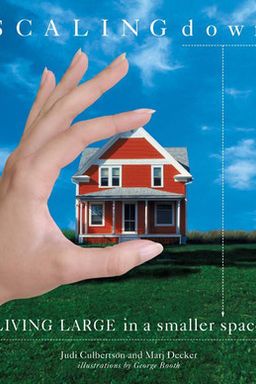
Have you ever looked around your home and felt suffocated by all the things you own? In Scaling Down: Living Large in a Smaller Space, Judi Culbertson and Marj Decker challenge the American obsession with accumulation and argue that true abundance comes not from owning more stuff but from owning less of what truly matters. They contend that downsizing isn't about deprivation—it's about liberation. When you shed the physical and emotional baggage crowding your life, you uncover space for joy, creativity, and freedom.
The authors draw on decades of experience as professional organizers to reveal a deeply psychological process: decluttering works best not when approached as a chore but as a form of personal transformation. They’ve seen every kind of client—from those who stay awake until three in the morning throwing out belongings before the organizers arrive, to those unwilling to part with even a bent hanger. Their insight is clear: scaling down successfully requires not just boxes and trash bags but emotional clarity and a guiding Mission Statement.
Why Stuff Became a Crisis
Culbertson and Decker trace America’s clutter crisis to cultural habits woven through our history. After the Depression, our parents learned frugality; later generations were taught to equate buying with happiness. Postwar advertising stoked demand for every luxury, from electric bagel cutters to SUVs with built-in status. The result is a society buried in possessions—one where freedom of choice became a trap of overcrowded closets, garages, and basements. We’ve turned the vacation house dream—living easily and spaciously—into an unreachable fantasy.
The Emotional Geometry of Possession
Decluttering isn’t just about logistics; it’s about emotions. Our stuff expresses identity, memory, and self-worth. We keep gifts from Aunt Winnie because they symbolize affection, hold onto career manuals to preserve a sense of competence, and save children’s cast-offs because they represent love. Each object carries a narrative, and stripping away those stories can feel like erasing parts of ourselves. But as Decker and Culbertson show, keeping everything is another kind of forgetting—an inability to distinguish what truly matters from what merely takes up space.
Clutter as a Mirror of Fear
The authors identify twenty-one fears that keep people trapped in clutter—from worrying they might need an item later to fearing emotional pain from confronting the past. Beneath these anxieties lie questions of identity and control. To move forward, they encourage readers to create a Scaling Down Mission Statement: a personalized blueprint defining what you truly need and why. Are you clearing space to move, to create, to breathe easier? This document transforms decluttering from a mechanical purge into a meaningful philosophy of living.
The Reward: Living Large in a Small Space
Ultimately, Culbertson and Decker redefine the term “large.” Living large doesn’t mean expanding square footage; it means expanding quality of life. Through detailed strategies—grouping, triage, photographing, shrinking—they show how less becomes more. The size trap in modern life, they argue, comes from mistaking scale for satisfaction. By reimagining smaller homes as canvases for creativity rather than limitations, you can regain control of your environment and heart.
The book unfolds in five parts that follow the emotional arc of change: the challenge of scaling down, identifying culprits behind clutter, handling special situations like moving or merging households, applying practical strategies, and finally, embracing the rewards of simplicity. Each section blends humor, psychological insight, and real-life stories—from clients transforming cluttered garages into offices to retirees discovering purpose after letting go. This isn’t just a manual for tidiness; it’s an invitation to reinvent your relationship with possessions and, more importantly, with yourself.
Scaling down, the authors remind us, isn’t about scarcity—it’s about selectivity. When you own less, you live more deliberately. In a world driven by consumption, Culbertson and Decker ask a simple but radical question: What if bigger isn’t better? What if freedom begins with a trash bag and a pen?