
Idea 1
How Language Rules Shape and Reflect Us
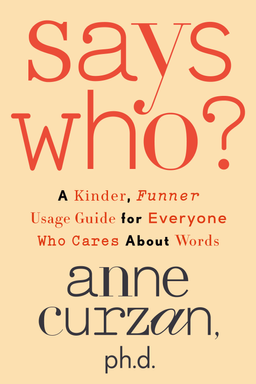
How do you decide what counts as good English? In her book on usage and grammar, Anne Curzan argues that language is not a fixed code but a living social system. Every time you correct a word or notice someone’s phrasing, you engage two internal characters she calls your inner grammando and your inner wordie. The grammando enforces rules and traditions, while the wordie delights in evidence of change and variation. The art of speaking and writing well, Curzan insists, is about learning when to listen to each of these instincts.
This book helps you see language rules as layered, historical, and purposeful—not just arbitrary prescriptions. It shows that what you call 'errors' or 'rules' often reflect older prejudices, editorial conventions, or power dynamics. Curzan blends linguistic research, usage debates, and examples from both everyday life and scholarly corpora to show how English continually reshapes itself. From double negatives to singular they, from 'impactful' to 'irregardless,' she invites you to become a better listener, writer, and citizen of language.
Two Inner Voices: Grammando and Wordie
Your grammando thrives on clarity, tradition, and external authority. It thrives on Bryan Garner’s rules and the preferences of editors and teachers who treat English as a craft of restraint. Your wordie, by contrast, loves watching the species of words evolve: it notices verbing, new slang, and the way social media accelerates lexical creativity. Curzan models how these two voices coexist in practice, as in her anecdote about debating whether 'impact' may be used as a verb at a wedding reception. She doesn’t crown either voice the winner—she shows you how to weigh context, audience, and evidence before deciding.
Evidence, Not Instinct Alone
To shift your perspective, Curzan teaches you to consult corpora such as COCA (the Corpus of Contemporary American English) or historical databases like Google Books. When you see a word used widely by careful writers, that’s evidence of change at work. Dictionaries, usage panels, and house style guides act as informed but human arbiters; their labels—'informal,' 'nonstandard,' 'slang'—are social signals, not universal truths. In exploring the American Heritage Usage Panel, on which she once served, Curzan exposes how authority is negotiated, not absolute. The panel might reject funner or finalize in one era but embrace them decades later.
Language Change and Social Meaning
Behind every usage controversy lies a deeper social story. Double negatives once filled Chaucer’s lines, yet modern grammar teachers outlaw them because of 18th-century prescriptive reasoning. Likewise, pronunciations like 'aks' for 'ask' reflect legitimate historical forms later stigmatized by class and race bias. You begin to see that linguistic 'error' often means 'deviation from those in power.' By historically tracing these patterns, Curzan invites you to replace judgment with curiosity—and to recognize that respecting diverse dialects is both linguistically and ethically sound.
Writing and Editing with Awareness
Curzan connects linguistic generosity to practical communication. In formal writing or teaching, you can describe rules without vilifying alternatives. She recommends gentle correction and explaining why conventions exist: commas separating clauses, semicolons linking complete thoughts, or pronoun forms such as who versus whom. Understanding origins—like Bishop Lowth’s Latin-inspired proscriptions—helps you choose wisely rather than blindly.
Even punctuation debates, from Oxford commas to dash overuse, reveal the dynamic tug between aesthetics and clarity. Style guides differ not because one is 'right' but because they serve distinct audiences. The same principle holds for grammar debates: you adjust for rhetorical precision, not tribal allegiance to rules.
Inclusive Language and Power
Language also enacts inclusion. Curzan shows how pronoun changes such as singular they or titles like 'first-year student' instead of 'freshman' respond to real shifts in visibility and respect. Speaking inclusively isn’t 'political correctness' gone awry; it’s social listening. Words shape who feels seen and who doesn't. In these chapters, she links linguistic choices to civic responsibility: each speaker decides whether their words widen or narrow the circle of belonging.
Why These Choices Matter
Ultimately, Curzan reframes your relationship with English: rules are not commandments but evolving tools. Learning grammar and usage history arms you to make decisions grounded in both clarity and empathy. When your grammando bristles at 'irregardless,' your wordie can check corpus data; when a student says 'aks,' your wordie can recognize heritage, not error. Being language-savvy means balancing accuracy, kindness, and awareness of how language, identity, and power intertwine.
Curzan’s central message
Treat grammar as a conversation between the past and present, not as a battlefield. Combine descriptive knowledge with social sensitivity so that your choices affirm communication rather than constrain it.
This philosophy of balance—between guidance and openness, between rule and result—makes Curzan’s work not only a grammar manual but a moral discourse on how we treat one another through words. You finish the book fluent not only in linguistic facts but in empathy for the speakers around you.