
Idea 1
The Troubles and the Human Cost of Silence
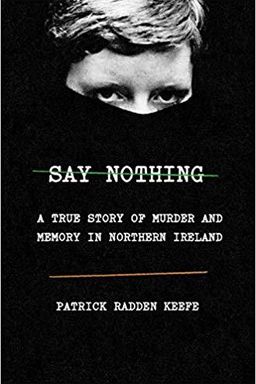
How can a society remember what it has been forced to forget? In Say Nothing: A True Story of Murder and Memory in Northern Ireland, Patrick Radden Keefe reconstructs how secrecy, loyalty, and silence shaped the Troubles—a conflict where the boundaries between justice and revenge, protection and betrayal, moral conviction and personal ruin blurred beyond recognition. He does this through stories of ordinary people drawn into political theater they neither designed nor could escape. You follow abductions, hunger strikes, bombings, and cover-ups, culminating in a haunting question: how does a community move forward when truth itself is dangerous?
Conflict born of conviction and coercion
The conflict that erupted in late twentieth-century Northern Ireland began as a civil rights struggle but warped into a prolonged insurgency. Catholics in Belfast faced systemic discrimination, loyalist violence, and an unresponsive state. Into this atmosphere of grievance stepped the Provisional IRA, promising defense and dignity through force. You see how young idealists like Dolours and Marian Price, inspired by family legends of rebellion, were radicalized by events such as the Burntollet ambush of 1969. Outrage gives way to militarization; the movement’s moral logic—violence as necessity—takes hold.
Across the street from idealists are tactical minds like Brendan Hughes, commander of D Company in West Belfast. For Hughes, operations and discipline sustain both morale and myth. Meanwhile, the British state develops its own underground techniques—counter-gangs, informers, and covert units like the MRF—adapting colonial counterinsurgency principles to a domestic conflict. What results is a tangled web of mutual infiltration, mistaken identities, and moral corrosion.
Private pain as public mirror
The book grounds its moral argument in one family’s tragedy: the disappearance of Jean McConville, a widowed mother of ten abducted from Belfast’s Divis Flats in 1972. To “disappear” someone is to deny both death and closure. The McConville children become orphans first of politics and then of the state; they are scattered through abusive institutions like Nazareth Lodge and Lisnevin, where trauma begets further trauma. The story reminds you that the Troubles were not abstract battles; they were domestic catastrophes, carried out in rooms where children hid in bathtubs from gunfire.
When the state mirrors the insurgent
Keefe juxtaposes the IRA’s underground with the British government’s own shadow world. The doctrine of Frank Kitson—intelligence-first warfare using pseudo-gangs and informers—produces the MRF and later the FRU, units that blur the line between intelligence collection and assassination. Practices such as internment without trial, hooding, and sensory deprivation break bodies but also radicalize communities. (It’s an eerie preview of later “war on terror” rationales, where interrogation is relabeled as necessity and abuses become “lessons learned.”)
Memory as battlefield
Decades after the violence subsides, a new battle begins: who owns the story? Through projects like the Boston College Belfast archive, ex-combatants such as Hughes and Dolours Price record candid testimonies about killings, operations, and leaders, under promises of confidentiality until death. Yet even after the peace accords, history refuses to stay buried. When police subpoena the tapes to investigate Jean McConville’s murder, academia collides with law, confidentiality with justice. Boston College’s legal collapse becomes a case study in how truth, when stored rather than shared, can erupt into new conflict.
The politics of forgetting and survival
By the end, you face the same dilemma that haunts the people Keefe interviews: Is peace possible without truth? Gerry Adams rises as a political visionary, steering Sinn Féin into democratic respectability, while simultaneously denying IRA membership and deflecting allegations of direct involvement in disappearances. His denials ensure political survival but leave moral residue. Families like the McConvilles still wait for justice; former fighters like Hughes and Dolours Price die disillusioned, feeling abandoned by the movement that made them. In Keefe’s hands, the Troubles become not just a history of violence but a meditation on memory itself—how nations remember selectively, and how silence, once weaponized, outlives the war.