
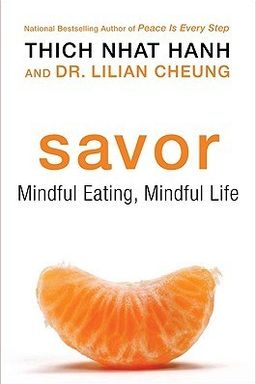
Savor cover

Savor

by Thich Nhat Hanh and Dr Lilian Cheung

Savor presents a transformative journey towards inner peace and sustainable weight loss through mindful eating. With a fusion of Buddhist wisdom and nutritional science, it offers practical insights to enhance physical, psychological, and spiritual well-being, empowering readers to live more fulfilling lives.

Mindfulness as the Path to Freedom from Weight Suffering

How can you turn the suffering of weight imbalance into peace? In Savor: Mindful Eating, Mindful Life, Thich Nhat Hanh and Dr. Lilian Cheung show that mindful awareness—applied to eating, breathing, and moving—can transform the roots of suffering instead of just suppressing symptoms. Their approach blends Buddhist wisdom with modern nutrition and behavioral science, positioning mindfulness as both a moral compass and a practical tool for sustainable health.

The book’s premise reframes excess weight not as failure or moral weakness but as a manifestation of suffering. You don’t overcome this through self-punishment but through awareness—seeing the causes of habit energy, the cultural context of overeating, and the possibilities for transformation. The authors use the Buddha’s Four Noble Truths as a structural guide: acknowledge suffering, identify causes, recognize change is possible, and walk the Eightfold Path of mindful living.

A Shift from Dieting to Mindful Investigation

Traditional diets start with restriction; this book begins with curiosity. When you breathe and pause before eating, you step out of reactivity and begin asking: why am I eating? Is this physical hunger, boredom, or anxiety? This awareness marks the turning point from compulsion to choice. Hanh’s poetic voice reminds you to greet cravings gently: “Hello, habit energy. I know you are there.” That single acknowledgment interrupts automatic behavior and allows freedom.

The Four Noble Truths framework invites both personal and societal reflection. The First Truth says to recognize suffering—whether in your body, your environment, or cultural systems that push excess. The Second urges you to trace causes: oversized portions, processed foods, sleep deprivation, or emotional pain. The Third assures you that transformation is possible. The Fourth translates into daily practice—breathing, mindful meals, supportive community, and meaningful movement.

Mindfulness and Interbeing

Every mindful act, from an apple bite to a daily walk, reveals interbeing—the deep interconnectedness of all things. When you hold an apple and see the sunshine, rain, and farmer within it, you realize eating is ecological and moral, not just nutritional. Hanh’s “apple meditation” makes eating a sacred act: you chew slowly, taste attentively, and feel gratitude for the web of existence that nourishes you. The apple becomes the cosmos in your palm, a portal into compassion for both body and planet.

This perspective dissolves the illusion of separation. Overeating, pollution, and burnout stem from the same root—forgetfulness. The antidote is mindful presence. When you eat or move with awareness, you participate in healing both yourself and the world around you.

Science Meets Spiritual Practice

Dr. Cheung integrates findings from Harvard’s nutrition and public health research, reinforcing that mindful, plant-based, minimally processed diets align with both longevity and planetary sustainability. Evidence from the Nurses’ Health Study and global reports such as Livestock’s Long Shadow underpins their message: what you eat affects not only your health but also climate, soil, and water systems.

By marrying mindfulness and evidence-based science, Savor appeals equally to the contemplative and the pragmatic. You learn that portion sizes, sleep cycles, and advertising cues—down to popcorn container experiments showing a 61% increase in intake—are extensions of consciousness. Changing them mindfully reclaims your freedom from manipulation.

Community, Sangha, and Collective Action

Individual awareness grows within community. Hanh calls this the sangha—a circle of support where shared practice sustains energy. The book shows how communal meals, workplace mindfulness groups, or walking clubs make new habits durable. Extending that outward, Savor highlights activism grounded in compassion: replacing sugary drinks in schools, demanding transparency in food sourcing, and promoting urban walking paths. Small, mindful collective actions ripple outward into systemic change.

Core Message

You nourish body and mind by nourishing awareness. Through mindful eating, ethical consumer choices, conscious movement, and compassionate engagement, you dissolve the roots of suffering and build lasting wellbeing for yourself and the Earth.

Overall, Savor transforms the question “How do I lose weight?” into “How do I live fully and lovingly?” Mindfulness becomes the framework through which body, mind, and community reconnect. You leave not with a diet chart but with a way of being—each breath, step, and bite a reminder of freedom and interconnection.


Transforming Habit Energy

Your struggle with food often begins with what Thich Nhat Hanh calls habit energy—automatic patterns that steer actions without conscious choice. The book opens by inviting you to pause and recognize these patterns through mindful breathing. You learn to 'stop the horse' of reactivity and become the rider again. This practice, drawn from Buddhist shamatha (stopping and calming), is the foundation for sustainable transformation.

Seeing the Roots of Suffering

Mindfulness requires that you look deeply at your suffering rather than escape it. Ask: what do I eat when lonely, tired, or fearful? Instead of punishing yourself, you explore causes: stress, lack of sleep, or societal conditions that promote excess. Dr. Cheung emphasizes that identifying causes allows change. This shift from blame to understanding mirrors cognitive-behavioral concepts of awareness and response prevention.

From Awareness to Small Actions

Converting awareness into action begins with simple steps: three mindful breaths before meals, smaller plates, or replacing soda with water. These micro-acts, sustained mindfully, harness Bandura’s principle of self-efficacy—small wins build confidence and momentum. Through repetition, mindfulness becomes the new habit energy that sustains health without deprivation.

Practice Mantra

“Hello, habit energy. I know you are here.” This gentle acknowledgement replaces repression with awareness and opens the door to freedom.

Through this approach, Savor turns mindfulness from a theory into a daily rhythm. With every pause, you plant seeds of freedom where habit once ruled.


The Four Nutriments of Life

One of the book’s most powerful frameworks is the Buddha’s Four Nutriments: edible food, sense impressions, volition, and consciousness. Thich Nhat Hanh and Dr. Cheung show that every act of consumption—what you eat, watch, think, or intend—feeds either your suffering or your wellbeing. Mindfulness allows you to choose nourishment that supports health rather than craving.

Edible Food

You begin with literal food. The book urges high-quality, plant-leaning diets: whole grains, fruits, vegetables, legumes, and minimal processed meats. It also connects eating to ethics: the environmental toll of livestock agriculture and processed foods echo the Buddha’s teaching from the Discourse on the Son’s Flesh—a reminder to eat with awareness, not exploitation. Pausing before each meal to trace the origins of food—soil, sun, farmer—creates reverence and limits excess.

Sense Impressions

The media diet is as critical as food. TV ads, billboards, and online imagery overwhelm your senses and activate cravings. By mindfully filtering inputs—switching off screens during meals or unsubscribing from promotional emails—you stop feeding the seeds of desire. This practice parallels modern findings in behavioral economics about stimulus control: change your environment, and your behavior shifts.

Volition and Consciousness

Volition is your core motivation: the 'why' behind your actions. When you chase wealth or comfort as happiness, you may use consumption as a surrogate for meaning. Reframing volition around compassion and simplicity realigns your energy. Consciousness, the final nutriment, holds the seeds of every mental pattern—anger, greed, and joy. Mindfulness waters wholesome seeds and allows diseased ones to dry out. Careful attention to these four nutriments becomes a complete map of transformation for mind and body.


Mindful Eating and the Apple Meditation

Thich Nhat Hanh’s apple meditation captures the heart of Savor: transforming eating from automatic consumption into awareness. By slowing down, tasting fully, and observing interconnection, you cultivate gratitude, reverence, and joy. A single apple becomes both teacher and mirror.

The Practice

Before eating, pause. Hold the apple, notice its form, smell, and weight. Take one slow bite, chew twenty to thirty times, and rest your mind on the taste and breath. Doing nothing else—no screens, no conversation—anchors you in the moment. Each chew becomes a dharma lesson in patience and awareness.

From Apple to Cosmos

When you look deeply, you see the apple’s interbeing with rain, soil, sunlight, and human care. This awakening shifts eating from private pleasure to ethical communion. The experience deepens compassion for both the planet and your own body, strengthening your commitment to healthful and sustainable food choices. Over time, the simple apple practice expands—into mindful cooking, communal meals, and dishwashing done with joy. It is both health behavior and spiritual realization.


Mindful Moving and Daily Activity

Mindful movement transforms physical activity into meditation in motion. From walking to tai chi to simple arm swings, your body becomes a vehicle for awareness. You anchor attention in breath and step, turning exercise from duty into joy.

Walking Meditation

Thich Nhat Hanh teaches: take two or three steps per breath, silently repeating, “I have arrived, I am home.” You stop chasing future outcomes and inhabit the present. Scientifically, this aligns with stress reduction and parasympathetic activation, lowering cortisol and stabilizing mood. You no longer separate 'exercise' from 'mindfulness'—they merge into a single healing act.

Practical Guidance

Evidence-based guidelines suggest 150 minutes of moderate activity per week for general health, building toward 200–300 minutes for weight management. The National Weight Control Registry finds that most successful long-term weight controllers move about an hour daily. These metrics, woven with Hanh’s meditative instructions, form a balanced approach—scientific accuracy joined with spiritual presence. Even short ten-minute bouts, done consciously, add up to transformation.


InEating and the Mindful Living Plan

The book translates insight into structure through the inEating, inMoving, and inBreathing systems. They guide you to design an integrated Mindful Living Plan tailored to your life, emphasizing gradual improvement and compassionate persistence.

Seven Practices of a Mindful Eater

  • Honor food through contemplation of its origins.
  • Engage all senses to remain present.
  • Serve modest portions.
  • Savor small bites and chew thoroughly.
  • Eat slowly and avoid multitasking.
  • Don’t skip meals.
  • Favor plant-based foods for health and ecology.

Building Your Plan

Start where success is easiest: one meal, one walk, one mindful breath. Use a daily log to track progress and obstacles. Expect setbacks and approach them kindly. Surround yourself with a sangha—friends or coworkers sharing goals. Regular reflection and gratitude keep momentum alive, turning mindfulness into sustainable lifestyle rather than temporary discipline.


Overcoming Barriers and Maintaining Practice

Every journey faces obstacles: time, energy, expense, or relapse. Savor anticipates these barriers and equips you with workarounds grounded in mindfulness and behavioral research. Instead of waiting for ideal conditions, you learn to adapt.

Practical Workarounds

  • Shorten exercise sessions and scatter them through the day.
  • Prepare clothes or meals in advance to minimize friction.
  • Use community centers and home routines instead of expensive gyms.
  • For relapse prevention, plan for emotional triggers—negative moods, social pressure, or conflict—and use breathing meditation as an immediate reset.

Sustaining Change

Long-term success rests on compassion. “Slipping is just slipping,” the authors remind you. Each slip becomes feedback, not failure. Weekly reflection on the Five Mindfulness Trainings—reverence for life, true happiness, true love, loving speech, and nourishment—acts as a moral compass. When daily mindfulness aligns with ethical clarity, relapse loses its grip. You don’t start over; you continue more wisely.


From Personal Awareness to Collective Change

The final arc of Savor expands your practice toward social transformation. Interbeing means your mindful choices touch others: the farmers who grow food, the environment that sustains it, and policy systems that govern access. The book celebrates figures who proved that compassion can alter institutions—from Candace Lightner’s MADD movement to scientists removing trans fats from the food supply. Your small daily acts—choosing water over soda, supporting community agriculture, cycling instead of driving—become seeds of global healing.

Ultimately, mindfulness is both personal and political. Through each mindful breath, you contribute to a culture of awareness and kindness. When enough individuals act together, the suffering of overeating, ecological destruction, and disconnection begins to dissolve. The result is what Hanh calls “collective awakening”—a world where every bite, step, and breath expresses gratitude and responsibility.

Dig Deeper

Get personalized prompts to apply these lessons to your life and deepen your understanding.

Go Deeper

Get the Full Experience

Download Insight Books for AI-powered reflections, quizzes, and more.