
Idea 1
Markets Are Made, Not Born
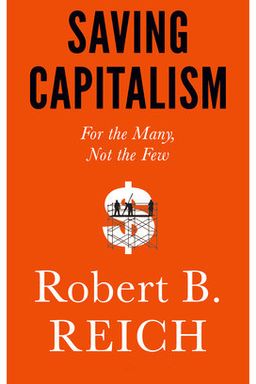
You often hear that the market is a natural, self-regulating force—an invisible hand correcting imbalances and rewarding merit. Robert Reich, in his lucid and urgent argument, dismantles that comforting illusion. He contends that there is no such thing as a “free market” separate from government; all markets are human-made systems governed by rules about property, contracts, monopoly, bankruptcy, and enforcement. Those choices are political, not technical, and they determine who prospers and who struggles.
Reich’s central claim is that over recent decades, political and legal systems have rewritten market rules to favor large corporations, financial institutions, and wealthy individuals. The result is what he calls “upward pre-distribution”—a quiet, structural transfer of income and power before any government redistribution occurs. In this sense, inequality today is not a natural outcome of skill or effort; it is the predictable result of rulemaking guided by concentrated power.
How the illusion of the ‘free market’ persists
Reich reminds you that terms like “deregulation” or “market freedom” are often code for reregulation—a shift in rules to favor particular interests. When Congress relaxed financial oversight in the 1980s and 1990s, it wasn’t shrinking government; it was rewriting the rules to let Wall Street take riskier bets while maintaining implicit guarantees of rescue (as the 2008 crisis proved). Each regulatory change created a new marketplace with its own winners and losers.
As Karl Polanyi noted decades earlier, markets are sustained by law. The question is not whether the state intervenes, but how it intervenes, and for whose benefit. By treating market outcomes as morally deserved or “inevitable,” you stop asking who designs the rules in the first place.
The five building blocks of capitalism
Reich structures his analysis around five institutional pillars—property, monopoly, contract, bankruptcy, and enforcement. These determine how value flows through society. They decide whether you can own software code or genes (property), how much dominance a corporation may wield (monopoly), what rights you have in agreements (contract), who gets to walk away from debt (bankruptcy), and whether laws are actually enforced on the powerful (enforcement). None of these pillars is neutral; each reflects political influence and moral priorities.
As you’ll see across the book, property law increasingly constructs monopolies out of ideas and data; antitrust enforcement has waned in the face of digital platforms; contracts trap workers and consumers in arbitration systems they didn’t choose; bankruptcy lets big firms shed obligations while ordinary debtors sink; and enforcement is routinely underfunded or captured by the very industries it is meant to police.
Freedom and power intertwined
The market myth survives partly because it borrows moral authority from the language of freedom. But Reich asks you to examine whose freedom expands when corporations win the right to spend unlimited money on politics (as in Citizens United) or when an employee must sign away her right to sue in court. Freedom without attention to power imbalances becomes a hollow slogan. True liberty, Reich argues, demands a level playing field—something rules alone can secure.
From fairness to sustainability
When economic and political power concentrate at the top, capitalism undermines itself. Demand weakens, social trust erodes, and political resentment grows. History offers warnings: severe inequality in 1928 and again in 2007 preceded economic collapse. If markets are to endure, rulemaking must once again distribute power broadly. Otherwise, the system devolves into plutocracy—capitalism for the few, insecurity for the many.
Reich’s project, then, is to turn the conversation from “more or less government” toward the real question: Who writes the rules of capitalism, and to whose benefit? Once you grasp that markets are human institutions, you can reclaim them as moral and political choices. The challenge is not to abolish capitalism, but to design it so it serves democracy rather than distorting it.
Core takeaway: The economy is not an act of nature but an act of design. Every rule—about property, monopoly, contract, or enforcement—embeds a moral decision about who counts and who profits. To build a fair society, you must first rebuild the rules of the market itself.