
Idea 1
What Never Changes in a Changing World
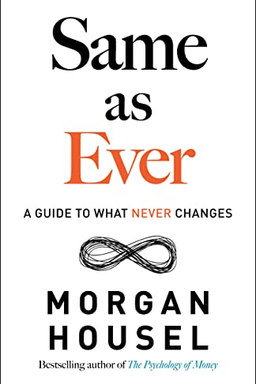
Have you ever wondered why, despite constant technological leaps and worldwide disruptions, humans keep making the same mistakes? In Same as Ever, Morgan Housel invites you to zoom out from today’s chaos and look for timeless patterns beneath the noise. He argues that while the details of history may change—the gadgets, governments, and global headlines—the deeper forces shaping human behavior remain strikingly constant. His core claim is simple: the best way to understand the future is not to predict what will change, but to identify what never does.
Across hundreds of stories—from avalanches and pandemics to business booms and personal regrets—Housel contends that life’s most revealing lessons come from recognizing stable traits like fear, greed, overconfidence, envy, and the pursuit of security. These traits define how people act in markets, relationships, and societies, and their consistency allows you to forecast how things will unfold without clairvoyance. As Jeff Bezos once said (a quote Housel underscores), while people obsess over what will change in the next ten years, the more important question is what won’t.
A Perspective Shift
Housel’s premise reverses the lens through which most people study history or economics. Instead of trying to decode future trends, he focuses on recurring human responses—greed in booms, fear in busts, pride after success, panic during uncertainty. “History never repeats itself; man always does,” Voltaire reminds us in one of the book’s opening quotes, capturing the pattern perfectly. That repetition, according to Housel, is your compass in a world where predictions fail over and over again.
Timeless Human Constants
Throughout Same as Ever, Housel explores constants of human nature through gripping vignettes: a near-death avalanche experience that taught him about randomness, Warren Buffett’s wry Snickers story illustrating enduring preferences, and historical accidents—like a changed wind during the Battle of Long Island—showing how luck rewrites destiny. By grounding wisdom in these small stories, he reveals a bigger truth: predicting human behavior is far more reliable than predicting events. People will keep chasing comfort, rationalizing folly, fearing loss, and copying others, regardless of era.
Why It Matters Today
In a world obsessed with innovation and disruption, Housel’s lens offers calm. If you can anchor your expectations on human permanence—our tendency to seek stories over statistics, our blind spots with risk, our ebb and flow between optimism and despair—you can cultivate resilience. The point isn’t to resist change but to recognize which parts of it are superficial. Economic cycles, tech revolutions, and cultural shifts will always emerge, but under their surface, the same psychological and behavioral forces will drive outcomes.
What You’ll Learn
In this guide, you’ll explore how fragile events can hinge on chance (Hanging by a Thread), how unseen risks shape decisions (Risk Is What You Don’t See), and how expectations—not circumstances—determine happiness. You’ll see why calm inevitably breeds chaos, why stories beat facts, and how compounding rewards the patient while surprises demolish the arrogant. You’ll also discover the moral hazards of perfection, the perils of incentives, and the enduring scar tissue of lived experience.
Ultimately, Housel wants you to rethink foresight. Instead of asking, “What will change next?” ask, “What has always driven people, and how will those forces play out again?” The answer, he promises, is what will help you make sense of your own life—and accept uncertainty with surprising peace.