
Idea 1
Helping Customers Buy by Mastering the Art of the Sales Pitch
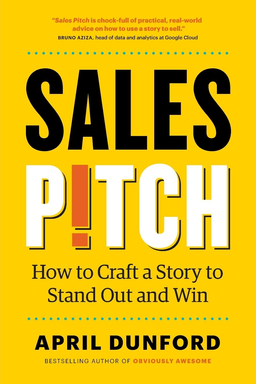
When was the last time you tried to buy something complicated—say, new software for your business—and found yourself overwhelmed by choices? In Sales Pitch: How to Craft a Story to Stand Out and Win, April Dunford argues that the same confusion plagues your customers. Her claim is simple but profound: great selling isn’t about persuasion; it’s about helping customers buy with confidence. To do that, you need a powerful sales pitch built around a clear, differentiated story of value—not a spreadsheet of features or a pushy script.
Dunford, best known for her earlier book Obviously Awesome on product positioning, now takes her expertise to the front lines of sales. She contends that even the best positioning work fails if it doesn’t live inside the sales pitch. A marketing department can define what makes your product different, but if your sales team can’t tell that story convincingly in the first meeting, the message dies before it reaches the customer.
Why the Sales Pitch Matters Now
Dunford opens with a striking observation: there are countless books about negotiation, cold calling, and objection handling, but almost none about how to build a sales pitch itself. Yet the sales pitch is the make-or-break moment when a potential buyer first hears your story. In a world where buyers are drowning in information but starving for clarity, the company that can simplify choice wins. This makes the sales pitch a teaching moment rather than a selling monologue.
Dunford emphasizes that selling software or technology today means guiding buyers through a high-stakes, fear-driven decision. She notes that decision paralysis, or the dreaded “do nothing” outcome, kills between 40 and 60 percent of deals (as Matthew Dixon and Ted McKenna found in The JOLT Effect). Most buyers aren’t choosing a competitor—they’re choosing not to choose.
The Shift from Selling to Guiding
At the core of Dunford’s philosophy is a mindset shift: from selling to guiding. A true salesperson acts like the toilet-store salesperson in Dunford’s humorous story: an expert who categorizes options, explains trade-offs, and teaches the buyer how to decide. Just as that guide helped her choose between hundreds of toilet models by clarifying what mattered—quality, style, and space—a good sales pitch helps a buyer navigate complex, high-stakes options. The goal is never to ‘convince’ but to illuminate a logical path to decision-making.
This approach reframes the salesperson as a trusted advisor. Buyers, Dunford says, are the experts in their pain; vendors are the experts in possible solutions. A great sales story bridges the two by helping the buyer understand not only what your product does but why your differentiated value matters and how it compares to alternatives. This methodology is grounded in the insight that confidence—not persuasion—drives purchase decisions.
The Core Framework: The Eight-Step Pitch
To bring this vision to life, Dunford offers a complete eight-step structure for crafting a winning pitch that works for startups and large enterprises alike. The structure is divided into two phases—the setup and the follow-through:
- Insight: Begin with a unique perspective on the market—your key learning that sets the stage for your differentiated value.
- Alternatives: Paint a clear picture of how buyers currently solve the problem, and the pros and cons of each approach. This serves as a discovery moment.
- The Perfect World: Define what an ideal solution should look like for your best-fit customers—and ensure it aligns with your value.
- Introduction: Introduce your company and situate your offering within the right market category.
- Differentiated Value: The centerpiece—show (not tell) how your product alone delivers the key outcomes customers care about. This is where a demo lives.
- Proof: Back up your claims through case studies, statistics, or third-party validation.
- Objections: Handle key deal-killing questions proactively—such as integration, pricing, or complexity.
- The Ask: End with a clear next step that keeps the buyer moving forward.
The first three steps—Insight, Alternatives, and The Perfect World—form what Dunford calls the “setup.” This is where you teach the buyer how to think about the problem and market. The next five steps—starting with Introduction—constitute the “follow-through,” where you connect that learning directly to your solution. Each step intentionally prepares the ground for the next, ensuring the buyer’s journey mirrors a learning path, not a persuasion funnel.
Positioning as the Foundation
A successful pitch can’t exist without strong positioning. Dunford revisits her previous framework—defining Competitive Alternatives, Unique Capabilities, Differentiated Value, Best-Fit Customers, and Market Category. These become your inputs: your insight (what customers must know), your map of alternatives (competitors and the status quo), and the value only you can deliver (why you win). As she puts it, “Garbage positioning in, garbage pitch out.”
When positioning is clear, the pitch becomes an educational narrative. Dunford likens it to teaching the buyer “why pick us?” instead of simply “what we do.” Help Scout, Postman, Funnel, and Gearset—real companies Dunford spotlights—illustrate how a structured pitch powered by positioning can transform customer understanding and accelerate revenue growth.
Why This Framework Works
What makes Dunford’s approach stand out is that it blends empathy with structure. By combining storytelling techniques with positioning science, it replaces scattered sales talk with a repeatable, confidence-building journey. Drawing from the Challenger Sale framework’s idea that great reps teach, Dunford extends the lesson: it isn’t enough to challenge; you must guide. You become the “toilet Obi-Wan” of your industry—trusted, practical, and focused on helping your audience make sense of complexity.
This focus on making sense gives your team a strategic edge. A standardized pitch ensures every rep tells the same powerful story, accelerates onboarding, and brings marketing, product, and sales into alignment. It also ensures that what worked for one rep can scale—and that prospects hear consistent, credible messages about why your product is different and better.
The Payoff
In her conclusion, Dunford makes one promise: if you guide buyers to clarity, you win their trust and their business. The best companies, she argues, don’t just sell products—they sell understanding. By combining empathy (“buying is hard”) with mastery of narrative and structure, Sales Pitch delivers a complete playbook for converting insight into sales conversations that feel authentic and helpful to both sides.
“Stop selling. Start helping.” — Zig Ziglar, quoted by April Dunford to summarize her philosophy.
In essence, Sales Pitch teaches that every great company must be able to teach. When you move from convincing customers to guiding them, your pitch stops being a performance and becomes a path—which is what every overwhelmed buyer secretly wants.