
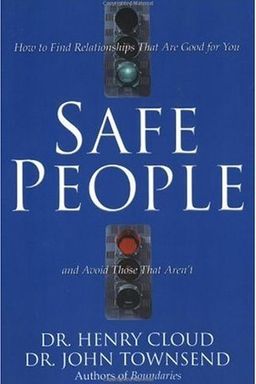
Safe People cover

Safe People

by Henry Cloud and John Townsend

Safe People by Henry Cloud and John Townsend offers a biblically grounded guide to identifying and fostering healthy relationships. Learn to recognize the traits of unsafe individuals and transform your life by welcoming safe, enriching connections that support emotional and spiritual growth.

Finding and Becoming Safe People

Have you ever wondered why some relationships leave you drained, while others make you feel seen, safe, and loved? In Safe People, Dr. Henry Cloud and Dr. John Townsend explore one of life's most practical spiritual challenges: how to recognize, attract, and become people who are emotionally and spiritually safe. The authors argue that true connection—the kind that draws you closer to God, others, and your authentic self—requires discernment. Without it, we find ourselves trapped in destructive patterns with untrustworthy people, and disconnected from the healing relationships God designed us to have.

Cloud and Townsend contend that discerning safe versus unsafe people is not about judging or labeling others—it’s about developing spiritual maturity and character discernment. Unsafe people exist everywhere: in friendships, marriages, churches, and workplaces. They may be religious, charming, or confident, but their character flaws—such as pride, defensiveness, or lack of empathy—make closeness harmful. Safe people, on the other hand, embody humility, truth, and grace. They are not perfect, but they are willing to grow, repent, and love honestly. Learning to identify these qualities is both a psychological and spiritual skill.

The Core Conflict: Our Hunger for Connection

Humans crave connection. From Genesis onward, the authors remind us that God declared it not good for man to be alone. Yet, after the Fall, trust was fractured. Unsafe relationships—those that exploit, manipulate, or withhold love—became part of the human condition. As a result, many of us oscillate between reckless trust and fearful isolation. The book helps you navigate this tension by learning how to discern the difference between right relationship and unhealthy attachment.

Cloud and Townsend frame emotional safety as a triangle of dwelling, grace, and truth—modeled after Jesus himself (John 1:14). Safe people are present and connected (“dwelling”), unconditional and forgiving (“grace”), and honest without cruelty (“truth”). These three elements are the foundation of every healing relationship, whether with God or others. Unsafe people typically distort one or all of these: they may withdraw (no dwelling), judge harshly (no grace), or lie and pretend (no truth).

Why Character Discernment Matters

Most relational pain, the authors write, stems not from a lack of love but from a lack of discernment. We misjudge who is trustworthy because of personal blind spots, emotional needs, or past wounds. As Jesus taught in Matthew 7, we must first remove the plank from our own eye before judging others clearly. Cloud and Townsend translate this into psychological terms: your unhealed fears, patterns of self-blame, or desire to be rescued all influence how you choose unsafe people. Recognizing these internal biases allows you to pick people whose character aligns with God’s design for love—people who can help you grow rather than keep you stuck.

The Book’s Structure and Promise

Over three sections, the authors guide you through identifying unsafe people, discovering why you attract them, and learning how to become safe yourself. Part One (“Unsafe People”) defines twenty dangerous traits—like perfectionism, blame-shifting, and lack of repentance—that destroy trust. Part Two (“Do I Attract Unsafe People?”) reveals how your own patterns—fear, guilt, victimhood—make you a magnet for dysfunctional relationships. Part Three (“Safe People”) shifts from diagnosis to recovery, showing how community, forgiveness, and humility become pathways to emotional healing.

Ultimately, Safe People is not just a relationship manual—it’s a spiritual transformation guide. It challenges you to unlearn unsafe habits inherited from your past, to open yourself to God’s grace through healthy relationships, and to model that safety for others. When you become grounded in truth and love, you attract the kind of people whose presence strengthens your character. As Cloud and Townsend remind, being and finding safe people is not perfection—it’s progress toward Christlike maturity.


Traits of Unsafe People

Unsafe people hurt relationships not because they lack intelligence or sincerity but because their character resists humility, truth, and transformation. In Chapter Two and Three, Cloud and Townsend detail twenty traits—eleven personal and nine interpersonal—that serve as warning signals. Understanding these enables you to protect your emotional well-being and build life-giving connections.

Personal Traits: Red Flags Within

Unsafe people think they have it all together. When someone denies weakness, vulnerability becomes impossible. Cloud illustrates this through Sally and Julia’s friendship, in which Julia’s perfectionism prevented intimacy. Real connection grows only when both parties share weakness and need; those who avoid vulnerability force others into one-down roles. This self-righteous posture often masks fear and shame. (Similar insights appear in Brené Brown’s Daring Greatly emphasizing vulnerability as the birthplace of connection.)

They are religious instead of spiritual. Henry Cloud recounts his own early zeal in faith communities where theology replaced authenticity. He learned that spirituality isn’t about moral appearances—it’s about allowing God to transform your brokenness through real relationships. Unsafe people hide behind religious rituals rather than living with honesty and grace.

Other key personal markers include defensiveness, lack of repentance, perfectionism, and blame-shifting. For instance, Jay the colleague reacts with excuses and anger rather than receiving feedback. Safe people listen and grow; unsafe ones protect their ego at all costs. Similarly, the man who repeatedly cheats yet cries “I’m sorry” embodies hollow repentance—it feels emotional but produces no change. True repentance bears fruit in behavioral transformation over time.

Interpersonal Traits: Patterns of Disconnection

Unsafe people damage through how they relate. They avoid closeness instead of connecting. Cloud recalls Wayne, a friend pleasant on the surface but emotionally unreachable—his hidden addiction mirrored his inability to be vulnerable. Unsafe people also center on I rather than we: relationships exist to serve their needs. Barry, for instance, ignores his friend’s boundaries, unable to consider others’ emotions. Safe people, conversely, demonstrate empathy—seeing and caring for how another feels.

Other relational symptoms include sarcasm in response to boundaries (as Brian did toward Josie), flattery instead of honest feedback (as in Crystal’s avoidance of confrontation), and gossip. Unsafe people resist equality, preferring power dynamics of parent-child roles where someone must dominate or submit. Over time, these dynamics erode trust and intimacy.

Safeness is proven over time

Cloud cautions that even healthy people make mistakes. What defines safety is openness to change, not perfection. Watch for degrees of imperfection and willingness to grow—true safety is shown through humility, accountability, and grace in response to feedback.


How We Lost Safety

Every unsafe pattern has roots in humanity’s spiritual and psychological fall. In Chapter Four, Cloud and Townsend trace how sin fractures relational safety—in four dimensions: sin by us, sin against us, sin in the world, and Satan’s strategies. Recognizing these origins helps you understand your own mistrust and move toward recovery.

Sin by Us: The Internal Saboteur

The authors describe envy, self-sufficiency, entitlement, and transgression as sources of broken trust. We envy others instead of celebrating them; we claim we don’t need love; we demand special treatment; and we violate God’s boundaries. These attitudes alienate both God and people. Like Margie envying her friend Paula’s relationships, envy poisons connection. The antidote is gratitude and rejoicing in others’ gifts.

Self-sufficiency—the illusion we “have it together”—keeps us from admitting need. The authors challenge the cultural celebration of independence, reminding that need is sacred because it drives us toward God and community. Paul’s confession, “When I am weak, then I am strong,” embodies this healing paradox.

Sin Against Us: Wounds That Distort Connection

Unsafe patterns often emerge from childhood injuries: abandonment, inconsistent attachment, criticism, or abuse. These disrupt bonding and teach us to distrust love. Out of protection, we devalue intimacy—deciding people “aren’t worth it.” That defense becomes loneliness. Healing means relearning attachment with safe individuals who model stability and empathy.

Sin in the World and Satan’s Strategies

Beyond personal sin, structural evil and spiritual forces perpetuate brokenness. We live in a world of decay—death, injustice, disease—and an enemy who sifts relationships through accusation, temptation, and division. Satan isolates by whispering that you’re unworthy or by sowing gossip among believers. Healing requires what the authors call confession and connection: telling truth about pain and inviting grace through community.

Transformation through Awareness

Understanding these dynamics turns despair into discernment. You cannot heal what you haven’t named. Recognizing how sin within and around you warps safety is the first step toward becoming truly safe yourself.


Why We Choose Unsafe Relationships

In Chapter Six, the authors shift focus from others to ourselves. The painful truth, they argue, is that repeated unhealthy relationships reveal as much about us as about them. Our unresolved fears and patterns attract unsafe people. The solution is awareness and self-confrontation.

Internal Blind Spots

We often pick people who match our brokenness. Jessie, who married nine abusive men, unconsciously sought familiarity with her past. Until she examined her own wounds—her inability to judge character and fear of abandonment—she kept choosing destructive partners. The authors list internal flaws that lead to unsafe relationships: inability to discern, isolation, defensive hope, unacknowledged badness, and merger wishes (attempting to fuse identity with another’s success).

Fear of confrontation is another trap. Andrea, afraid to upset her critical friend Sandra, tolerated verbal attacks rather than assert boundaries. Non-confrontational people naturally attract controlling ones. Cloud and Townsend stress that boundaries are gates of safety—without them, unsafe people flourish unchecked.

False Coping Mechanisms

Patterns such as guilt, victimhood, perfectionism, and rescuing also distort connection. Jerry, who stayed in a toxic relationship because he loved “fixing” Mindy, was driven by an unconscious need to repeat his childhood role of caretaker. Likewise, victims who avoid responsibility become magnets for abusers. Healing requires owning your agency—recognizing that not choosing is still a choice.

Repeated unsafe relationships are spiritual mirrors of immaturity. They signal unfinished sanctification. Bringing these patterns to light allows God’s truth to transform them. You begin choosing partners not from fear or nostalgia, but from discernment rooted in grace.


False Solutions to Relationship Problems

Before you can build healthy connections, you must stop trying false solutions that seem spiritual but actually deepen isolation. In Chapter Seven, Townsend outlines seven misguided “doings” that promise safety but deliver emptiness.

The Seven False Paths

  • Doing the Same: Repeating relational history without introspection. Like Rob and Lu Ann, who remarried partners identical to their exes, we stay stuck when we fail to ask, “What am I supposed to learn from this?”
  • Doing the Opposite: Swinging from one extreme to another. Toby reacts to pain through ideological zigzags—proof that rebellion is not healing.
  • Doing Too Much: Filling life with activities while avoiding intimacy. Linda’s exhaustive list of hobbies kept her busy but disconnected.
  • Doing Nothing: Passivity and fear of initiative. People who wait to “be found” lack the courage to seek and risk connection.
  • Doing for Others: Giving to avoid being vulnerable. Service becomes self-protection rather than genuine love.
  • Doing Cosmetic Personality Surgery: External changes without heart transformation—pretending confidence or spirituality to get approval.
  • Doing Without: Giving up on love entirely, resigning to loneliness disguised as maturity.

All seven errors stem from misplaced motives. We seek connection from fear, shame, or avoidance rather than truth and grace. Townsend’s advice is simple: stop acting out of reaction; start acting out of transformation. Being safe is not about perfect technique—it’s about living from a heart changed by God’s love.


Why We Need Safe People

In Chapter Ten, Cloud and Townsend explain that safe people are not just desirable—they are spiritually necessary. God designed healing to occur through community. Isolation may feel secure, but it sabotages growth. Safe relationships act as catalysts for grace.

The Church as a Healing Community

The authors recount a pastor who, wounded by betrayal, vowed never to trust again. Though surrounded by hundreds, he remained internally alone. Like the psalmist, he echoed, “It is better to take refuge in the Lord than to trust in man.” Cloud challenges this distortion: God’s refuge is often embodied through his people. The church is meant to be relational, not merely doctrinal. Spirituality flows through love between believers, fulfilling Jesus’s command to love God and neighbor simultaneously.

How Safe Relationships Meet Human Needs

Cloud describes nine spiritual functions of safe relationships: fuel, comfort, strength to set boundaries, encouragement, modeling, healing, discipline, service, and rooting. For example, Mary’s support group helped her confront her abusive husband—a victory impossible alone. Safe people provide strength to stand firm in truth and love when confronted with evil.

Similarly, Paul’s friendships with Titus and Timothy illustrate how modeling multiplies goodness. We learn compassion, maturity, and forgiveness through observing others in Christlike action. Grieving hearts, Cloud notes, heal only through new attachment—safe people help replace what was lost so we can finally let go.

Connection as Spiritual Growth

Relationships are God’s primary vehicle for sanctification. Through confrontation and forgiveness in community, we learn humility and growth. Cloud’s story of being corrected by his team—expecting reinforcement but receiving rebuke—illustrates grace and truth in action. Real love is not comfort without correction; it is healing through honesty.

Safe people strengthen your roots so you can withstand life’s storms. As Jesus prayed for unity among his followers, relational safety wasn’t optional—it was the foundation of faith itself.


Learning to Be a Safe Person

Becoming a safe person requires active transformation. Chapter Twelve offers six practices—each a spiritual exercise—that train you to cultivate grace, truth, and love. These steps move you from consumer of safety to creator of it.

1. Learn to Ask for Help

Safety begins with humility. Stacy, the caregiver who feared vulnerability, found healing when she asked her support group simply to express care for her. Asking destroys self-sufficiency, ownership replaces demand, and gratitude replaces entitlement. It’s an outward sign that you’ve accepted dependency as holy—not shameful.

2. Learn to Need

Cloud compares emotional revival to Oliver Sacks’s patients awakened from paralysis: love can reawaken dormant hunger. Many suppress need to avoid pain; learning to need means confessing this inability, refusing pretense, and allowing safe relationships to evoke genuine longing again.

3. Work Through Resistance

All growth meets resistance. Tom, who founded a “bonding group” but admitted, “I don’t want to do this,” models courage in naming internal opposition. Safe people normalize vulnerability, helping you rebel against your resistances rather than your relationships.

4. Invite Truth and 5. Enter Forgiveness

Ask trusted friends: “What do I do that pushes you away? What draws you closer?” Truth increases love because it removes fear. Similarly, forgiveness transforms condemnation into reconciliation. Ken’s quick reply, “Go back to bed; I forgave you years ago,” embodies how safe people set others free.

6. Give Something Back

True safety multiplies. You respond to love by loving others—the exhausted teacher helping toddlers or the friend strengthening someone else’s boundaries. Safe people become conduits of grace, echoing Jesus’s call to serve "as I have loved you."

Being safe is lifelong work. Ask, need, resist, invite truth, forgive, and give—these practices keep you in rhythm with divine love and create communities where hearts thrive.


Repairing or Replacing Unsafe Relationships

Cloud and Townsend close with one of the hardest questions: when should you work to repair a relationship, and when must you let go? The biblical model for reconciliation begins with God’s own approach—he pursued humanity despite betrayal. Likewise, you must start from love, act righteously, use community support, and endure long-suffering before deciding to separate.

Six Steps to Reconciliation

  • Start from Love: Secure yourself in safe support networks so fear of abandonment doesn’t drive compromise.
  • Act Righteously: Address your part first—remove your own log before confronting theirs.
  • Use Others to Help: Biblical confrontation involves community; interventions restore perspective and prevent self-righteousness.
  • Accept Reality and Forgive: Love people as they are, not how you want them to be. Forgiveness grieves lost ideals and focuses on solving problems, not shame.
  • Give Change a Chance: Boundaries within relationships, not outside them, prove real transformation.
  • Be Long-Suffering: Like God in Exodus 34, seek restoration persistently, but know when to accept separation if repentance never comes.

Separation, Cloud cautions, does not mean rejection—it acknowledges choice. Just as God allows humanity to turn away, sometimes love means letting absence become a mirror. If after sincere effort there is no change, step away without bitterness and continue growing in grace.

Healing relationships take time, courage, and humility. Don’t mistake quick exits for boundaries, or endurance for passivity. Freedom lies in truthful love—the kind that repairs when possible and releases when necessary.

Dig Deeper

Get personalized prompts to apply these lessons to your life and deepen your understanding.

Go Deeper

Get the Full Experience

Download Insight Books for AI-powered reflections, quizzes, and more.