
Idea 1
The Tight-Loose Lens of Culture
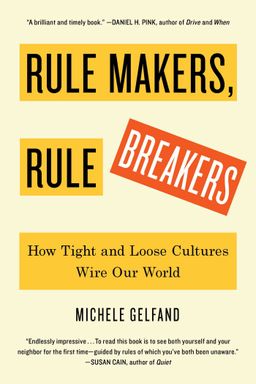
Why do trains run on time in Tokyo but rules seem optional in Rio? Michele Gelfand’s book argues that one deep cultural axis explains a surprising range of behaviors: tightness versus looseness. Tight cultures have clear norms and little tolerance for deviation. Loose cultures have permissive norms and high tolerance for variation. This continuum shapes how societies coordinate, innovate, and respond to threat, from household rituals to global politics.
The power of social norms
You live inside invisible webs of expectations that tell you how long to handshake, when to speak up, and how to dress in public. These norms differ drastically depending on cultural tightness. Singapore’s gum bans and public cleanliness campaigns show tight order; New Zealand’s barefoot informality and casual dissent reveal looseness. The difference isn’t whimsical—it reflects how societies balance freedom and control based on historical and ecological pressures.
Measuring the continuum
Gelfand’s research team surveyed thousands of people across more than thirty nations to quantify tightness and looseness. Countries like South Korea, Japan, and Singapore scored among the tightest; the U.S., Brazil, and the Netherlands sat on the loose end. Tightness predicts group synchrony, order, and safety. Looseness predicts innovation, flexibility, and diversity. Both sides offer advantages and risks—and most societies hover between.
Why cultures tighten
Threat explains much of why cultures grow tight. High population density, territorial invasion, natural disasters, and disease push communities toward discipline and collective control. Japan’s earthquake history and Singapore’s pathogen sensitivity have fostered tight norms. Loose countries, often relatively safe or geographically insulated, evolved with fewer external pressures and thus tolerate more diversity and experimentation.
Trade-offs and adaptation
Tightness buys coordination, cleanliness, and security. Looseness buys creativity and rapid change. Yet either extreme backfires: rigid societies suffocate innovation; loose ones breed disorder. Gelfand frames this as a Goldilocks principle—both freedom and constraint are vital, but balance is key. The book shows how societies, organizations, and families continually adjust norms to match threat levels and collective needs.
From nations to you
You experience tight-loose differences at all scales—nations, communities, workplaces, social classes, and even family life. Tight states tend to enforce laws and routines strictly; loose regions foster openness and innovation. Your company’s success may hinge on cultural fit and ambidexterity, your class upbringing may predispose you to certain rule-orientation, and even online behavior reflects a tug-of-war between freedom and control.
Cultural change and resilience
The book’s closing chapters move from diagnosis to design. Gelfand shows how norms can be recalibrated deliberately—tightened to restore order (as Iceland did to curb teen drinking) or loosened to remove harmful taboos (as CARE did to improve family planning in Kenya). You learn that culture is adaptive: when disorder reigns, people crave tightness (as in post-revolution Egypt or post-Soviet Russia); when controls suffocate, they push for looseness. The challenge for individuals and leaders is to recognize this cycle and steer society toward a balanced midpoint where cooperation and freedom sustain one another.