
Idea 1
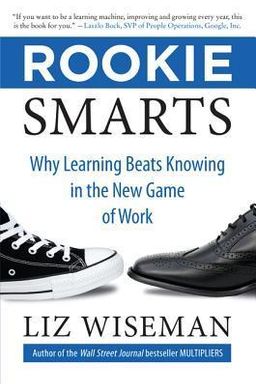
Rookie Smarts: The Power of a Beginner's Mind
When was the last time you felt both terrified and exhilarated by a new challenge—completely unsure if you’d sink or swim? In Rookie Smarts, leadership expert Liz Wiseman argues that doing something for the first time can be the key to doing your best work. Contrary to the popular belief that experience guarantees excellence, Wiseman contends that not knowing can actually make you smarter, faster, and more inventive.
Throughout the book, Wiseman explores how a lack of experience—or deliberate return to a beginner’s mindset—can spark curiosity, agility, and learning at a speed that experts rarely match. She calls this combination of humility, hunger, and adaptability “rookie smarts.” Her claim is striking: in rapidly changing industries, experience can become a liability.
Becoming Brilliant by Not Knowing
Wiseman discovered this phenomenon firsthand as a twenty-four-year-old manager at Oracle tasked with building a corporate university—something she had never done. “No clue” turned into her secret weapon. Instead of pretending to know, she asked questions, sought guidance, and stayed close to those who did. This humility born of desperation fostered rapid learning and collaboration, leading to one of Oracle’s most successful internal programs.
The lesson is timeless and universal: you don’t need to know everything; you just need to learn faster than you’re failing. Especially in a world where information doubles every eighteen months and knowledge decays at 30 percent per year, the ability to learn beats mastery. Experience can lead to autopilot, where experts rely on intuition instead of curiosity. Newcomers, by contrast, ask questions, listen deeply, and improvise their way toward breakthroughs.
A New World that Rewards Learners
Wiseman situates her argument in today’s “VUCA world”—a term borrowed from military strategy meaning volatile, uncertain, complex, and ambiguous. In this new workscape, information is vast (too much to master), fast (accelerating innovation cycles), and fleeting (skills and strategies expire quickly). In this context, rookies—those willing to think fresh, learn hard, and move fast—are not just useful; they’re essential.
Her research, conducted with hundreds of managers and professionals, revealed that rookies often outperform veterans in creativity, timeliness, and innovation. Experienced people excel at solving known problems, but rookies shine in complex, ambiguous domains with multiple answers and moving targets—startups, innovation projects, and emerging markets.
Four Rookie Smarts Modes
From thousands of data points, Wiseman distilled four ways rookies think and act when they’re at their best:
- Backpackers travel light, unencumbered by bureaucracy or ego. They see new possibilities and act wholeheartedly.
- Hunter-Gatherers actively seek expertise, scanning for guidance and connecting with diverse mentors.
- Firewalkers operate cautiously but quickly, moving fast enough not to get burned, driven by urgency and feedback.
- Pioneers forge ahead through discomfort, improvising, and creating value from scratch.
These modes are not tied to age or tenure; they’re mindsets anyone can adopt. Even seasoned leaders can act like rookies when they take on a new challenge or move into an unfamiliar domain.
The Perpetual Rookie
At the heart of Wiseman’s argument lies one profound idea: learning is the true marker of mastery. Perpetual rookies—people who remain curious, humble, playful, and deliberate—combine wisdom with wonder. Examples like Magic Johnson, Annie Leibovitz, Peter Drucker, and Elon Musk show that continual unlearning keeps you ahead of the curve.
If experience can seduce you into comfort, rookie smarts can jolt you awake. The book’s message is simple yet subversive: to succeed in fast times, you must think slow again, ask naïve questions, and relearn as if for the first time. Instead of falling from expertise to irrelevance, you can live perpetually on the learning curve—curious, adaptive, and alive.
The essential insight
Success can kill curiosity, but curiosity revives success. The fastest learners—those who ask, listen, and experiment—will thrive where the knowledgeable falter.
In the pages that follow, Wiseman reveals how you can cultivate rookie smarts at any stage of your career, lead teams that learn fast, and build organizations that stay perpetually fresh. In a world where the only constant is change, being “new” is no longer a weakness—it’s your competitive advantage.