
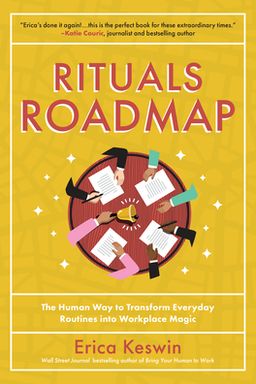
Rituals Roadmap cover

Rituals Roadmap

by Erica Keswin

Rituals Roadmap by Erica Keswin delves into the transformative power of workplace rituals. This insightful guide offers practical strategies to enhance employee engagement and foster a supportive, productive environment. Discover how simple rituals can boost morale, strengthen team bonds, and create a thriving human-centric workplace.

Rituals as the Human Bridge to Workplace Magic

How can a simple cup of coffee, a team lunch, or a dance break transform a workplace from ordinary to extraordinary? In Rituals Roadmap: The Human Way to Transform Everyday Routines into Workplace Magic, Erica Keswin argues that rituals—regular, intentional acts infused with personal meaning—are the tools that make modern organizations truly human. In an era of distraction, burnout, and digital overload, rituals remind us of who we are, why we work, and the relationships that sustain us.

Keswin contends that the key to workplace success lies not in perks or technology but in deliberately designed experiences that honor psychological safety, purpose, and connection. She coins the “Three P’s” of rituals—Psychological Safety + Purpose = Performance—to show how thoughtful routines can improve engagement, trust, and collaboration across teams. Drawing from hundreds of interviews with CEOs and employees, from firefighters to startup founders, Keswin reveals that rituals give structure and soul to even the most high-pressure organizations. They spark oxytocin, reduce anxiety, and convert daily routines—the meetings, breaks, meals, and milestones—into meaningful touchpoints of belonging.

Why Rituals Matter in a Digital Age

Keswin opens with a paradox of the modern world: despite being “connected” 24/7, many of us feel lonely and cut off. Technology lets us collaborate from anywhere, yet it strips away the human rhythms that build trust—water-cooler chats, communal meals, celebrations of small wins. She reminds us that loneliness is as damaging to health as smoking fifteen cigarettes a day (a fact echoed by former Surgeon General Vivek Murthy). Rituals counteract this by creating predictable, meaningful patterns of interaction that anchor people in time and purpose. They are not just habits; they are intentional acts that say: you belong here.

The Three P’s Framework

Through the lens of psychology and business, Keswin’s Three P’s offer a roadmap for leaders who want their workplaces to be both productive and humane:

  • Psychological Safety: the foundation of trust, where people feel safe to express themselves and take risks without fear of humiliation. Rituals—like daily huddles or shared coffee tastings—create a sense of predictability and comfort so people can focus on creativity.
  • Purpose: the deeper “why” behind routines. Rituals remind employees what their work means and connect them to their company’s mission, as in Starbucks’ onboarding ritual “The First Sip,” which ties every new barista to the story of coffee and community.
  • Performance: the result of aligning safety and purpose. When employees feel secure and value-driven, their performance naturally improves—teams collaborate better, innovate faster, and stay engaged longer.

From Firehouses to Boardrooms

Keswin anchors her theory in research that began at Cornell University, where Professor Kevin Kniffin discovered that firefighters who cooked and ate together performed better as a team. It wasn’t the food—it was the ritual: eating at the same time, sharing stories, cleaning up together. That informal camaraderie improved coordination and saved lives. Inspired by this study, Keswin launched “The Spaghetti Project,” her own experiment in creating workplace rituals that build connection. The results showed that when people regularly share meaningful routines—like lunches, breaks, or celebrations—trust deepens and productivity rises.

Turning Routine into Ritual

The book’s structure mirrors the lifecycle of an employee—from recruitment and onboarding to everyday collaboration and departure. Keswin guides readers through each stage, showing how companies like JetBlue, LinkedIn, and Chipotle have ritualized their cultures: JetBlue begins every new-hire orientation with value-sharing inspired by love and care; LinkedIn pauses once a month for “InDay,” a day for employees to invest in their personal and professional growth; Chipotle teams eat together before opening as a ritual that builds respect and synchrony. Each story reinforces a central point: rituals turn the ordinary moments of work into opportunities for meaning.

Magic in Turbulent Times

The COVID-19 pandemic made Keswin’s message even more urgent. In her postscript “Rituals in Turbulent Times,” she documents how companies sustained connection during lockdown: virtual coffee breaks replaced cafeteria chats, employees shared weekly celebrations on Zoom, and the simple act of waving goodbye became a new ritual of resilience. She argues that in chaos, rituals restore a sense of control and belonging. Whether through a “Taco Tuesday” at home or a digital meditation at work, rituals help people adapt while staying human. In Keswin’s words, “Rituals are good for people, great for business, and just might change the world.”


The Three P’s: Safety, Purpose, and Performance

At the heart of Keswin’s framework lies the Three P’s formula: Psychological Safety + Purpose = Performance. It’s a deceptively simple equation that explains why rituals strengthen companies from the inside out. When employees feel safe and know their work has meaning, they naturally perform better. Keswin’s examples—from Harvard Business School research to stories about Chipotle’s team lunches—illustrate how these human needs translate into tangible business outcomes.

Psychological Safety

Every ritual begins by building trust. Harvard professor Amy Edmondson defines psychological safety as the belief that you won’t be punished for taking risks or speaking up. For Daisy Auger-Dominguez, a workplace strategist, a powerful ritual called “manager integration exercises” helps new teams quickly build that trust: employees share what they wish their manager knew about them and vice versa. Similar practices—like JetBlue’s onboarding stories or LinkedIn’s volunteer-led InDays—turn vulnerability into strength. When people belong, they contribute more freely.

Purpose

Purpose fuels engagement. Keswin quotes BlackRock CEO Larry Fink’s famous statement that “purpose is not the sole pursuit of profits but the animating force for achieving them.” Rituals give employees consistent reminders of why their work matters. Starbucks rituals link every action back to “inspiring and nurturing the human spirit.” At Chipotle, the morning meal before opening fulfills their value “The Line Is the Moment of Truth,” connecting daily effort to mission. Purpose transforms compliance into enthusiasm.

Performance

When safety meets purpose, performance skyrockets. The firefighters’ research showed higher life-saving efficiency; Google’s Project Aristotle revealed that psychologically safe teams produced more innovation and revenue. Keswin concludes that rituals are not “soft” but strategic. They are invisible architecture that upholds organization-wide excellence: a three-minute meditation before meetings can sharpen attention, and a shared meal can strengthen cooperation. Rituals synchronize hearts and minds, driving sustained performance across all levels of a company.


From Recruitment to Belonging: Rituals of Arrival

Keswin begins her roadmap where every career starts—at “All Aboard.” Recruiting and onboarding are a company’s first chance to make belonging tangible. She argues that culture takes root in rituals of arrival: the handshakes, stories, and welcome gestures that signal, “You matter here.”

Start as You Mean to Go On

Borrowing advice from pediatrician Penelope Leach, Keswin writes, “Start the way you mean to go on.” The first day sets a lasting tone. JetBlue’s onboarding immerses new employees in five core values—Safety, Integrity, Caring, Passion, and Fun—through storytelling and role-play. At KIND Snacks, founder Daniel Lubetzky meets every new hire personally, inviting them to share something others don’t know about them and then naming their cohort based on common traits like “Clumsy Romantics.” These playful details build instant community.

Preboarding Magic

Rituals can begin even before the first day. At Zappos, candidates are evaluated not just in interviews but during small moments—how they speak to the receptionist or the driver who picks them up. Humility is a core value, so any arrogance spotted early disqualifies a candidate. Dropbox turns offers into celebrations, sending potential hires a “cupcake kit” tied to their values of delight and collaboration. These preboarding rituals transform corporate recruiting into expressions of humanity.

Personal Touch

Welcoming rituals work because they are sensory and emotional. Starbucks’ “First Sip” coffee tasting engages smell, taste, and story—linking each new barista to the company’s heritage. Radio Flyer gives every new employee a miniature red wagon signed by the CEO. Glamsquad’s team includes even IT hires in free salon experiences, ensuring everyone literally feels the brand. As Keswin emphasizes, you don’t need lavish gestures—just moments with meaning. The first shared snack, handwritten note, or name tag becomes a symbol of belonging.


Meetings with Meaning: The Ritual of Gathering

Meetings are the most common yet most complained-about workplace activity. Keswin uses Priya Parker’s book The Art of Gathering to argue that rituals can transform them into engines of clarity and connection. Instead of dull assemblies, purposeful meetings create belonging and ignite ideas.

Have a Purpose

Keswin reminds us that assembling people without purpose is like building Ikea furniture without instructions: frustrating and meaningless. Parker’s principle—“Ask why you’re gathering”—is central. At A+I, the New York architecture firm, founders Brad Zizmor and Dag Folger begin every week with breakfast to reaffirm their partnership, a ritual of “survival through mutual support.” At Basecamp, remote workers gather twice yearly for retreats filled with intentional fun, reflection, and even a pizza-and-Dungeons-&-Dragons night that blends trust with play.

Invite Presence

Presence means more than showing up physically—it’s about arriving mentally and emotionally. Companies use rituals to spark mindfulness: Eileen Fisher opens meetings with a chime and one minute of silence; Daisy Auger-Dominguez rotates meeting leaders so every voice is heard; Udemy’s “Meeting Hero” pledge ensures each session ends with clarity of purpose and inclusion. Even small acts like LinkedIn’s morning dance parties at 3:00 p.m. refresh energy and remind teams they’re human before they’re corporate.

Chime Out Strong

Ending rituals matter, too. Bank Leumi’s daily 15-minute huddle closes with a “values story” honoring acts of compassion or integrity spotted in the workplace. Buffer’s all-remote retreats end with gratitude sessions and a Monday off for recovery—a modern-day “sunset ceremony” that mirrors Parker’s advice to close meaningfully. As Keswin concludes, when teams chime in and chime out with care, meetings stop being time-wasters and start being transformations.


Communal Meals: Eating Together to Build Trust

Why do shared meals feel so special? Because, Keswin says, eating together is the primal ritual that connects humans beyond hierarchy. Chapter Four, “Eatings,” reveals that communal dining isn’t just good manners—it directly predicts team performance.

The Firehouse Meal

At Cornell University, researchers studied firefighters who traditionally cooked and ate together. They discovered these shared meals built “social glue” that improved coordination and morale. The more firehouse teams ate together, the better they performed on the job—sometimes saving more lives. In Keswin’s interpretation, every lunch table can be a modern firehouse, where trust simmered over spaghetti translates back into action at work.

Modern Commensality

Company rituals around food—like KIND Snacks’ waffle Wednesdays or Chipotle’s team lunches—celebrate connection. At Horizon Media, CEO Bill Koenigsberg sustains a decades-old ritual of bagels every Friday, now feeding thousands of employees. Udemy’s “Lunch Roulette” pairs colleagues from different departments to dine together and bridge silos. Even at Motley Fool, “Pizza Fridays” pit local restaurants against each other, turning lunchtime into a cultural festival of choice and laughter.

Beyond the Table

Keswin notes that mealtime rituals extend into family and community. CEOs like Brian Garish of Banfield Pet Hospitals invite executives’ families to dinner to tighten relational networks. Northwestern University president Morty Schapiro hosts thousands of students at his home every year, building culture one purple cookie at a time. The lesson: what we eat matters little, but how we eat—together—changes everything.


Taking a Breather: The No-Smoke Break

In Chapter Six, Keswin reimagines the old “smoke break” as a ritual of renewal. She argues that rhythm, not constant effort, powers sustainable performance. Borrowing from Tony Schwartz’s “pulse theory” of energy, she recommends breaks every ninety minutes—physical or social—as vital recharges for the modern worker.

Disconnect to Reconnect

The most productive teams step away together. Slack’s 3:00 p.m. gong signals a companywide cappuccino break—ironically celebrating face-to-face conversation at a digital communications firm. At Moon Juice, an office dog walk brings employees together outdoors every afternoon; at LinkedIn, daily mini dance parties convert solitary desk time into team bonding. These rituals boost oxytocin, not nicotine, refreshing energy and empathy simultaneously.

When Rest Becomes Culture

Some companies make breaks structural. Food52 closes for two whole “Summer Weeks,” encouraging total disconnection to recharge creativity. REI locks its doors on Black Friday, paying employees to #OptOutside and clean up nature—a ritual aligned with its sustainability values. Even Motley Fool’s random vacation lottery forces leaders to take unplanned breaks, reinforcing humility and teamwork. Keswin praises these courageous choices as statements of humanity over productivity.

The Lesson of the Pulse

Keswin concludes that ritualized breaks are less about relaxation and more about rhythm. Like breath or heartbeats, they remind workplaces of their organic pace. “Left to our own devices—we aren’t connecting,” she warns. The No-Smoke Break is thus symbolic: pause intentionally, power collectively, and return stronger together.


Recognition and Joy: Rituals That Say ‘We See You’

Recognition is a universal human need. Keswin’s Chapter Seven turns appreciation into art, showing how rituals of reward and celebration sustain morale. Rather than performance reviews and generic awards, she showcases creative practices that say, “You matter.”

Rewarding Effort and Humor

At Ketchum PR, a manager invented the “Golden Toilet”—a trophy for turning the sh*ttiest moment into triumph. At KIND Snacks, Daniel Lubetzky’s KINDOS awards honor acts of kindness between colleagues. Next Jump’s “Avenger’s Ceremony” recognizes one stewardship leader out of 200 employees each year, flying families in and gifting the winner a $50,000 vacation. Each ritual mixes recognition with a moral: we thrive through gratitude and shared values, not ego.

Milestones That Matter

Long-term rituals remind employees they belong to a story. DICK’S Sporting Goods celebrates 20-year veterans with a personalized cookie jar containing $300—the same amount founder Dick Stack borrowed to start his business. Microsoft marks anniversaries with pounds of M&Ms proportional to years served. These tiny gestures become folklore inside companies, teaching humility and joy.

Collective Celebration

Communal rituals strengthen unity. DoSomething throws Pride parties reflecting its LGBTQ+ community; Tauck Travel’s “Joyful Celebration” shares employees’ happy news publicly, extending positivity. Backroads sends all 400 staff on a multi-day adventure trip to live its brand. In Keswin’s model, recognition isn’t about hierarchy—it’s about visibility. Everyone, from new hire to CEO, deserves to be seen and celebrated.


Rituals at Scale: Starbucks and the Power of Purpose

Starbucks becomes Keswin’s ultimate “rituals rockstar.” Across 31,000 stores, the company’s success is built on one repeated gesture: sharing coffee together. Every tasting, meeting, and farewell begins with the “First Sip,” a ritual that encapsulates Starbucks’ purpose “to inspire and nurture the human spirit—one person, one cup, and one neighborhood at a time.”

From Milan to Global Magic

Founder Howard Schultz’s trip to an Italian coffee bar sparked the idea that hospitality is a ritual, not a transaction. Baristas learned to greet each customer as if welcoming them home. That ethos spread internally: employees join the Coffee Academy, attend “Nine at Nine” tastings, and end careers with farewell brews. Ritual infuses identity—it’s not optional but cultural oxygen.

Three P’s in Every Cup

Psychological safety emerges when partners gather over coffee and stories. Purpose shines in global rituals like “Origin Trips” to meet farmers in Rwanda or Sumatra, reminding employees of their ethical mission. Performance follows naturally: coffee tastings in meetings enhance focus and empathy. As Michelle Burns told Keswin, “You call it a ritual. We call it what we do.”

The Human Barista

Ashley Peterson, Keswin’s own neighborhood barista, symbolizes the model. Peterson doesn’t just serve coffee—she builds relationships, remembers names, and checks in with her staff through daily commitment rituals. Her small store mirrors Schultz’s global dream: a network of individuals transforming service into belonging. In Keswin’s words, Starbucks proves that “rituals are scalable magic.”


Designing Your Own Rituals Roadmap

Keswin ends her book with an invitation: you don’t need to be Starbucks to create magic. Start where you are. Every team, family, or entrepreneur can design a roadmap of rituals that align with their values and goals. The process is simple but powerful.

Step 1: Map the Moments

Identify the lifecycle of your workplace—recruiting, onboarding, meetings, eating, breaks, recognition, and farewells. What happens regularly? Where could connection deepen? Keswin calls these “prime ritual real estate.” Even a weekly snack cart or end-of-day email can become a keystone ritual when infused with intention.

Step 2: Test for the Three P’s

Ask: Does this ritual create psychological safety? Is it linked to purpose? Would people miss it if it disappeared? If yes to all three, it’s worth keeping. If participation fades, adjust the design. Rituals thrive on authenticity, not obligation; they must fit naturally into your culture.

Step 3: Keep It Human

The final lesson is humility: rituals work best when they evolve from genuine feelings, not top-down mandates. Company founders can spark them, but employees often sustain them. As Keswin reminds us through stories of JetBlue and REI, values must be lived “off the walls and into the halls.” When rituals honor relationships at every level, workplaces become not just productive but profoundly human.

Final Reflection

“We all desire to be seen, to know we matter, and to feel loved. That’s part of being human.” Keswin quotes Dr. Vivek Murthy to close her roadmap, affirming that rituals are our language of belonging. They turn coffee into connection, meetings into meaning, and work into a practice of being fully alive.

Dig Deeper

Get personalized prompts to apply these lessons to your life and deepen your understanding.

Go Deeper

Get the Full Experience

Download Insight Books for AI-powered reflections, quizzes, and more.