
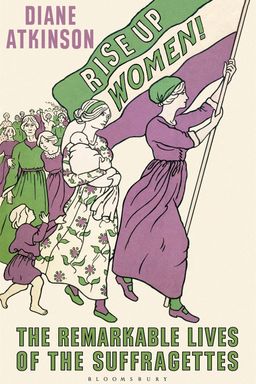
Rise Up, Women! cover

Rise Up, Women!

by Diane Atkinson

Rise Up, Women! vividly captures the dramatic tale of the suffragettes'' struggle, led by the formidable Pankhurst family. This engaging narrative reveals the grit and determination that ignited one of the 20th century''s most significant civil rights movements, ultimately transforming societal views on women''s roles.

The Making of Militant Suffrage

How do you transform an excluded population into a political force? The struggle for women’s suffrage in early twentieth-century Britain, as seen through the Women’s Social and Political Union (WSPU), answers that question with action, discipline, and spectacle. Founded by Emmeline Pankhurst in Manchester in 1903, the WSPU rejected slow constitutionalism in favor of what its motto demanded—Deeds, Not Words. In less than a decade, that principle turned a small local group into a militant national campaign that permanently altered the grammar of protest politics.

This story is not just about votes. It’s about how women built modern activism: they created publicity machines, tested the limits of law, and forced the British state to engage with them as political actors. You watch how spectacle, media strategy, and moral confrontation combine into a revolutionary political art form. (Note: Much like later civil rights or climate movements, the WSPU made visibility itself a weapon.)

From Drawing Room to Street Campaign

In Manchester’s 62 Nelson Street, the Pankhurst family launched the WSPU with clear principles: keep the organization for women only, avoid party affiliation, and pursue direct confrontation with authority. Early protesters like Annie Kenney and Christabel Pankhurst deliberately courted arrest to show seriousness. From those confrontations you see the template emerge—planned arrests, controlled outrage, and front-page coverage. This shift marks a break from the polite petitions of Millicent Fawcett’s National Union of Women’s Suffrage Societies (NUWSS).

Building a Modern Political Machine

The WSPU professionalized activism. With money and managerial talent from Fred and Emmeline Pethick-Lawrence, it rented offices at Clement’s Inn, paid regional organizers, and produced its own media outlet, Votes for Women. They sold merchandise, ran exhibitions, printed pamphlets, and turned their cause into a self-funded enterprise. By 1906 the organization resembled a modern NGO: centralized strategy, local branches, salaried staff, and high visual branding through purple, white, and green.

Militancy as Moral Drama

From 1908 the WSPU discovered the dual power of performance and provocation. Processions like the “Women’s Sunday” rally in Hyde Park fused pageantry and protest—bands, banners, and color-coded marches designed for mass photography. Yet the same organization escalated into direct assaults on political space: Parliament “rushes,” window-smashing raids, and, later, arson. The movement mastered the line between publicity and illegality. Each action became a headline; each arrest fed the narrative of courage and repression.

Cracks, Repression, and Radicalization

As militancy intensified, so did conflict inside and outside the movement. Leaders disagreed on democracy versus discipline; members broke away to form the Women’s Freedom League. The state replied with mass arrests and force-feeding, turning prisons into sites of feminist martyrdom. Setbacks like the broken promises of the 1910 Conciliation Bill deepened militants’ conviction that only disruption could win justice. Black Friday’s police assaults, the “argument of the broken pane,” and the arson wave of 1913–14 show how moral outrage evolved into physical confrontation with property and power.

From Martyrdom to Wartime Politics

By 1913 force-feeding, the Cat-and-Mouse Act, and Emily Davison’s death made the movement both heroic and fractured. The WSPU transformed suffering into propaganda—posters of bruised faces became moral weapons. Yet dissent within the Pankhurst family split the wider movement: Christabel and Emmeline centralised authority; Sylvia turned left toward socialism and the East End. When war broke out in 1914, the militants called a truce, redirecting their energies to the national cause. Ironically, that wartime cooperation helped create the political opening that enfranchised women in 1918. The struggle thus ends not in victory through destruction, but in reform through patience, symbolically closing the arc from street protest to political recognition.

Core Idea

The WSPU’s story is the birth of modern activism: organized spectacle, strategic suffering, and mass media politics used to force moral recognition. It teaches you that the line between reform and rebellion is often drawn by those who insist on being seen.


Foundations of the WSPU

The Women’s Social and Political Union began as a pragmatic experiment in women-led power. Emmeline Pankhurst and a few allies in Manchester designed an organization that placed women’s voices at its core and liberated the suffrage campaign from male mediation. Unlike conventional lobbying groups, the WSPU chose independence from political parties to preserve purity of purpose. Its motto—“Deeds, Not Words”—wasn’t mere rhetoric but a mandate for disruption.

Organizing for Impact

Early structure was both tight and visionary. Central control came from the Pankhursts, but recruitment drew across society: working-class activists such as Annie Kenney and Dora Thewlis joined forces with middle-class women, making the WSPU a rare cross-class alliance. Fred and Emmeline Pethick-Lawrence added institutional muscle, turning slogans into sustainable operations by funding offices, paying organizers, and launching Votes for Women. The Clement’s Inn headquarters soon rivaled political party offices in activity.

Tactical Beginnings

If you look at the 1905 Manchester incident—when Annie Kenney and Christabel Pankhurst interrupted a Liberal rally—you see how small acts of defiance were rehearsals for national theatre. These arrests set a pattern: choose symbolic spaces, provoke measured scandal, and ensure coverage. The WSPU treated journalists as strategic partners, recognizing publicity as the oxygen of change. (Note: Decades before television-era activism, they mastered media cycles.)

Political Positioning

While shunning formal alliances, the WSPU leveraged parliamentary politics with tactical cunning. “Keep the Liberals Out” became its rallying cry, punishing ruling-party candidates who failed to support suffrage. Emmeline’s friendship with Labour’s Keir Hardie and later confrontations with ministers such as Asquith reveal a movement operating both inside and outside the system. Every by-election was a referendum on women’s patience.

Key Insight

The WSPU built protest into an art form by merging practical organisation with symbolic confrontation—early proof that political effectiveness depends as much on stagecraft as on argument.


Spectacle and Escalation

By 1908, the suffragette movement discovered that politics could be aesthetic and combative at once. Pageantry and militancy grew together: Hyde Park rallies, brass bands, purple-white-green processions, and attacks on property were part of the same vocabulary. You can think of this period as the invention of “visual politics,” where appearance, choreography, and shock formed a coherent argument.

From Theatre to Tactics

Women’s Sunday in June 1908 marked a turning point—250,000 spectators, 30 brass bands, banners from across the country. Artists like Sylvia Pankhurst turned propaganda into design: each banner was a statement of citizenship. Then came direct assaults on state authority: the “rushes” on Parliament, the pantechnicon raid disguised as a moving van, and waves of window-breaking. Each act was rehearsed and disciplined, designed to invade the visual field of a complacent public.

The Broken Pane Strategy

In 1912 Christabel Pankhurst articulated the logic behind property destruction: glass breaks cleanly, wounds no one, and forces insurance and government responses. This “argument of the broken pane” replaced self-sacrifice with material disruption. Hundreds of shopfronts and offices suffered the cost of neglecting reform, while militants accepted prison as moral theatre. (Parenthetical note: modern activists often inherit this calculus—spectacle versus harm.)

Public Response and Polarization

Public reaction split sharply. Admirers saw courage; critics saw hysteria. Yet the WSPU’s flair for performance ensured constant attention. Every smashed window or arrest amplified pressure on ministers. Politicians, anxious about electoral damage, proposed limited “Conciliation Bills” that dangled partial reforms. When these promises collapsed in 1910, suffragettes concluded that the only reliable dialogue with power was confrontation.

Lesson

Militancy succeeds when visibility outpaces repression—but it also risks alienating moderates. The WSPU’s genius was to weaponize spectacle, though its escalating tactics revealed the fine line between moral protest and perceived menace.


Prisons and Hunger Strikes

Once inside prison walls, suffragette militancy evolved into a contest over the body itself. Women demanded political-prisoner status; the state refused. When hunger strikes began in 1909, imprisonment turned into an act of public theatre as visceral as the marches outside. Marion Wallace-Dunlop’s refusal of food inspired a wave of fasting that drew moral lines no legislation could erase.

Force-Feeding and Public Outrage

The Home Office authorized forced feeding by tube, claiming the duty to preserve life. Accounts from Holloway Gaol—gags, nasal tubes, convulsions—spread through suffragette newspapers and shocked even moderate observers. Doctors split between professional duty and conscience; 118 signed letters condemning the practice as torture. For many Britons, images of bound women being force-fed extinguished government credibility.

Moral Leverage of the Body

As the hunger strikes spread, the WSPU realized the propaganda power of suffering. Every fainting activist or photograph of bruised throats became a rebuttal to accusations of hysteria. Personal agony turned into collective credibility. (Note: this transformation of bodily harm into political capital echoes later protest tactics from Gandhi’s fasts to modern human rights hunger strikes.)

The Cat-and-Mouse Act

By 1913, the government’s solution—the Prisoners’ Temporary Discharge for Ill Health Act—attempted to release starving women until recovery, then re-arrest them. But suffragettes used the reprieve to vanish, forming networks of safe houses, disguises, and self-defense units trained in ju-jitsu. Instead of compliance, the Act bred defiance. “Mouse castles,” bodyguards, and theatrical rescues turned enforcement into farce.

Key Reflection

In criminalizing conscience, the state unintentionally made martyrs. Hunger strikes proved that moral endurance can outlast legal coercion, and that the body can become the most eloquent weapon in politics.


Crisis, Splits and Radical Leadership

Behind every suffragette procession stood intense personal and ideological battles. The WSPU’s unity was tested by its own success. Christabel Pankhurst’s insistence on centralized command—“one policy, one programme, one leadership”—clashed with members who sought internal democracy or socialist collaboration. The 1907 split created the Women’s Freedom League; later schisms fractured the movement into wings representing different visions of equality.

Leadership Personalities

Emmeline Pankhurst provided charisma; Christabel designed tactics; Sylvia brought artistry and working-class empathy; the Pethick-Lawrences financed and organized. The synthesis worked until differing philosophies collided—constitutional patience versus revolutionary urgency. By 1912, the Pethick-Lawrences were expelled; by 1914 Sylvia’s East London Federation split away, emphasizing socialism and welfare.

Consequences of Centralization

Central control ensured message discipline but stifled debate. The loss of talented moderates shrank the WSPU’s coalition. Yet this rigidity also kept militant focus intact during crises—proof of both power and peril in charismatic leadership. (Historically, similar paradoxes recur in movements led by commanding figures.)

Radical and Socialist Offshoots

Sylvia’s East London Federation (ELFS) replaced confrontation with community-building—milk funds, clinics, co-operatives—while retaining the rhetoric of women’s independence. Meanwhile, the United Suffragists formed to reunite moderates and men. Divergent methods widened suffrage’s reach beyond the WSPU’s narrow militant theatre, seeding post-war working women’s politics.

Leadership Paradox

The WSPU’s efficiency depended on hierarchy; its moral legitimacy depended on inclusiveness. The cracks between those imperatives both fractured and diversified the women’s movement, ensuring that suffrage would become many causes, not one.


Violence, Repression and the State

From 1910 onward, the state–suffragette confrontation became open warfare. Black Friday (18 November 1910) dramatized it: police assaults on women petitioners outside Parliament produced outrage and trauma. With the collapse of parliamentary reform, militancy escalated from glass to fire. Arson attacks on town halls, churches, and even artworks framed destruction as dialogue: if you refuse to hear words, you will notice smoke.

Escalation Logic

From 1912 to 1914 sabotage proliferated. Flames consumed unoccupied houses, railway stations, golf greens, and museums. Lilian Lenton and Olive Wharry set Kew Gardens ablaze; Kitty Marion and Betty Giveen torched the Hurst Park grandstand. The WSPU’s newspaper justified it as economic pressure rather than cruelty: “It is better to break their windows than our bodies.”

State Counteroffensive

The government replied with mass raids, censorship, and public-trial theatre. The 1912 “conspiracy” trial of Emmeline Pankhurst and the Pethick-Lawrences symbolized the state’s effort to redefine political dissent as criminal conspiracy. Special Branch surveillance, force-feeding, and propaganda wars followed. Yet repression fed resilience: each prisoner released under the Cat-and-Mouse Act became a legend.

The Climax of Confrontation

The 21 May 1914 deputation to Buckingham Palace was the last large-scale clash. Mounted police crushed crowds; Emmeline Pankhurst’s arrest was photographed worldwide. Home Secretary Reginald McKenna confessed that options were exhausted—death, deportation, insanity, or reform—and only the last remained plausible. The outbreak of war months later abruptly ended this domestic conflict.

Reflection

The WSPU forced the state to choose between repression that scandalized or reform that conceded. In the process, Britain rehearsed the mechanics of modern protest policing and propaganda warfare—forms that echo through later social movements.


War, Transition and Partial Victory

The First World War turned militant suffragettes into patriots overnight. With the declaration of war in August 1914, the WSPU suspended militancy and pledged aid to the nation. Emmeline and Christabel Pankhurst launched recruiting drives and “Women’s Right to Serve” marches, reframing the cause as proof of women’s civic capacity. This was a strategic truce, not surrender.

Contrasting Paths

While the central WSPU embraced nationalism, Sylvia Pankhurst’s East London Federation pursued local welfare, milk funds, and anti-war activism. This divergence illustrated how the broader suffrage movement could adapt to contrasting moral imperatives—national duty versus social justice. Both strands, in their different ways, helped redefine women’s citizenship.

Political Consequences of War

Women’s extensive wartime labor dissolved remaining objections to enfranchisement. As millions took industrial, clerical, and agricultural roles, politicians recognized that denying them a voice risked social backlash. The 1917 Speaker’s Conference recommended limited reform, and the Representation of the People Act (1918) granted the vote to women over 30 with property or educational qualifications. Though partial, it rewrote Britain’s political contract.

Aftermath and Legacy

Post-war trajectories diverged again: Emmeline shifted toward conservative imperialism; Christabel emigrated; Sylvia turned to socialism and international causes. Yet their shared shadow defined modern political activism. The suffragette experiment proved that visual rhetoric, moral suffering, and disciplined organization can move the boundaries of citizenship. The legacy persists whenever protest merges courage, spectacle, and strategic patience to force democratic expansion.

Key Takeaway

The suffragettes did not win by persuasion alone but by transforming society’s perception of women—from passive subjects to indispensable citizens. The war became the context that made their argument politically unavoidable.

Dig Deeper

Get personalized prompts to apply these lessons to your life and deepen your understanding.

Go Deeper

Get the Full Experience

Download Insight Books for AI-powered reflections, quizzes, and more.